Bureau Veritas Classes its First Methanol Fual-Fuel Container Ship
Bureau Veritas Marine & Offshore (BV) has classed its first methanol-fueled containership, CMA CGM ANTIGONE. The 15,000 TEU methanol dual-fuel vessel was built by CSSC Jiangnan Shipyard for the CMA CGM Group, and officially named on December 11 and delivered on December 12.
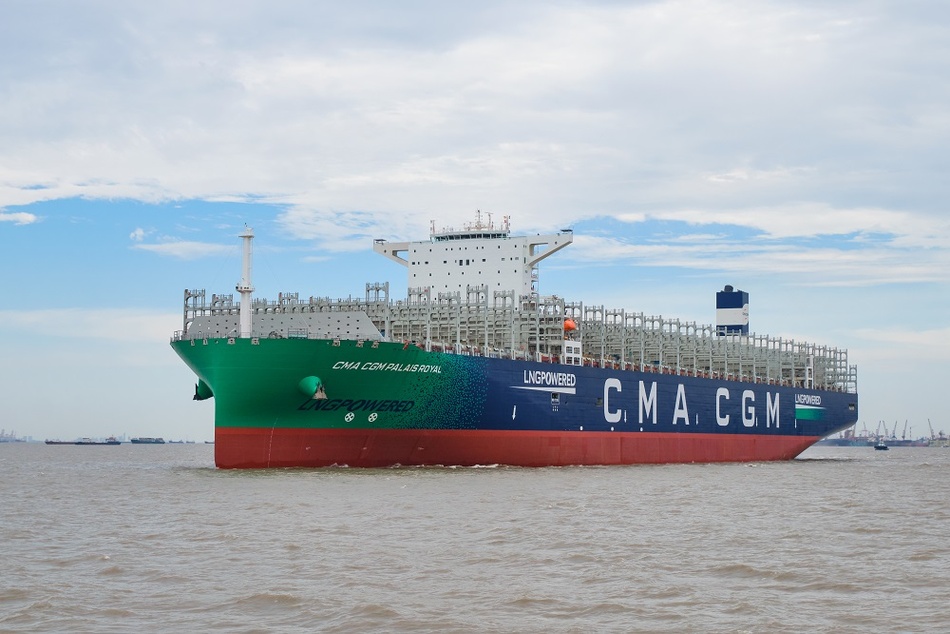
Bureau Veritas Marine & Offshore (BV) has classed its first methanol-fueled containership, CMA CGM ANTIGONE. The 15,000 TEU methanol dual-fuel vessel was built by CSSC Jiangnan Shipyard for the CMA CGM Group, and officially named on December 11 and delivered on December 12.
CMA CGM ANTIGONE is the lead ship of CSSC Jiangnan Shipyard’s independently designed “Kun” series of 15,000 TEU-class methanol dual-fuel container ships. With an overall length of 366 meters, the vessel represents a new generation of large container ships that combine high operational efficiency with significantly reduced environmental impact. Powered by methanol dual-fuel propulsion, the vessel achieves substantial reductions in nitrogen oxide (NOx) emissions and near elimination of sulfur oxide (SOx) emissions, enabling early compliance with the International Maritime Organization’s (IMO) 2030 emissions reduction targets.
Ahead of the project launch, BV assembled a dedicated team of gas-carrier and alternative-fuel experts to provide specialized training for BV surveyors and the client’s project team and assessed forthcoming international regulations to facilitate early and future compliance. During design review, BV worked closely with Jiangnan Shipyard to optimize structural arrangements and fuel system integration, using advanced simulation tools to meet safety requirements while controlling lightship weight.
In accordance with BV’s Rules for Methanol & Ethanol Fueled Ships, BV provided technical review and risk assessment for key areas including ship design and fuel system safety. During construction, BV surveyors applied refined process control and data-driven monitoring and conducted targeted inspections of fire safety, ventilation, and explosion-proof systems, reinforcing the vessel’s safety.