Transport Associations: Cornerstone of Realizing a Smart Road Transport Ecosystem
Dr. Hamzeh Zakeri unveiled a strategic roadmap for the country's smart transportation fleet monitoring platform, emphasizing the shift toward smart, data-driven metrics that require the full cooperation of all industry stakeholders.
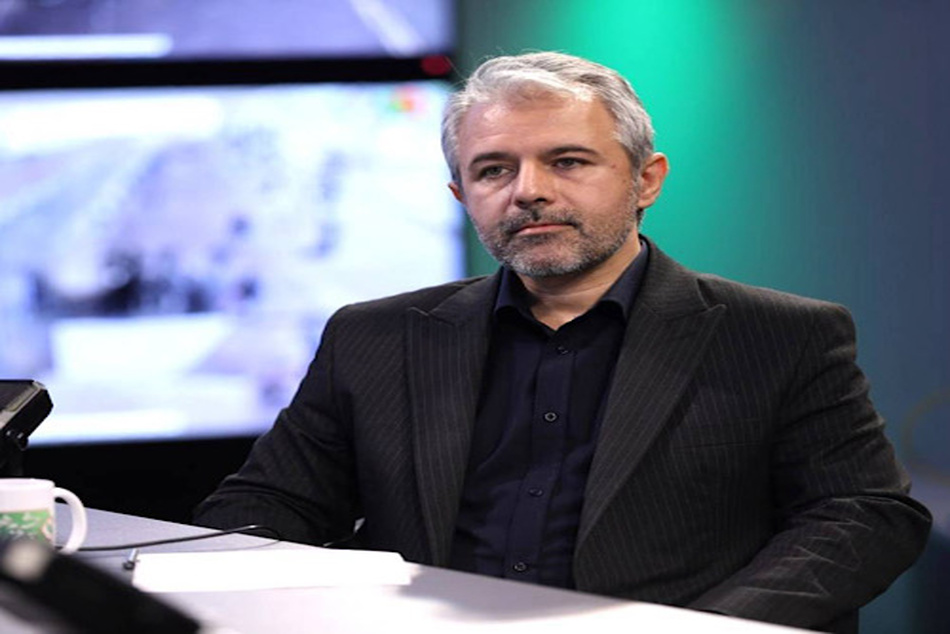
In a statement released by Dr. Hamzeh Zakeri, Deputy for Technology Development and Intelligent Systems at the Road Maintenance and Transport Organization, said the national smart fleet monitoring platform is moving beyond the traditional approach of equipping and tracking vehicles to build one of Iran’s most important foundations for data-driven and intelligent road transport governance, stressing that the full realization of the project depends on the active participation of associations, chambers, transport companies, drivers and all stakeholders in the transport ecosystem.
Dr. Zakeri further said the smart fleet monitoring platform has been placed on the agenda as one of the RMTO’s major digital transformation initiatives. Under the new approach, the objective is no longer limited to installing positioning devices and receiving location data; the platform is designed to collect, integrate, validate and analyze fleet data to create a national foundation for smart decision-making, higher productivity and data-driven governance of road transport.
He outlined three core missions: boosting safety monitoring, improving the accuracy of mileage tracking and building a comprehensive, transparent and real-time picture of Iran’s fleet. In safety, connecting vehicles to positioning systems allows online monitoring and analysis of speed, stops, routes and traffic patterns, paving the way for stronger oversight, identification of high-risk behavior, event prediction and a shift toward preventive and anticipatory safety management.
The second mission, more precise mileage monitoring, enables data cross-checking, performance evaluation and the production of accurate and reliable statistics, which can support fuel-consumption management, greater transparency and improved fleet productivity. The third mission, a unified national picture, allows managers, guilds, associations, transport companies and fleet owners to access fleet status, routes, mileage, stops and traffic flows according to their access levels.
In the new architecture, GPS is no longer seen only as a positioning tool but as the point that connects the fleet to a national ecosystem of data and smart services, Zakeri said. Aggregating fleet data on a single platform and subjecting it to validation and analysis creates capacity for management indicators, behavioral pattern detection, anomaly identification, smart alerts and, in later phases, the use of artificial intelligence to predict events. The ultimate goal is to convert data into information, knowledge and better decisions.
According to the official, about 611,000 vehicles of various types currently operate in Iran’s road network, of which around 11 percent have been equipped with GPS so far. Over 24,000 of those vehicles are currently observable on the monitoring platform. Around 60 percent of Iran’s bus fleet has been equipped with GPS, enabling real-time monitoring of passenger journeys, smarter movement management and faster decision-making during peak travel periods and national or religious occasions.
Dr. Zakeri cited successful operational experience during the Arbaeen pilgrimage and the final ten days of the month of Safar, when round-the-clock fleet monitoring provided a live visual and analytical picture of vehicle numbers at terminals and in Mashhad and supported operational management.
He also said the platform is not designed solely for managers. Technical dashboards and services are tailored to the needs of fleet owners, transport companies, drivers, guilds, chambers, associations and executive and oversight bodies. As the platform develops, information on safety, mileage, location, stops, routes and transport flows will be made available according to each stakeholder’s access level and needs, helping to increase transparency, productivity and service quality.
Dr. Zakeri also reiterated that the transformation cannot be achieved through technology and technical infrastructure alone. Associaitons, chambers and technical
transport associations are strategic partners in implementing this national initiative and can play an effective role in designing and improving services, communicating the real needs of the private sector, promoting technology adoption, improving data quality and developing platform-based services.
The smart platform is the shared infrastructure of Iran’s intelligent road transport ecosystem, and its success depends on genuine cooperation among the Road Maintenance and Transport Organization, governing bodies, associations, chambers, individually transport companies, drivers and technology and knowledge-based enterprises.
Other platform capabilities include fleet behavior analysis, monitoring of abnormal stops, route analysis, traffic flow monitoring, queue-length observation and border traffic status tracking, fleet performance analysis and the production of decision-making dashboards and indicators.
Dr. Zakeri described the platform as more than a technological project, calling it one of the main foundations for transforming road transport governance. With its completion and development, the Road Maintenance and Transport Organization will move toward becoming a national reference for fleet data and analysis, supporting policy-making, smart analysis, safety improvement, productivity growth, crisis management and rapid, accurate decision-making.
The project’s horizon is the smart connection of the fleet, driver, journey, road, border, safety, infrastructure and other components of the transport chain within a single data ecosystem, where management decisions are based on real-time data, intelligent analysis and a comprehensive picture of the network, he added.
Dr. Zakeri finally called the national smart fleet monitoring platform a fundamental step toward “smart road transport governance” and a transition from traditional, reactive management toward integrated, data-driven, forward-looking and intelligent management of Iran’s transport network.