Report: Iran’s Ports and Maritime Chief Concludes High-Level Mission to IMO Assembly in London
Saeed Rasouli, Iran’s PMO Managing Director, led the country’s delegation to the IMO Assembly in London, presenting Iran’s maritime strategy and commitment to global conventions.
LONDON — November 2025
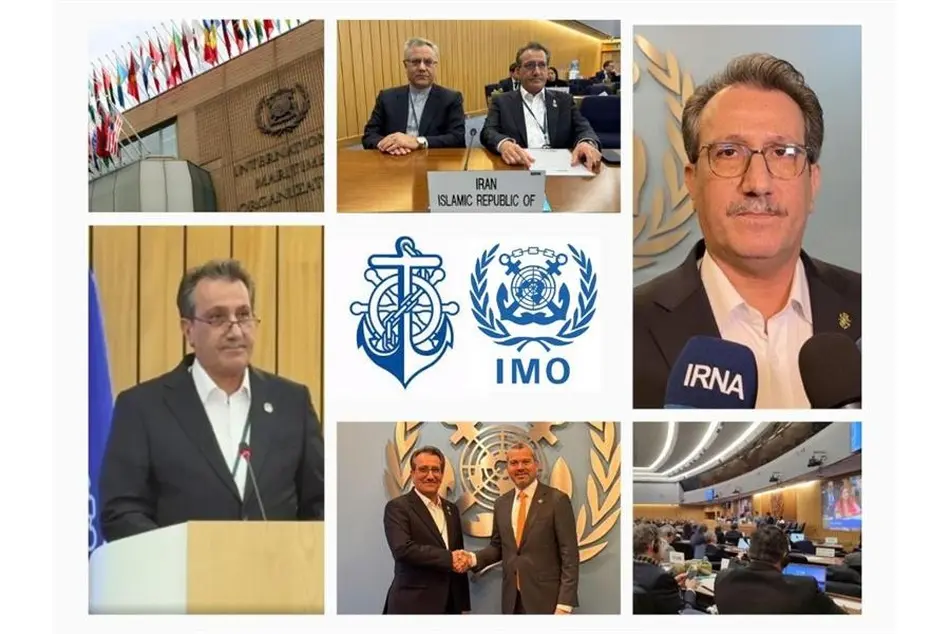
A high-ranking delegation from the Islamic Republic of Iran, led by Saeed Rasouli, Deputy Minister of Roads and Urban Development and Managing Director of the Ports and Maritime Organization (PMO), participated in the 34th Assembly of the International Maritime Organization (IMO) in London. The Assembly, IMO’s highest decision-making body, convened on 24 November 2025 with representatives from 176 member states to address the most pressing issues facing global maritime governance.
Iran Outlines Strategic Vision at the IMO Assembly
Delivering Iran’s national address at the opening plenary, Rasouli reaffirmed the country’s commitment to international maritime conventions and emphasized Tehran’s readiness to expand cooperation in transit, maritime transport, safety, training, and environmental protection.
Highlighting Iran’s extensive maritime credentials—including 5,800 km of coastline, a top-20 merchant fleet, and a workforce of over 130,000 seafarers—Rasouli underscored the nation's long-standing role as a founding and active IMO member.
He reported that Iran carried out 378 maritime search and rescue operations in 2024–2025, saving 2,150 lives, including the rescue of 73 migrants in the Mediterranean this July. Rasouli stressed that maritime safety, navigation standards, and environmental compliance must remain technical, non-politicized domains governed by IMO conventions such as SOLAS, MARPOL, and STCW.
Advancing National Maritime Priorities
Rasouli emphasized that Iran’s Five-Year Development Plan recognizes the maritime economy as a national priority, focusing on:
- Expansion of port infrastructure
- Strengthening commercial and passenger shipping
- Boosting regional transit corridors
- Supporting coastal development and maritime industries
He also highlighted Iran’s growing investment in port capacity and coastal industries, noting plans to relocate water-intensive industries to coastal zones as part of long-term economic strategy.
“The outcomes of this Assembly signal the beginning of a new chapter in Iran’s engagement with the IMO,” Rasouli said, emphasizing Iran’s commitment to constructive participation in shaping the future of global maritime governance.
Bilateral Diplomacy: A Key Focus of Iran’s Mission
On the sidelines of the Assembly, Rasouli held a series of high-level bilateral meetings with maritime ministers and senior officials from China, Saudi Arabia, Qatar, India, Pakistan, and several other countries.
According to Rasouli, these discussions were “practical and results-oriented,” covering:
- Increased foreign investment in Iranian ports
- Expansion of commercial shipping routes
- Development of passenger shipping lines
- Technical and training cooperation
- Strengthening maritime transport corridors
Pakistan, he confirmed, plans to establish maritime transport links connecting Karachi, Gwadar, Chabahar, and Shahid Rajaei ports in the near future.
Meeting with IMO Secretary-General
In a significant engagement, Rasouli met with IMO Secretary-General Arsenio Dominguez, accompanied by Seyed Ali Mousavi, Iran’s Ambassador and Permanent Representative to the IMO.
The meeting centered on:
- Challenges facing Iranian seafarers under sanctions
- Enhanced technical cooperation
- Maritime education and training
- Greater utilization of IMO capacity-building programs
Rasouli described the meeting as “very positive,” signaling strengthened cooperation in multiple technical areas.
Key Agenda Items of the 34th IMO Assembly
During the opening ceremony, Secretary-General Dominguez outlined the Assembly’s priorities, including:
- Election of IMO Council members for 2026–2027
- Adoption of the IMO’s six-year strategic guidelines and two-year action plan
- Review of committee reports from MSC and MEPC
- Budget approval
- Global deliberations on maritime safety, regulatory consistency, and decarbonization
Dominguez commended the progress of IMO bodies in enhancing shipping safety and reducing marine pollution and called for expanded cooperation to accelerate the reduction of greenhouse gas emissions from international shipping.
the Assembly elected its leadership:
- France as President of the 34th Assembly
- Morocco and the Maldives as First and Second Vice Presidents
- Barbados and Thailand as chairs of the First and Second Committees
Strengthening Iran’s Role in Global Maritime Governance
Rasouli stated that Iran’s active presence at the Assembly reflects its intention to assume a more influential role in regional and international maritime mechanisms. He emphasized the diplomatic value of multilateral engagement, particularly in strengthening supply-chain corridors and attracting investment to Iran’s ports and maritime sector.
“Iran stands prepared to deepen international maritime cooperation and contribute meaningfully to the global decision-making process,” he said, reaffirming Tehran’s commitment to safeguarding its maritime interests while supporting the broader objectives of the global maritime community.