Amirabad Port Emerges as Key Hub in Iran’s New Northern Trade Corridors
As the government prioritizes the restructuring of national trade routes through northern ports, the development of alternative corridors, and strengthened logistical ties with Caspian Sea nations, Amirabad Port is solidifying its position as a critical artery for northern transit.
As the government prioritizes the restructuring of national trade routes through northern ports, the development of alternative corridors, and strengthened logistical ties with Caspian Sea nations, Amirabad Port is solidifying its position as a critical artery for northern transit.
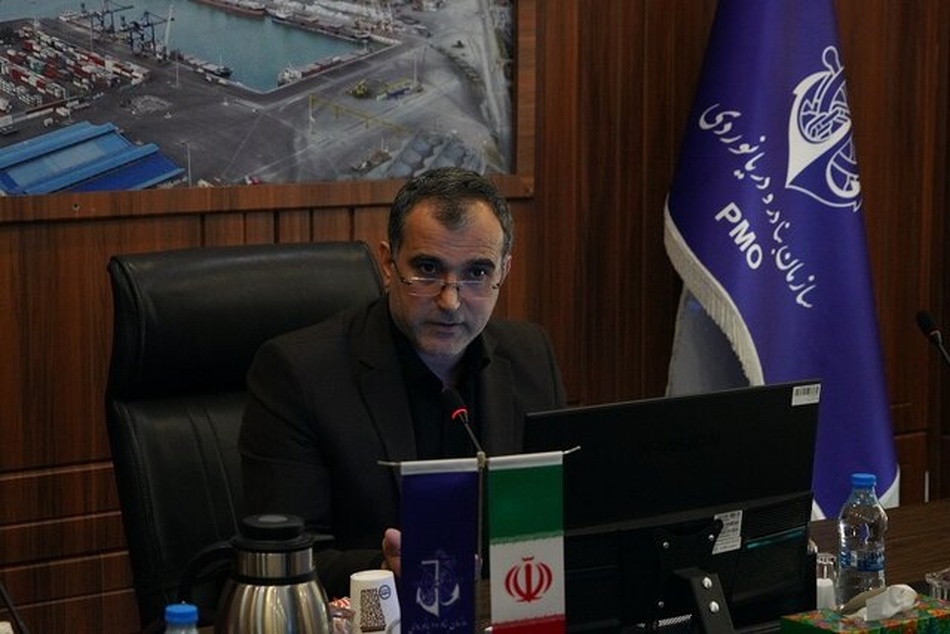
In an interview, Mohammad Ali Mousapoor Gorgi, Director General of Amirabad Ports and Maritime, outlined the port’s current capacities and future development plans. He highlighted the port’s growing role in the International North-South Transport Corridor, the expansion of multimodal transport, and the push toward modernizing cargo clearance processes—moves that he believes could reshape the time, cost, and competitive dynamics of trade in northern Iran.
When asked about Amirabad’s operational readiness to serve as the "main transit hub" for the north, given the President’s emphasis on alternative trade routes, Mousapoor Gorgi explained that the port’s geostrategic location on the Caspian Sea has transformed it from a simple operational facility into a key node in the region’s new transit architecture.
"Amirabad is connected simultaneously to rail, road, and sea networks and lies directly on the International North-South Corridor," he stated. "This connectivity facilitates the smooth flow of goods between Iran, Russia, Central Asia, and even the Indian subcontinent. By reducing transport time and costs, it offers a significant competitive advantage for economic actors, which is decisive in the current regional landscape."
He added that the integration of direct rail links with road and sea capacities positions Amirabad to play a central role in the government’s new policies, increasing cargo speed while alleviating pressure on the national road network.
Addressing the President’s call for expanded cooperation with neighboring countries, including Russia, Azerbaijan, and other Caspian states, Mousapoor Gorgi noted a shift in interaction models among Caspian ports. The focus has moved from traditional methods to integrated, data-driven models aimed at reducing cargo dwell time and administrative friction.
"The gradual elimination of paper processes has led to electronic document exchange between Iranian and Caspian ports, significantly reducing physical visits and speeding up clearance," he said. Furthermore, sending cargo information prior to vessel arrival allows for pre-clearance preparations, minimizing cargo idle time.
Modernizing efforts, including integrated systems for cargo tracking, warehouse management, berth reservation, and electronic payments, are cited as fundamental pillars for enhancing operational efficiency and reducing clearance times.
Emphasizing the government’s focus on synergy between public and private sectors in managing alternative supply routes, Mousapoor Gorgi outlined the primary expectations from traders and cargo owners. He stressed that realizing new trade policies requires active private sector participation, specifically through precise planning, information transparency, and timely notification of cargo details.
"Targeted use of multimodal transport, leveraging rail capacity, and participating in the development of logistical infrastructure are essential for increasing speed and reducing costs in maritime and land trade," he explained.
He noted that private investment in specialized warehouses, silos, and packaging centers is a prerequisite for the port’s sustainable development. Such investments not only enhance operational capacity but also create shared, long-term benefits for both the government and the private sector.
"Greater coordination among the port, customs, transport companies, and cargo owners will not only accelerate trade but also firmly establish Amirabad’s position in regional transit equations," Mousapoor Gorgi concluded.