Iran Condemns US Military Attacks on Ports and Maritime Infrastructure at IMO Council Session
The Islamic Republic of Iran, during a session of the International Maritime Organization (IMO) Council, condemned US military attacks on the country's ports, coastal areas, and maritime infrastructure, describing these actions as a clear violation of international law and a direct threat to the lives of civilians, seafarers, commercial shipping, and the marine environment.
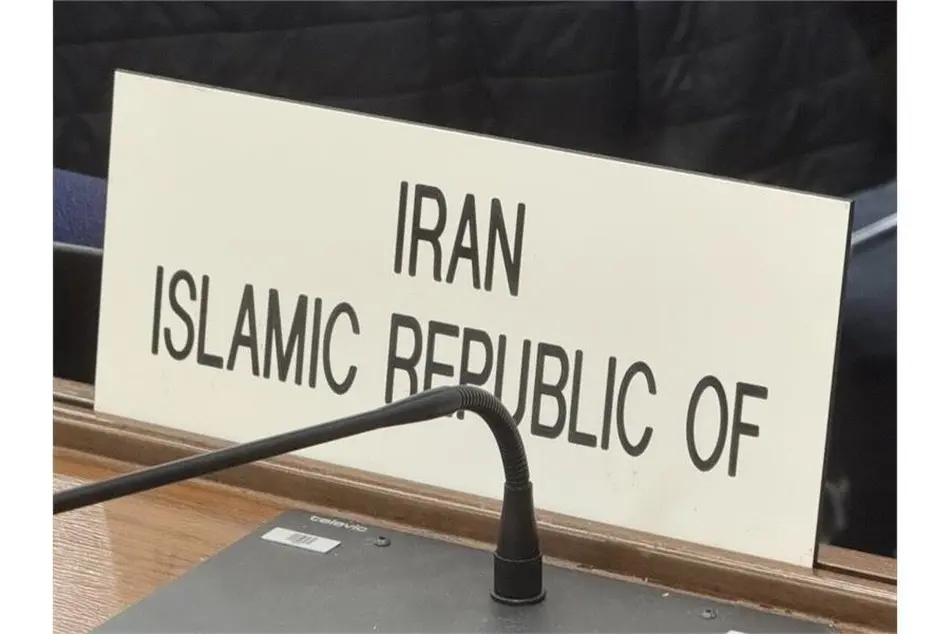
The Islamic Republic of Iran, during a session of the International Maritime Organization (IMO) Council, condemned US military attacks on the country's ports, coastal areas, and maritime infrastructure, describing these actions as a clear violation of international law and a direct threat to the lives of civilians, seafarers, commercial shipping, and the marine environment.
PMO News Portal - Iran's delegation read a formal statement at the 137th session of the IMO Council, strongly condemning US military attacks against the country's ports, coastal areas, and maritime infrastructure, including the maritime traffic control tower in Chabahar, civilian fishing vessels, and equipment dedicated to navigation safety and security.
Unlawful Use of Force
The statement emphasized that the US attacks constitute a clearly unlawful use of force against the sovereignty and territorial integrity of the Islamic Republic of Iran, directly endangering civilians, seafarers, commercial shipping, and the marine environment.
Referring to Washington's claims about defending "freedom of navigation," Iran's delegation stated that the United States cannot on one hand claim to support maritime security while on the other hand targeting maritime traffic control facilities and safety equipment established to protect ships and seafarers.
"No country can appoint itself as complainant, judge, and enforcer, and then use its unilateral claims about incidents involving commercial vessels as a pretext for further military aggression," the statement read.
Root Cause of the Crisis
Iran's delegation emphasized that the deterioration of maritime safety and security is not the cause of the current crisis but rather one of the direct consequences of the aggressive war launched by the United States and the Israeli regime against the Islamic Republic of Iran.
Response to UAE Proposal
Referring to a proposed anti-Iranian document submitted by the UAE regarding the Strait of Hormuz, Iran's delegation stated that this document attempts to portray the UAE as a defender of freedom of navigation, maritime safety, and international law, while deliberately concealing that country's role in creating the current insecurity in the Strait of Hormuz and the region.
Iran's statement said that the United Arab Emirates has placed its territory, airspace, military bases, facilities, and logistics infrastructure at the disposal of hostile military operations against the Iranian people, Iran's sovereignty and territorial integrity, and navigation security in the Strait of Hormuz.
Citing UN General Assembly Resolution 3314, Iran's delegation declared that allowing a country to use its territory to commit an act of aggression against a third state itself constitutes an act of aggression, and the UAE cannot evade responsibility for its participation in this aggression.
Iran's delegation also stated that the Israeli regime lacks the legal and moral standing to raise claims about maritime safety, freedom of navigation, or respect for international law, pointing to the regime's record of maritime blockade of Gaza, interception and diversion of ships carrying humanitarian aid in international waters, and detention of civilians.
Post-War MOU and Navigation Arrangements
In another part of its statement, Iran emphasized that the aggression against the Islamic Republic of Iran has fundamentally changed the security and operational conditions of navigation in the Persian Gulf, the Strait of Hormuz, and the Sea of Oman. As a coastal state, Iran has adopted necessary regulatory, supervisory, and precautionary measures to protect maritime safety, its essential security interests, and the lives of seafarers.
Referring to the end-of-war memorandum of understanding between Iran and the United States, Iran's delegation stated that according to Paragraph 5 of this MOU, the Islamic Republic of Iran has specific responsibilities regarding facilitating commercial navigation through the Strait of Hormuz, including making arrangements for the safe passage of commercial vessels and removing technical and military obstacles.
Iran's delegation warned against efforts by some third parties to pressure ship owners and operators to ignore established coordination arrangements and use parallel, unauthorized, and potentially unsafe routes, emphasizing that such interference neither strengthens freedom of navigation nor enhances safety.
Iran also reiterated its long-standing legal position, declaring that the Islamic Republic of Iran is not a party to the United Nations Convention on the Law of the Sea and is not bound by the treaty-based regime of transit passage cited by some delegations.
In conclusion, Iran's delegation emphasized that the IMO is a specialized technical organization and should not become a political platform for collective condemnation of some member states. Iran called for all reporting, monitoring, and follow-ups in this organization to be factual, balanced, comprehensive, non-discriminatory, and without prejudice to the legal positions of member states.
The Islamic Republic of Iran declared its continued commitment to safe and orderly maritime navigation but stated that it will firmly safeguard its sovereignty, security, sovereign rights, and legitimate interests against any attempt to distort the legal and factual realities of the region.