Are Electric Air Taxis In Florida Airports’ Future?
Orlando International (MCO) and Tampa International (TPA) airports sit 90 miles apart in central Florida, connected by the often congested I-4 interstate highway. Journeys between MCO, Florida’s busiest airport, and TPA, the state’s fourth busiest airport, can crawl through snarling traffic.
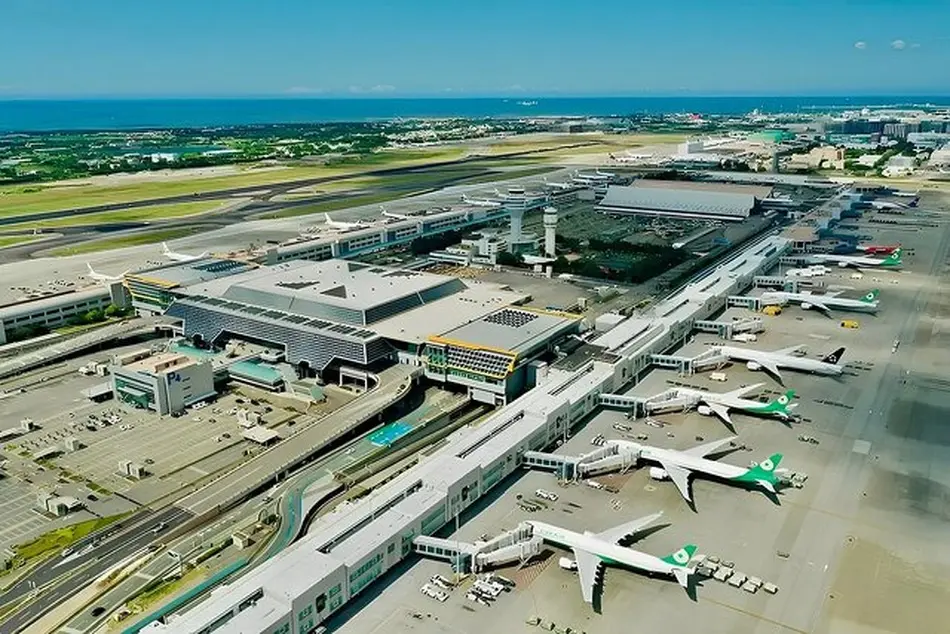
Orlando International (MCO) and Tampa International (TPA) airports sit 90 miles apart in central Florida, connected by the often congested I-4 interstate highway. Journeys between MCO, Florida’s busiest airport, and TPA, the state’s fourth busiest airport, can crawl through snarling traffic.
But what if passengers and cargo could move between MCO and TPA via electric-powered air taxis? What if passengers could deplane and connect from either airport to Disney World in Orlando by hopping over road traffic in four-seat, electric-battery vertical takeoff and landing vehicles (eVTOLs) operated from on-airport vertiports?
This may seem far-fetched, but the fledgling advanced air mobility (AAM) sector is inching closer to FAA certification of air taxis, and both airports are at the forefront in preparations for their use.
“I think it makes perfect sense, when you look at the I-4, to really put a focus on an aerial highway network and what that would look like between our two airports,” TPA VP general aviation Brett Fay told ATW. “We’re in regular contact with Orlando Airport about what that could potentially look like in the future.”
MCO CEO Lance Lyttle told ATW, “Our goal would be to improve regional connectivity and to provide alternatives to traditional transportation methods.”
Electric air taxi OEMs like Joby Aviaton—a Santa Cruz, California-based eVTOL developer generally viewed as closest to FAA certification—see Florida’s warm weather and geography as ideal for potential services.
Fay noted that “we have a lot of bridges in the Tampa area, a lot of bodies of water to get people across, and that is something I think is going to lend itself to a new technology like advanced air mobility.”
MCO, which handles around 4.7 million passengers per month, and TPA, which processes around 2 million passengers monthly, have spent considerable time over the last several years exploring the possibilities of AAM, including carefully studying viable on-airport eVTOL vertiport locations.
TESTING GROUND
TPA hosted a demonstration flight in 2023 by German startup Volocopter’s air taxi prototype, with the aircraft lifting up from the airfield and flying for 8 minutes, a first of its kind trial at a major US airport. Volocopter has since been acquired by China’s Wanfeng Auto Holding Group and continues to develop its eVTOL under the new ownership.
“Seeing is believing, and that really is the truth. People think of this as some distant technology that’s way in the future, but it is right around the corner. To be able to see it here at our airport added a sense of reality,” Fay said.
MCO earlier this year participated in a three-day simulation in concert with FAA to help understand how air taxi flights would affect airline operations in and around the airport.
MCO wants “to ensure that future eVTOL operations can be safely integrated into a large-hub airport environment with standardized procedures to minimize air traffic controller workload and capacity impacts to legacy operations,” Lyttle explained. “Given FAA’s role in managing the National Airspace System, it is critical to understand airspace impacts of eVTOLs along with legacy air traffic at MCO.”
FAA plans to issue a report in December detailing the findings of the simulation.
While passengers jetting from the airports to Disney World may be a seductive selling point for air taxis, Fay envisions operations that could provide valuable public services. TPA is located around 20 miles from the Moffitt Cancer Center, and the airport’s vertiport could possibly be used by eVTOL air ambulances.
PASSENGER ADVANTAGES
Airlines, for their part, view air taxis as a way to connect premium passengers to airports. Joby has reached an agreement with Delta Air Lines to launch such services in New York and Los Angeles.
Both MCO and TPA have been studying potential on-airport vertiport sites, with TPA initially considering eight locations. Each airport is down to two possible sites they believe could enable high volume air taxi operations without interfering with existing air traffic.
“The two sites identified at MCO are in the process of FAA review and analysis for airspace integration,” Lyttle said. “We are fortunate to have over 11,000 acres of land, offering some flexibility for a vertiport location and other [supporting] facilities.”
TPA settled on two sites near FBOs that are used mostly for business aviation. But that means finding a way to connect passengers from the vertiport to the terminal. “That’s a big component,” Fay said. “If you’re not going to be directly landing on top of the terminal, how do you get passengers to and from either mass transit or the terminal? We’re working through that right now and evaluating the most efficient ways to do that.”
He explained that a vertiport would be relatively straightforward to develop. It would feature a small terminal, likely with some form of security screening, and electric charging equipment for the air taxis. The surface would have markings and lights similar to a heliport.
Initially, the vertiport “will start off at a reasonably low operational tempo” of flights with piloted air taxis, Fay said. “But when you look at the overall vertiport capacity in the future, as we move towards autonomy and taking the pilot out of the aircraft, you would expect hundreds of these operations to be happening hourly.”
There remain many obstacles to overcome before reaching that future. For starters, the FAA certification process for eVTOLs has stretched on for years. Joby earlier this decade forecast a 2024 certification with limited commercial flights in the US starting that year. Fay and other AAM observers now foresee FAA certification coming in 2027.
To truly create a “highway in the sky,” vertiports and supporting infrastructure would have to be developed not just at the airports but throughout the central Florida region and gain public acceptance. The Florida Department of Transportation, with which both airports are working closely, is studying how to make that happen.
Also, with air taxis initially to be certified with onboard pilots and manufacturers having to build up production capacity, large-scale operations will likely take years to develop—and for some time may be financially out of reach for most people.
“I think the scaling of this only really happens with autonomy, which brings pricing structure into something that’s approachable and affordable for the everyday person,” Fay said. “That is when you will see the scaling of operations at an operational tempo that is very high. FAA is very focused on the safety of integration and the safety of certifying these aircraft. So I have no doubt that when these aircraft are certified, when we get to a point where we receive the blessing from FAA, they’ll be integrated into our airspace in a way that is safe.”