Airbus Says Most A320s Have Received Urgent Software Updates
Airbus says most of the 6,000 A320-family aircraft requiring an immediate software update to their flight control systems have received the necessary modifications, after a weekend in which airlines scrambled to address the issue and minimize flight disruption.
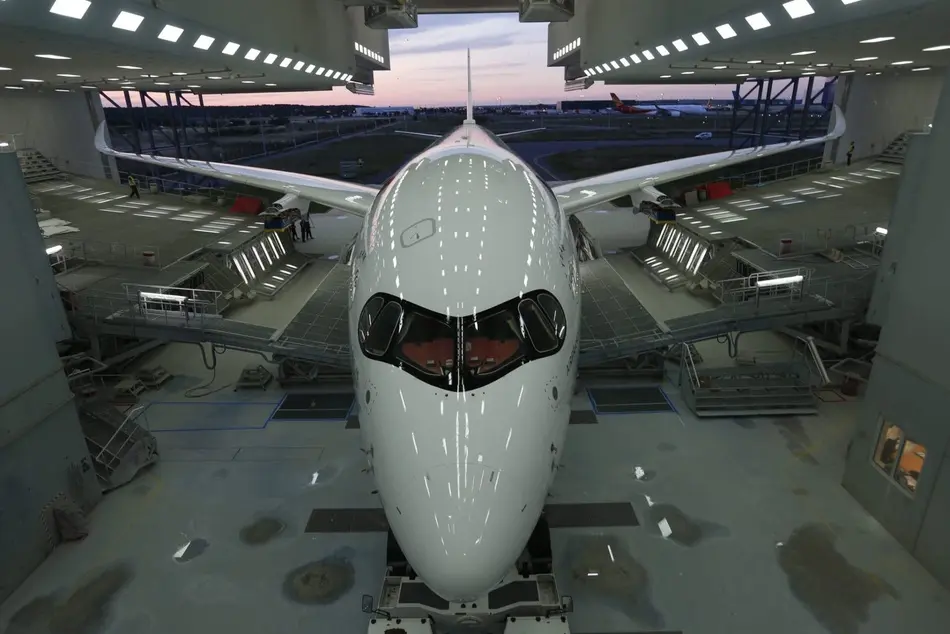
Airbus says most of the 6,000 A320-family aircraft requiring an immediate software update to their flight control systems have received the necessary modifications, after a weekend in which airlines scrambled to address the issue and minimize flight disruption.
Airbus gave the update on airlines’ progress in tackling the issue, which involved about a third of the in-service A320-family fleet worldwide, on Dec. 1.
The European Union Aviation Safety Agency (EASA) had issued its Emergency Airworthiness Directive (EAD) Nov. 28, following Airbus’ own issue of an Alert Operators Transmission (AOT) on the same date, calling for an immediate precautionary software update on A320-family aircraft.
“Out of a total number of around 6,000 aircraft potentially impacted, the vast majority have now received the necessary modifications,” Airbus said in a Dec. 1 statement. “We are working with our airline customers to support the modification of less than 100 remaining aircraft to ensure they can be returned to service.”
The manufacturer added: “Airbus apologizes for any challenges and delays caused to passengers and airlines by this event. The company thanks its customers, the authorities, its employees and all relevant stakeholders involved for their support in implementing these measures, and for their understanding of Airbus’ decision to put safety above all other considerations.”
EASA’s EAD issued Nov. 28 ordered operators to ensure their aircraft have “serviceable” elevator aileron computers (ELAC) before further flight.
Following the EAD, operators of some 6,000 A320-family aircraft had to make immediate software modifications, both A320ceo and A320neo variants, including A319s and A321s.
Airbus had identified the issue during its probe into an Oct. 30 incident involving a JetBlue A320ceo, which suddenly lost altitude while in cruise, en route to Newark from Cancun.
“Preliminary technical assessment done by Airbus identified a malfunction of the affected ELAC as a possible contributing factor,” the EAD said.
The aircraft had the newest ELAC software installed. Airbus determined reverting back to the previous version eliminated the risk.
The global in-service A320 fleet totals about 9,900, excluding nearly 900 in storage, Aviation Week’s Fleet Discovery database shows. The directive covers about 60% of the in-service fleet.
Several airlines also gave updates on their actions following the AOT.
In the U.S., airlines worked to address the software issue through the busy Thanksgiving travel weekend. Mainline carriers American Airlines, Delta Air Lines, and United Airlines have each completed required work on affected aircraft in their fleets, and ULCC Spirit Airlines confirmed it has completed the Airbus software update for “all affected operational aircraft.” JetBlue “resumed regular operations after working through the requirements of the FAA airworthiness directive,” it confirmed on Dec. 1, stating that it does not anticipate any additional cancellations related to the issue.
On Nov. 29, IndiGo said a total of 200 of its aircraft had been identified for the checks. “We are pleased to confirm that the required actions have already been completed on 160 aircraft ... and inspections on the remaining aircraft are progressing well and will be completed within the timeline.”
No flights had been canceled as a result of the checks, but a few might experience minimal delays, IndiGo added.
Wizz Air said in a Nov. 29 update that it had identified 83 operational aircraft within its fleet requiring immediate amendment to the software. The software update and subsequent testing had been successfully completed on all affected operational aircraft, the ULCC said. The maintenance had been managed with zero flight cancellations, it added.
Vietjet said that as of 3:00 a.m. local time on Nov. 30, it had completed required updates on all 69 of its A320-family aircraft, nearly 4 hr. ahead of the deadline set by aviation authorities and Airbus.
An Air France spokesperson said operations had returned to normal as of Nov. 29, noting that all six aircraft involved received the software update over the course of Friday night (Nov. 28).
ITA Airways also said the modifications needed to its fleet would be completed within the timeline set out by authorities. ITA added that the A320neo carrying Pope Leo XIV to Turkey and Lebanon was among those involved. “The company sent the necessary components and an additional technician to Istanbul to carry out the software update, thus ensuring the safe continuation of the Apostolic Journey."