Wizz Air Needs Fleet Of 500 Aircraft To Stay ‘Relevant,’ CEO Says
BUDAPEST, Hungary—European ULCC Wizz Air says that a fleet of 500 aircraft is necessary to be relevant in the aviation business.
BUDAPEST, Hungary—European ULCC Wizz Air says that a fleet of 500 aircraft is necessary to be relevant in the aviation business.
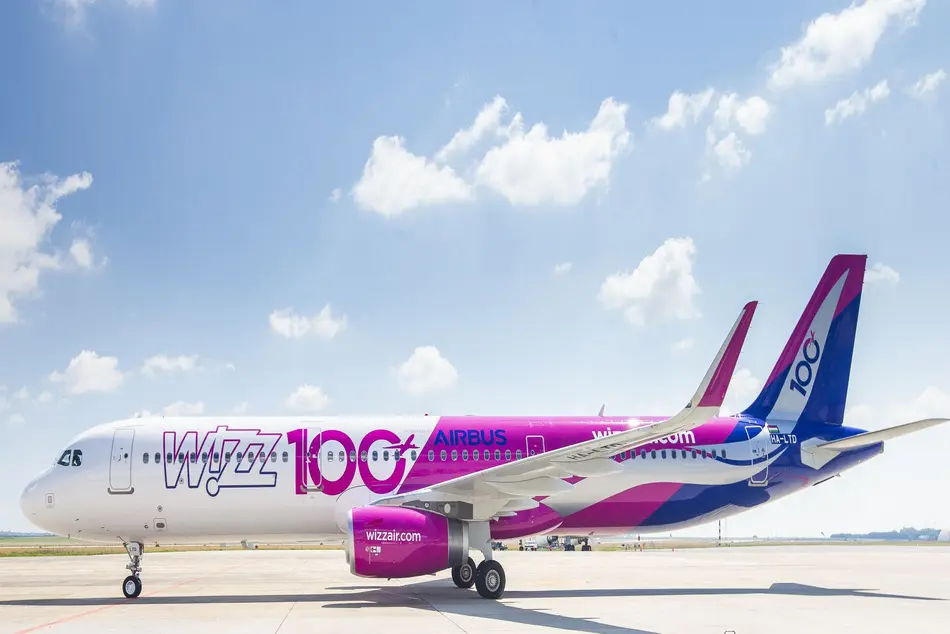
Wizz Air took delivery of its 250th aircraft, an Airbus A321neo, on Nov. 28. “This aircraft is very important. It is a strategic anchor to the business model what we are implementing,” Wizz Air CEO József Váradi told Aviation Week on the sidelines of the delivery event in Budapest, Nov. 28. “The A321neo delivers the lowest economics as well as the most enhanced environment. We see that being low-cost and environmentally responsible are a strategic matter for the future.”
“We have another 300 aircraft to be taken delivery ... looking ahead for the next 10 years or so, we need to be a 500-aircraft airline to stay relevant to the market, to stay relevant to the business,” Váradi said, adding that the airline business is becoming a business of scale.
Wizz Air is the largest A321neo operator worldwide.
Twenty percent of the Wizz Air fleet is owned; 80% is on operating lease. “I think we are going be moving it toward more owned aircraft. When you own an aircraft, you can get better economics in terms of profit. But the leasing is also very good, it is very efficient,” he said. Váradi said that Wizz Air is also doing sale-and-leasebacks. “That’s why we do aircraft on operational leases. We have a combination of ownership and sale and leaseback,” he said.
In November, Wizz Air outlined aircraft delivery changes that involved deferring 88 A321neos into the early 2030s and converting 36 A321XLRs to A321neos. That leaves the carrier with a total of only 11 A321XLRs, of which five have been delivered.
Asked if Wizz Air will keep the A321XLRs, Váradi said that the ULCC has a number of routes where it sees significant commercial and financial opportunities. “[That] priority is not as big of an opportunity as we saw it before,” he said.
The GTF Challenge
Speaking about the Pratt & Whitney GTF PW1100G engine challenges and how long this issue will remain, Váradi said he doesn’t know how long it will continue. “There is a new technology is coming over [GTF Advantage engine],” he said.
“I think this is trying to fix all the childhood diseases, and we are very hopeful. The early indications we are getting is it [the GTF Advantage engine] is going to do the job,” he said. However, engine challenges are widespread, not only from Pratt, Váradi added. “I know CFM operators grounding aircraft to due unintended engine removals. I don’t think it is down to one player. It is the whole industry; it is the whole supply chain.”
“Wizz Air is the largest neo operator in Europe and is exclusively powered by Pratt & Whitney,” a Pratt spokesperson told Aviation Week. “We continue to work closely with our customers to support their fleets. We are already implementing durability upgrades to the PW1100G-JM engine, and next year the GTF Advantage engine will enter service and offer up to two times longer time on wing,” the spokesperson said. At the same time, Pratt expects to deliver about 30% higher MRO output this year, which is key to continuing to improve AOG (aircraft on ground) levels.
“Now we are starting to see the light at the end of the tunnel, and I believe in the next two years it can be fully lifted, fully recovered,” Váradi said. “I think at that time, when all of our aircraft are flying, that is when you’ll see the full potential of Wizz Air.”