RSSB Sets Standards Framework for UK Battery Train Rollout
The Rail Safety and Standards Board (RSSB) has published new standards covering the design, charging and operation of battery-powered trains.
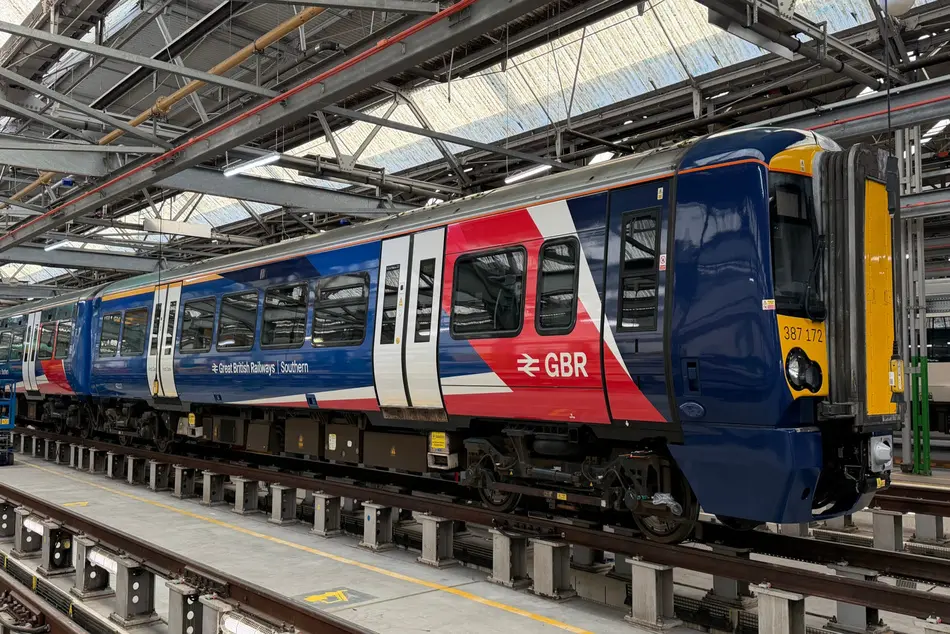
The Rail Safety and Standards Board (RSSB) has published new standards covering the design, charging and operation of battery-powered trains. This move provides manufacturers and operators with a common set of requirements as the technology moves towards wider deployment across Britain.
Battery trains offer an alternative to diesel on routes where continuous electrification may not be practical or cost-effective. However, introducing the technology across different fleets has required manufacturers and operators to develop their own approaches.
The new standards aim to establish a consistent framework, reducing the need for bespoke requirements for individual fleets and helping to limit the cost and complexity of introducing battery trains.
The Railway Industry Standard, Design of Traction-Battery Systems for Rail Vehicles and their Charging Systems, sets out requirements for battery design, charging, storage and maintenance.
RSSB has also published accompanying guidance for operators running battery trains in passenger service. This includes advice on managing transitions between electrified and non-electrified sections of track, helping to reduce the risk of trains becoming stranded and causing passenger disruption.
The standards come as the industry moves beyond initial trials towards larger fleet deployments. TransPennine Express recently announced plans to introduce 29 battery-electric trains on routes across northern England.
RSSB Chief Executive Mark Phillips said:
Battery trains are going to have a key role to play as the railway modernises and moves away from diesel, particularly on routes where full electrification may not be the best solution.
These new standards give the railway a common framework for introducing them safely and reliably, while avoiding unnecessary cost and duplication.
They will allow the industry to build on the experience gained from the first battery trains rather than starting again as each new fleet is introduced.
Further research is also underway to examine safety risks associated with battery traction and how trains can interact more efficiently with the electricity network.
This includes investigating whether changes to train design and software could improve the use of available power. The work will also explore ways to address electricity network constraints without requiring major infrastructure upgrades.