International Press Circle Opens InnoTrans 2026
The International Press Circle at InnoTrans 2026 brought together representatives from rail industry associations ahead of the 15th edition of the Berlin trade fair.
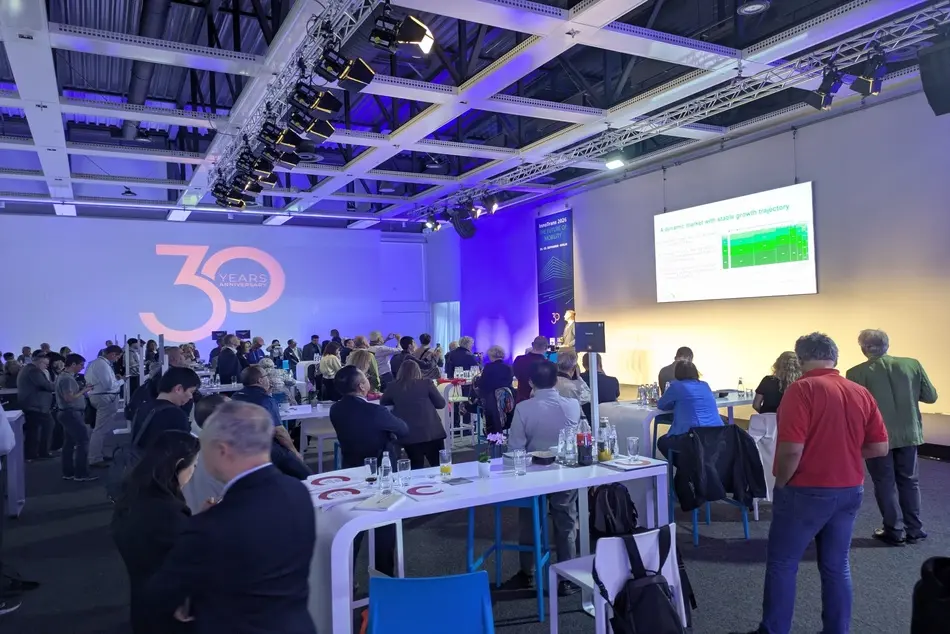
The International Press Circle at InnoTrans 2026 brought together representatives from rail industry associations ahead of the 15th edition of the Berlin trade fair.
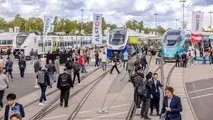
Opening the event, Messe Berlin CEO Dick Hoffmann highlighted InnoTrans’ growth since its first edition in 1996, when 172 exhibitors took part. For 2026, the organisers expect around 3,170 companies from 59 countries, with 181 world premieres and 113 rail vehicles on display across the outdoor track and exhibition areas.
Hoffmann said the event’s international character reflects the increasing globalisation of the rail industry, with projects, technologies and supply chains increasingly extending beyond national markets.
European Rail Industry Faces Changing Global Market
A key theme of the press circle was the changing competitive environment for European rail suppliers.
Enno Wiebe, Director General of UNIFE in Brussels, presented findings from the organisation’s 2026 World Rail Market Study. He said the global rail market had grown by approximately 4.6% annually between the 2021–2023 and 2023–2025 periods, reaching almost 221 billion EUR in annual value.
The outlook also remains positive, with the global market expected to grow at an average annual rate of 3.2% between 2029 and 2031, reaching an estimated 267 billion EUR.
However, Wiebe warned that European suppliers are facing declining access to parts of the global market. According to the study, the accessibility rate for European rail suppliers has fallen from 59% in 2024 to 56% in 2026, representing an estimated €6.8 billion in lost market opportunities.
He pointed to increasing manufacturing localisation in markets such as Russia, China and India behind the decline. Faster growth in these markets with lower accessibility for European suppliers is also contributing to the trend.
The figures underline a growing tension between the international nature of the rail market and efforts by major economies to develop domestic manufacturing and supply chains.
As such, Wiebe also stressed that UNIFE remains committed to InnoTrans Europe as the industry’s sole primary meeting place, despite the upcoming launch of InnoTr
Wiebe nevertheless described the overall market outlook as positive, arguing that Europe needs continued investment in research and innovation to maintain the competitiveness of its rail supply industry.
Calls for Stronger European Competitiveness
Sarah Stark, Managing Director of VDB, also highlighted the economic importance of the sector. She said the German railway industry recorded 15.6 billion EUR in turnover in 2025, while incoming orders reached 21.8 billion EUR.
Stark said German rail technology is already used internationally, while digitalisation, automation, artificial intelligence, alternative propulsion and intelligent infrastructure are creating further opportunities for innovation.
She argued that Europe needs strong domestic reference markets in which new railway technologies can move from development into operational use.
Azar Mottale from ZVEI placed the issue in a broader geopolitical context. She said the rail sector is facing both increased global competition and geopolitical uncertainty, raising questions about the resilience of supply and value chains.
Motale also highlighted the need for European infrastructure to make greater use of digital technologies and AI, while describing ETCS as an important foundation for a more integrated European railway system.
Global Development
The speakers also focused on the continuing transformation of public transport and rail on a global scale.
Martin Schmitz at VDV highlighted electrification, digitalisation and automation, including the deployment of battery-electric vehicles, ETCS and FRMCS. He also pointed to the development of operational frameworks for autonomous vehicles in public transport.
Dr Heike van Hoorn of the German Transport Forum (DVF) placed the current development of rail in a global context. She noted that while rail originated in Europe, innovation in the sector is now taking place around the world.
van Hoorn argued that Germany and Europe should remain part of this development by creating conditions that support innovation, including effective infrastructure, procurement practices, a stable regulatory framework and progress towards a single European railway area.
The International Press Circle therefore set the tone for InnoTrans 2026 around two parallel themes: a rail market that continues to expand globally, and a European industry facing a more competitive and increasingly localised international marketplace.
With more than 3,000 exhibitors, hundreds of innovations and participants from across the global rail sector, InnoTrans will provide an opportunity for those competing in this market to showcase technologies while also addressing the industrial and geopolitical issues shaping their future.