IMO Secretary-General: Only Coastal States Have the Right to Propose Shipping Routes in the Strait of Hormuz
The Secretary-General of the International Maritime Organization (IMO), described the mechanism for financing maritime safety services in this waterway as a viable and examinable solution.
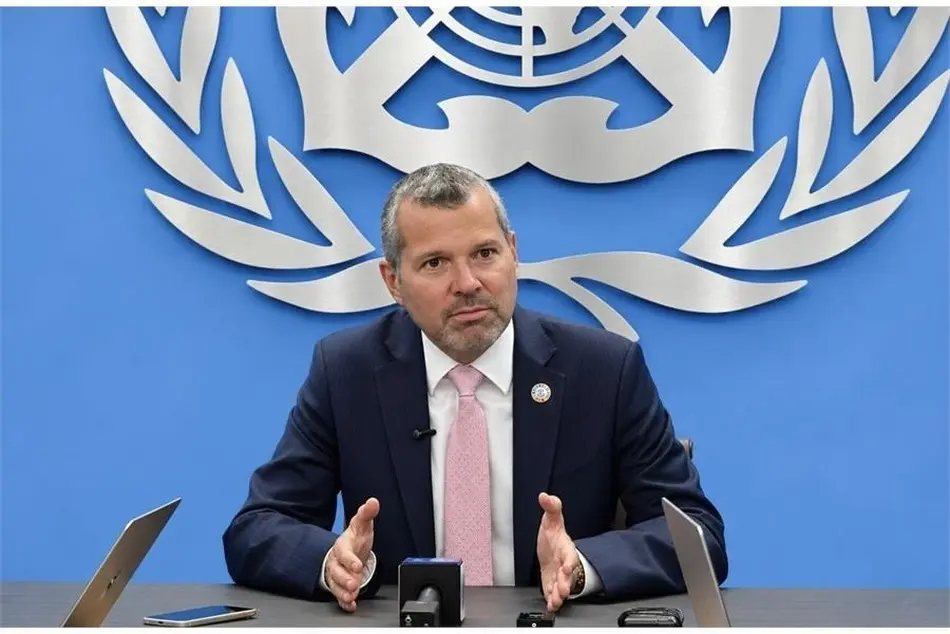
The Secretary-General of the International Maritime Organization (IMO), emphasizing that only coastal states have the authority to propose shipping routes in the Strait of Hormuz, also described the mechanism for financing maritime safety services in this waterway as a viable and examinable solution.
Arsenio Dominguez, at a press conference at the IMO headquarters in London, in response to a question about the proposed routes for the passage of ships through the Strait of Hormuz, clarified that under international regulations, only countries bordering an international strait have the authority to propose the creation of shipping routes.
He added: "This matter is completely clear to us and I have no doubt about it. Only countries bordering an international strait can propose the creation of traffic separation schemes. This is a rule, and we implement it in the same way."
These remarks were made in response to a question that referred to Iran's proposed route and the route imposed by the United States near the Omani coast. Without directly naming the United States in stating the legal rule, Dominguez emphasized that the right to propose the designation of shipping routes belongs to the coastal states.
He recalled that the official shipping route in the Strait of Hormuz was designated decades ago within the framework of the International Maritime Organization, and that the conditions arising from military conflicts have made the implementation of existing mechanisms difficult.
In another part of this session, in response to questions about the proposal to collect fees for maritime services in the Strait of Hormuz, Dominguez referred to the experience of the Malacca and Singapore straits and said that existing mechanisms in international law could be used to strengthen trust and confidence in shipping activities and to provide the services needed in the Strait of Hormuz.
The IMO Secretary-General explained that these mechanisms could address countries' concerns about ensuring the safety and security of shipping, the protection of the marine environment, and the services provided to commercial vessels.
Elaborating on this matter, he added: "I see this issue from another angle. The question is how to respond to countries' concerns about the necessity of supporting the safety, security, and environmental protection of the region, as well as the services provided to international shipping."
Referring to the experience of Malaysia, Indonesia, and Singapore in the joint management of maritime traffic, Dominguez clarified that such mechanisms have been used in the past to combat piracy, armed robbery, and to strengthen navigational aid equipment.
He added that the purpose of proposing such ideas is to find solutions that can provide the grounds for dialogue and cooperation among the relevant parties.
The IMO Secretary-General further clarified: "If this is one of those mechanisms, it could be a viable solution."
He said that consultations between Iran and Oman on the details of this mechanism are ongoing, and their results could be examined within the framework of the International Maritime Organization if an official proposal is submitted.
These remarks come at a time when the Islamic Republic of Iran has repeatedly emphasized over the past months the difference between collecting mere transit tolls for passage through the Strait of Hormuz and financing the services that coastal states provide to ensure the safety of shipping.
In this connection, Iran and Oman, as the two coastal states of the Strait of Hormuz, have begun consultations to formulate new shipping arrangements and the provision of maritime services.
Also, the National Security and Foreign Policy Commission of the Islamic Consultative Assembly, in reviewing the strategic action plan for ensuring the security and development of the Strait of Hormuz, has considered the issue of collecting fees in exchange for maritime, environmental, insurance, safety, and fuel supply services under special conditions.
In another part of his press conference, referring to the continuing security risks in the Strait of Hormuz, Dominguez announced that about 6,000 seafarers are present in the region and estimated the number of vessels trapped in the conditions arising from the conflicts at between 350 and 400.
He also said that the IMO recorded about 30 attacks on ships in October, and some of these incidents have led to marine pollution and oil leakage.
Referring to the Organization's efforts to support seafarers, the IMO Secretary-General emphasized that without addressing the roots of the conflict, achieving a sustainable solution to the shipping problems in the region will be difficult.