National Conference on Communications, Transport, and Logistics Held in Bandar Anzali with Focus on Sustainable Development and Maritime Economy
The National Conference on Communications, Transport, and Logistics with a focus on sustainable development and the maritime economy was held in Bandar Anzali.
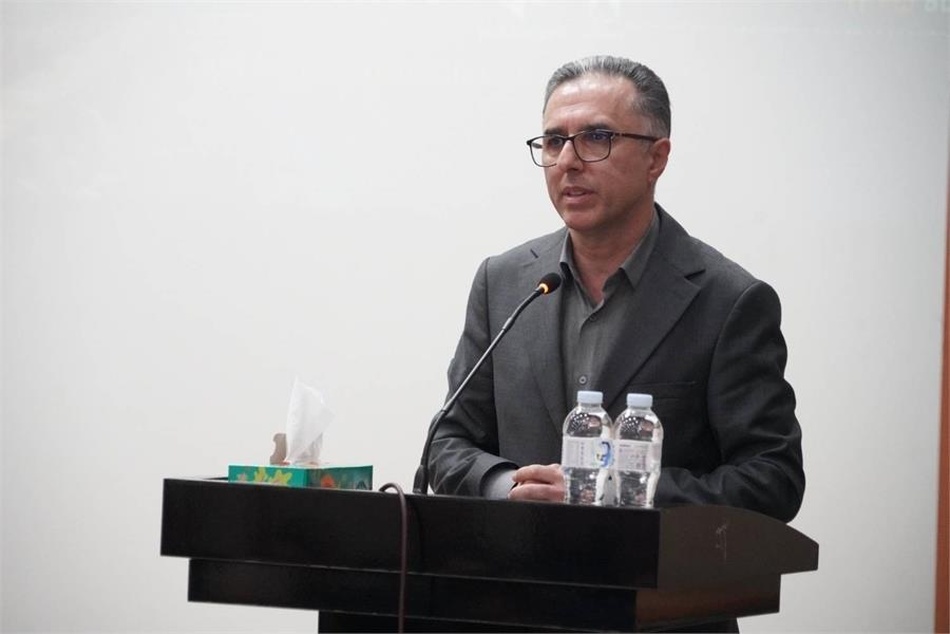
The National Conference on Communications, Transport, and Logistics with a focus on sustainable development and the maritime economy was held in Bandar Anzali, with the participation of the Director General of Gilan Ports and Maritime Directorate, the Head of the General Inspection Organization of Gilan Province, the Managing Director of Khazar Shipping Company, and the Acting President of the Islamic Azad University's International Branch of Bandar Anzali.
Hossein Younesi stated at the conference that developed countries have been able to resolve challenges in various economic and infrastructure sectors in a specialized and scientific manner by leveraging scientific capacities and creating effective links between academia and industry.
Maritime Economy Beyond Port Activities
Stating that the maritime economy is not limited solely to port activities, he added that the development of this sector is defined across three areas — coasts, ports, and the sea — and that to achieve the goals set in upstream documents, all executive bodies, universities, and the private sector must play their part.
The Director General of Gilan Ports and Maritime Directorate highlighted the importance of training specialized human resources in the maritime sector, noting that the training of seafarers and the development of disciplines related to marine sciences and technologies are among the most important requirements for realizing the maritime economy.
Younesi continued, for the first time, a bachelor's degree program in nautical science with a specialization in marine mechanical engineering was launched at the University of Gilan, and students have been admitted to this program since 1402 (2023-2024).
Maritime Economy Development Must Lead to Employment and Economic Growth
Ahmad Aghaei, Head of the General Inspection Organization of Gilan Province, also emphasized the importance of holding specialized meetings with the presence of academics, managers, and experts, stating that combining experience, knowledge, and ideas can pave the way for providing scientific solutions to the country's economic issues and challenges.
Referring to the role of the economy in reducing social harms, he added that one of the most important challenges facing societies is poverty and unemployment, and economic development and the creation of job opportunities can play an effective role in reducing social harms and promoting public well-being and happiness. Therefore, the country's economic capacities, including maritime capacities, should be utilized in a targeted manner.
He identified attention to legal requirements as one of the important issues in developing the maritime economy, stating that according to Article 45 of the Constitution, the sea is among the public assets and wealth, and the management of these resources is the responsibility of the government. Therefore, marine resources belong to all generations, and in implementing plans and projects related to the maritime economy, public interests and the rights of society must be taken into account.
Shipping Industry as a Driver of Trade and Economic Development
Kambiz Jahanbani, Managing Director of Khazar Shipping Company, also referred to the role of the shipping industry in the global economy, stating that approximately 80% of global goods trade is conducted by sea, demonstrating that shipping is one of the main pillars of international trade and economic development of countries.
Stating that shipping creates connectivity between capital, human resources, trade, and various economic sectors, he added that the flow of goods and the formation of trade ultimately generate demand and prosperity for various industries, including agriculture and steel, and the shipping industry, by enabling the movement of goods, plays a driving role in this economic cycle.
Referring to the capacity of Iran's maritime fleet, the Managing Director of Khazar Shipping Company said that developing the fleet and strengthening maritime infrastructure can increase the country's share of regional and global maritime trade.
Iran's Caspian Fleet Exceeds 100 Vessels
Jahanbani, referring to the capacities of the Caspian Sea, stated that in recent years, we have witnessed significant growth in maritime activities in the Caspian, and simultaneously with the implementation of maritime economy development policies, investment by both public and private sectors in this water body has also increased.
He added that today, the fleet under the flag of the Islamic Republic of Iran in the Caspian Sea has exceeded 100 vessels, and Iran is now considered one of the important shipping players in this region.
He identified the development of international corridors and the creation of multimodal transport chains as important capacities of the Caspian Sea, stating that today it is possible to transport goods and containers from various locations to Iran's northern ports through a transport chain, and this route, combining maritime, rail, and road transport, can be used as part of the country's logistics chain.
The Managing Director of Khazar Shipping Company, emphasizing the need to utilize the capacities created in the north of the country, noted that the development of maritime communications and trade corridors in the Caspian Sea should be pursued with a long-term perspective, as strengthening these routes can diversify the country's transport network while enhancing the role of northern ports in the regional and international trade chain.
Smartization and Renewable Energy: The Future Path for Northern Ports
Hossein Safari, Acting President of the Islamic Azad University's International Branch of Bandar Anzali, stated at the conference that achieving sustainable development requires creating connections and synergy among the fields of engineering, management, economics, law, and commerce, and that various sectors related to the sea and ports cannot be managed in isolation.
Referring to the necessity of transformation in port processes, he emphasized that we must move from traditional models toward agile and smart models in port operations and management, so that while increasing productivity, the total cost of logistics services is also reduced.
Safari identified smartization and the use of renewable energy as important axes of future port development, stating that the country's northern ports must move toward the "green port" model — a model in which increased productivity and economic development are pursued alongside environmental protection and the sensitive ecosystem of the Caspian Sea.
He also emphasized the need to enhance the resilience of marine structures and optimize communication routes, adding that transport infrastructure and communication routes are the main arteries of the coastal logistics chain, and their development must be proportionate to the future needs of ports and the maritime economy.
Referring to the country's scientific capacities in the maritime domain, Safari stated that this conference is an opportunity for synergy among scientific, technical, legal, commercial, and financial sectors, so that by utilizing the capacity of universities and experts, practical solutions for developing the maritime economy can be presented.
The Acting President of the Islamic Azad University's International Branch of Bandar Anzali noted that the outcomes of the conference's scientific committees and specialized panels are expected not to be limited merely to the presentation of papers, but ultimately, strategic declarations and actionable proposal packages should be developed for use by policymakers and executive managers.
Emphasizing the role of the university in national development, he said that strengthening cooperation between academia and industry in the maritime domain can pave the way for better utilization of the Caspian Sea's capacities and movement toward sustainable development on the northern coasts of the country.
In conclusion, Safari expressed hope that the outcome of this conference would lead to the presentation of practical solutions for the balanced development of the country's northern coasts, increased port productivity, and the realization of maritime economy goals.