|
News Code
95741
Copied
Cargo claims under Chinese law
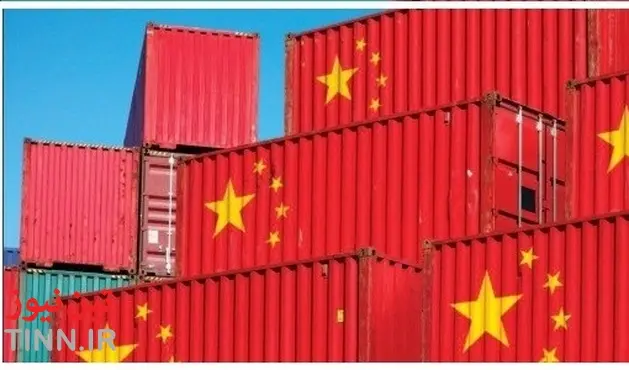
TIN news: The UK P&I Club has issued a Legal Briefing to provide guidance on the legal issues for the handling of cargo claims under Chinese law, as this country has become a significant importer of goods, and operations often face claims advanced by shippers or consignees in China.
Although China has not ratified the Hague/Hague-Visby Rules, the Hamburg Rules or the Rotterdam Rules, elements of these conventions have been incorporated into the Chinese Maritime Code 1992 (“CMC”).These include provisions regarding the responsibilities, exemptions and limitations available to a carrier, the obligations of a shipper and the regulation of transportation documents drawn from the HagueVisby and Hamburg Rules.
The Club identifies the following possible defences to a shortage claim :
shortage caused by reasons for which the owner/carrier is not responsible. For instance, the “shortage” may be the result of the inherent vice of the cargo (which entitles the carrier to be exempted from liability under the CMC);
a possible 5% trade allowance for bulk cargo, where such is acceptable to the Court or where the shortage can be attributed to different measurement methods;
an argument of short loading at the port of loading according to a draft survey conducted by the ship and/or independent surveyor
a possible 5% trade allowance for bulk cargo, where such is acceptable to the Court or where the shortage can be attributed to different measurement methods;
an argument of short loading at the port of loading according to a draft survey conducted by the ship and/or independent surveyor
However, the burden of proof for arguing such defences is quite heavy. The carrier may be asked to provide consecutive and detailed ship records.
Further details may be found by reading the Club’s Legal Briefing herebelow

Further details may be found by reading the Club’s Legal Briefing herebelow
