|
News Code
95380
Copied
Aviation specialists to develop new TRANSIT system to increase airport operations at low costs
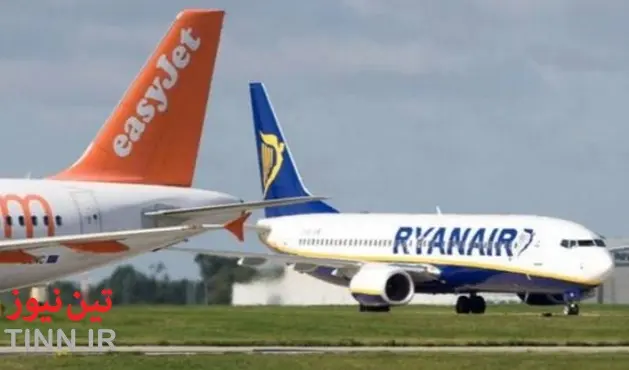
TIN news: Aviation engineering specialists led by researchers from the University of Lincoln, UK, have secured a £1m research grant to develop a new aircraft routing and scheduling system that would help save time and money, and reduce carbon emissions.
The new Towards a Robust Airport Decision Support System for Intelligent Taxiing (TRANSIT) system aims to increase operations by 50% at some of the busiest airports across the globe.
Funded by the UK Engineering and Physical Sciences Research Council (EPSRC), the new project will see researchers and industry experts collaborating for a period of three years.
The TRANSIT project will develop a new airport system that will reduce aeroplane taxi times and operating costs and control the environmental impact at airports worldwide.
University of Lincoln School of Engineering Artificial Intelligence and Control Systems expert and TRANSIT principal investigator Dr Jun Chen said: "Ensuring efficient movement of aircraft on the ground is a key way to save time, reduce costs and improve carbon emissions, so the critical problem we need to address is the balancing of these conflicting objectives.
"By modelling aircraft and their movements more accurately, we believe that highly efficient taxi routes can be generated while still maintaining safety standards.
"TRANSIT aims to develop realistic and cost-effective methodologies in order to build a system capable of making intelligent decisions to meet these multiple objectives."
"TRANSIT aims to develop realistic and cost-effective methodologies in order to build a system capable of making intelligent decisions to meet these multiple objectives."
The project is carried out in close collaboration with Cranfield University, the University of Sheffield and the University of Stirling.
It also includes major industry partners, such as Air France KLM, BAE Systems, Rolls Royce, Manchester Airport and Zurich Airport.
The TRANSIT project will create a new algorithm that will use data from airports across the world to quickly compute the most suitable route for guiding flights from one location to another.
Slated to commence this month, the TRANSIT research will consider currently ignored limitations, such as engine performance, airframe dynamics and uncertainty related to air traffic, while routing and scheduling aircraft.