|
News Code
90716
Copied
New Panama Canal will change world’s maritime trade
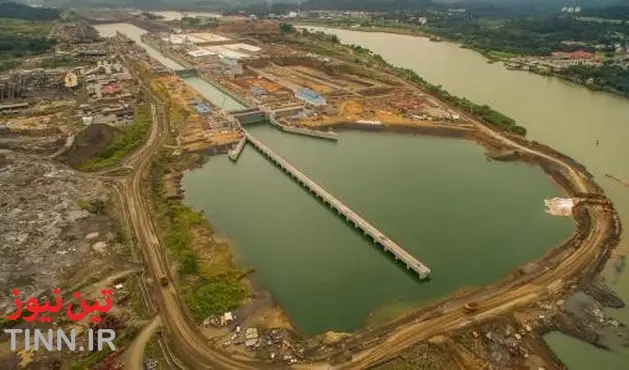
TIN news: The extension works of the Panama Canal will be delivered to the Panama Canal Authority on Tuesday after seven years’ work by the GUPC consortium (United Group for the Canal), in which the Spanish company Sacyr is a majority stakeholder, with 42 per cent stake.
Experts explain that it is the greatest engineering feat of the century, and has involved the construction of two three-level locks, one on the side of the Atlantic Ocean and the other one in the Pacific, to make ships pass through the 74 kilometers of the passage, exceeding a height of 27 metres, whose highest point is lake Gatun, in a period of 18-20 hours.
Although the economic aspect is still in the air, since it has not been able to settle at least 80 per cent of the claims that the consortium has made due to unforeseen issues and it would exceed 3,000 million, conclusions regarding the completion of the work are very optimistic, according to the Spanish construction company president, Manuel Manrique, who explained that the enlargement will mean a change in maritime trade worldwide.
But, what will the construction of the third set of locks mean for the Panama Canal? The first and fundamental implication will be the double-fold increase in sailing capacity through this straight, placing the transit of goods at 600 million tonnes per year since the new lines will enable the passage of larger ships. The frequency of daily crosses is 19 boats a day, one more than the old canal, so with this step it will have a transit capacity for 37 a day (considering the two places).
It is estimated that the Panama Canal Authority will have amortized the investment within ten years. The cost of the enlargement is USD 5,000 million.
The number of workers participating in the construction has reached 10,000 people from forty nationalities, for whose selection training has been needed for more than 50,000 people. These templates were distributed among the 74 companies, 46 of which are Spanish.