|
News Code
87597
Copied
ATI expects rise in profit, revenues amid expansion
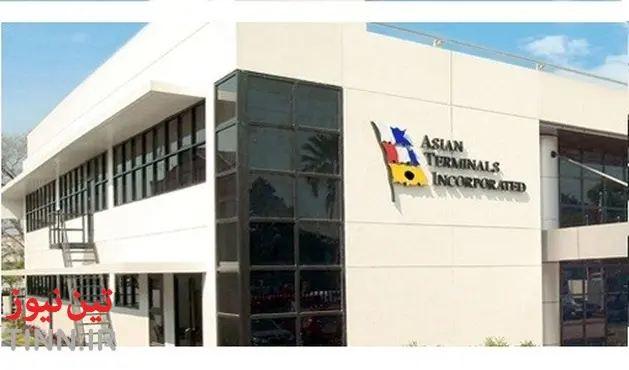
TIN news: TANCO-LED Asian Terminals, Inc. (ATI) is looking at earning at least P8 billion in revenues this year and seeing an improvement in its net income, driven by higher volumes following the expansion of its Batangas port.
“We would expect a similar type of results, but we intend to grow, so we hope to move that north a little,” ATI Executive Vice-President Andrew R. Hoad said in an interview, when asked if the port operator can sustain the P8-billion revenue that has been the “new norm” for it over the past two years.
“We expect the dynamics to be essentially the same, so we would expect a little bit of growth in net income as well,” he said on the sidelines of the company’s stockholders’ meeting last week at the Diamond Hotel in Manila City.
ATI’s 2015 net income dipped by an annual 7% to P1.77 billion amid flat international containerized volume in the Port of Manila.
Speaking to shareholders, ATI Chairman Rashed Ali Hassan Abdulla said the slowdown in the Chinese economy dragged exports, coupled by challenges in the Philippines’ freight industry and manufacturing sector.
“The exports went down, imports were quite flat,” Mr. Hoad said, but noted signs of recovery in March and April this year. “We hope that growth would continue and would magnify because it’s a volume-related business.”
“Ports have a fairly high fixed cost in terms of machinery, parts investment and people. So we look to the economy to grow so more volume could be laid on top of that fixed cost and keep the level of return at something that is acceptable to our shareholders.”
Mr. Abdulla said ATI is spending at least P3.8 billion this year to develop its ports in Manila and Batangas.
“Last year, we spent approximately $20 million (P940.71 million). It’s quite a significant step up this year, it really reflects the level of investment going into Batangas — on the container side, passenger side and car imports,” Mr. Hoad said.
ATI is adding an initial 200 meters of berth as well as quay cranes and rubber tire gantries, a five-storey car complex and a new passenger terminal.
“A modern and comprehensive facility for passengers will combine an increased capacity of over 5,000 passenger seats with a shopping mall complex, creating something comparable to a modern airport facility,” Mr. Hoad said.
Container volume at the Batangas Container Terminal jumped by 35% year on year to more than 132,000 twenty-foot equivalent units in 2015, on the back of higher flow of commodities that support the Calabarzon area, covering Cavite, Laguna, Batangas, Rizal, and Quezon.
“We’re also on the lookout for any investment or development opportunities within Asia. At the moment we don’t see another one out there for this year but these things can suddenly appear in the horizon… and we’re looking forward to see what may appear over the next couple of years,” Mr. Hoad said.
Shares in the company ended last week’s trading at P11.58 apiece, down by 22 centavos or 1.86%.