|
News Code
77194
Copied
INDIAS RELIANCE SHIFTS TO DUBAI - LINKED CRUDE OIL IN OCT - DEC QUARTER
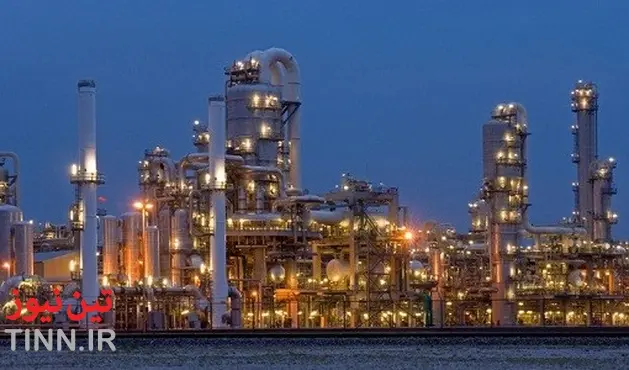
TIN news: Indian refining and petrochemicals giant Reliance Industries said it processed more light crudes during the October-December 2015 quarter in response to market demand, and also that it bought more Dubai-linked crude to take advantage of a wider Brent-Dubai price differential, a senior company official said Tuesday.
As demand for gasoline and gasoil took crack spreads to $19/b and $14/b respectively, Reliance produced more high value gasoline and ultra low sulfur gasoil, altering its crude slate to maximize light distillate output, joint CFO V.Srikanth told an earnings conference.
"We have also taken advantage of the fact that Brent-Dubai differential which used to be $0.5/b... has widened $3 to $3.5/b, so we have obviously changed the crude slate," Srikanth said.
Since Reliance was processing more Dubai-linked crude, much of it came from the Middle East, he said.
"OPEC is producing flat out. Big components of OPEC are the Middle East, so they are producing more, and every crude needs a home. They need to make it attractive," Srikanth said in response to a query on why the company was buying more Saudi and Iraqi crude rather than heavier South American crudes.
On the possibility of buying Iranian crude now that sanctions against the country have been lifted, he said Reliance was still at the evaluation stage but added: "If we are buying from Iraq, we can from Iran."
He ruled out buying crude from the US, after the recent lifting of that country's export ban, but said the company would stick to its plan to buy and ship ethane from there to India.
Chief Operating Officer Vipul Shah said last November that Reliance would receive the first shale gas-based ethane from the US at its petrochemicals complexes in western India by the end of 2016
REFINING MARGIN UP
Reliance's gross refining margin at $11.5/barrel in October-December was up from $10.6/b the previous quarter and from $7.3/b in the corresponding quarter of 2014.
Reliance's two refineries at the Jamnagar refinery complex in Gujarat, the older 33 million mt/year (660,000 b/d) domestic refinery and the 29 million mt/year export-oriented refinery, processed a record 18 million mt of crude in the October-December quarter -- the third quarter of its financial year -- running at a rate of 116%.
Higher local demand meant Reliance sold more products into the domestic market, reducing its exports by 8.4% year on year to 10.9 million mt.
Apart from increasing its sales to state-owned oil refining and marketing companies that dominate retail sales in the country, Reliance said it has been able to grow volumes at its own retail outlets. It had 750 outlets operational at the end of the October-December quarter.
Retail gasoil volumes were up 64% up from the previous quarter, Reliance said.
FURTHER CUTS IN US SHALE GAS CAPEX
Srikanth said Reliance will further cut capex on its US shale assets in 2016 in response to low oil prices. Shale gas capex was last year cut to $900 million from $1.2 billion in the previous year and in 2016 will be further reduced to $500 million, he said.
Reliance's upstream joint ventures in the US include a 45% working interest partnership with Pioneer Natural Resources in the Eagle Ford shale play, a 40% partnership with Chevron and a 60% partnership with Carrizo Oil & Gas in the Marcellus shale play.