|
News Code
75433
Copied
India: Developers of new cargo terminals get benefit of rate regime changes
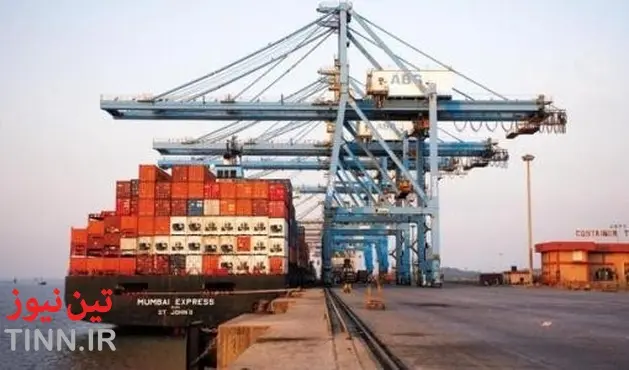
TIN news: Cargo handling contracts to be auctioned by ports owned by the Union government will allow flexibility to operators to move to new tariff regimes from the one prescribed at the time of signing the deal, according to new rules framed by the shipping ministry to fix a contentious issue that has roiled port investors.
The new rule has been incorporated by amending the so-called model concession agreement (MCA) for port contracts developed with private funds on the public-private-partnership (PPP) model. A concession agreement sets out the terms and conditions of a port contract.
Existing cargo handlers are, however, excluded from the new rule, which seeks to kickstart the flow of funds into port projects by offering comfort to bidders hurt by frequent changes to the tariff regime that are usually enforced prospectively.
Private developers are bound by the tariff guidelines applicable on the date of signing the concession agreement for setting the rates to be collected from users of the facilities, according to the MCA.
“However, in the event the said tariff guidelines are either amended, revised or replaced by a fresh set of tariff guidelines at any time during the concession period (typically spanning 30 years), such amended, revised or fresh set of tariff guidelines, as the case may be, shall be the applicable tariff guidelines, provided the concessionaire (the private developer) exercises an option to recover tariff under such amended, revised or fresh set of tariff guidelines within a period of 30 days from the date of its publication in the official gazette,” the shipping ministry wrote in a circular issued to all the 12 major ports (owned by the Union government) to implement the new rule. Mint has reviewed a copy of the circular.
Previously, in case the existing tariff guidelines were later amended, revised or replaced by a fresh set tariff of guidelines, they were not made applicable to existing private operators.
This was at the core of a tussle between the government and private firms running cargo terminals at major ports.
The shipping ministry and the private terminal operators have been discussing the potential migration of some 16 existing port contracts (10 of them private)—some operating from as far back as 1997—from a regulated set-up to a market-driven pricing regime announced in 2013 for projects put to bid since then. These terminals are governed by the tariff-setting guidelines framed by the shipping ministry in 2005.
On an average, the existing contracts have about 12 years left out of their term of 30 years.
The issue figured in the report prepared by a nine-member panel led by Vijay Kelkar that was tasked by the government to revisit and revitalize the public-private partnership (PPP) model of infrastructure.
“The methodology and guidelines adopted for determining the ceiling tariff has been revised periodically by the Tariff Authority for Major Ports (TAMP) in 1998, 2005, 2008 and 2013. Frequent revisions have resulted in multiple business frameworks for similar nature of projects, depending on the period of their concession, which has led to concerns of developers who are evaluating and bidding for projects all the time. It is suggested that a path for moving from pre-TAMP to current TAMP method be provided,” the committee wrote in its report submitted to the government in November.
TAMP is the rate regulator for the ports owned by the Union government.
Seven of the 16 private terminals have filed court cases seeking to overturn the rate cuts ordered by the port tariff regulator for their respective terminals by applying the 2005 guideline.
While courts in their respective jurisdictions have stayed the rate cuts, the cases are yet to be decided.
Without the stay orders, some of the cargo handling contracts would be liquidated due to default by the private developer.
The uncertainty over the tariff regime had hurt bidder interest in projects put to tender, resulting in poor response from private firms in the last three years.
Existing private terminal operators argue that they are bound by “statutory amendments to the existing procedure for fixing the tariff”.
“Hence, it would be incorrect to disallow a category of operators from the liberalised tariff regime of 2013. This would be discriminatory,” said a spokesman for industry lobby Indian Private Ports and Terminals Association (IPPTA).
The concession agreement signed by the operators does not stipulate any specific tariff guidelines under which a concessionaire has to operate. The migration to the 2013 guideline is in no way precluded. Previously, the operators moved from the 1998 guideline to the 2005 guideline. A gesture of the government in allowing migration from the 2005 guideline to the 2013 guideline would arrest further complication of issues emanating from continuing with the 2005 guideline,” the IPPTA spokesman said.