|
News Code
74468
Copied
As Ibom Deep Seaport Gets Underway
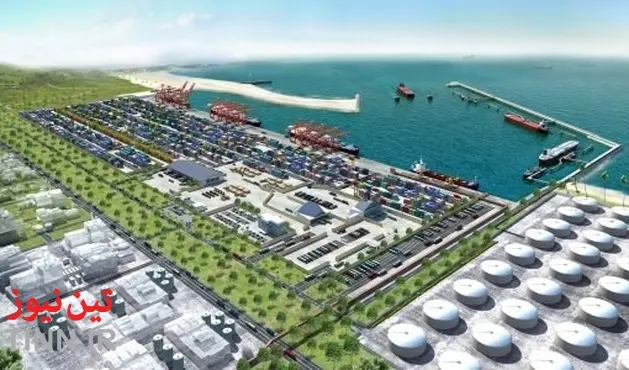
TIN news: With the selection of international transaction advisers, contract signing and the handover of certificate of occupancy, the Ibom Deep Seaport is fast becoming a reality, writes John Iwori.
The construction of a deep seaport requires a lot of experience and resources. It involves several processes at the pre-construction, construction and post-construction stages.
Making a Difference
There are several deep seaports in the making in Nigeria. These ports are earmarked in the Greenfield Development Programme of the Federal Government of Nigeria. They are being supervised by the management of the Nigerian Ports Authority (NPA). The ports include the ones in Ogbe Ijaw, Delta State; Lekki and Badagry in Lagos; Agge, Bayelsa State; Ibom and Port Notel deep seaports in Akwa Ibom State. These projects are in different stages of execution by their promoters. However, the Ibom Deep Seaport (IDS) seemed to have taken a step further with the recent meeting with transaction advisers and master planners. The promoters of the IDS are also trying to make a difference with their plan to integrate the port with the Ibom Industrial City (IIC). According to the Chairperson, Technical Committee on IDS, Mrs. Mfon Usoro, IDS would be developed as an integral part of IIC to ensure that a holistic development of the state in particular and Nigeria in general. For the projects earmarked for IDS and IIC to see the light of the day, she revealed that it has secured the mandate of the Akwa State Governor, Mr. Udom Emmanuel do all that is necessary to actualise the development of IDS and IIC “within the shortest possible time”.
Giving an insight into the projects, Usoro who is also the Secretary General of the Memorandum of Understanding on Port State Control for West and Central African Region (Abuja MoU), said: “At the end of the committee’s two day retreat for an in-depth study and analysis of the existing outline business case (OBC) for the deep seaport project and upon consultations with maritime stakeholders, it became evident that the next stage of the project requires the services of international, well acclaimed transaction advisers with global track record in port development which spans the developed world and the emerging economies for the project to be developed to the highest standards of efficiency, quality, reliability and integrity to establish commercial attractiveness and bankability of the project”.
These projects are situated on a vast expanse of land. The IIC in particular has 14,400hectares. The development of both projects to progress at the same pace is imperative for Nigeria nay Nigerians can be in a vantage position to derive maximum benefit from it. The promoters need to leverage on the proximity and integration with the deep seaport. Usoro who was the pioneer Director General of the Nigerian Maritime Administration and Safety Agency (NIMASA) confirmed the desire of her committee to achieve this when she noted that her committee is promoting the development of the IIC using what she called the “the industrial cluster model” where related industries and their supply chain will be in close proximity to each other to maximize efficiency.
“To achieve this, it was agreed that an international firm of master planners be engaged to produce a robust master plan for the smart city with sufficient design and information to attract foreign and domestic investors”, she added.
International Transaction Advisers
The construction of a deep seaport has international standards and practices that must be strictly adhered to. The promoters must have an eye not only for today but for the future as the dynamics of the shipping world may make what is profitable today to be unprofitable tomorrow and vice versa. To help drive IDS and IIC, an international transaction adviser has to be selected. Usoro, who is a lawyer by profession, disclosed that in August, the committee recommended and obtained the Akwa Ibom State Governor, Mr. Udom Emmanuel’s approval of “a transparent competitive procurement process” for the selection of international transaction advisers and master planners for the IDS and IIC.
She revealed that this made her committee to engage the services of PricewaterhouseCoopers (PwC) as Programme Managers to assist in facilitating the selection process.
According to her, PwC was saddled with the responsibility of identification of international transaction advisors and master planners based on pre-defined criteria including experience working on similar projects; presence in Nigeria/Africa; experience working in developing countries and financial status.
She stated that it was at the conclusion of the rigorous exercise conducted that her committee recommended for IDS the engagement of Global Maritime and Port Services Pte Limited (GMAPS) which has its headquarters in Singapore.
GMAPS is a firm of international transaction advisers with enviable global track record in port development and contacts with potential port developers, shipping companies and terminal operators will be engage for one year. Perhaps this explained why GMAPS was saddled with the task of producing a bankable business case, full business case and procurement of private sector investors for the IDS.
Benefits
There are enormous benefits in the development of a deep seaport in the oil and gas rich state. Some persons have argued that it does not make sense to construct another seaport when existing ones, especially in the east are not fully utilised. However, the tremendous benefits of building a deep seaport cannot be over-emphasised. This is vital as the existing ports in the country, especially in Lagos, are not seaports in the true sense of the word. They are essentially river ports. Therefore, the construction and completion of the ones earmarked for Akwa Ibom, Lagos and Bayelsa States when completed would turn out to be Nigeria’s first deep seaport. There are opportunities for direct and indirect employments for the youth presently roaming the streets for non-existent jobs. Development would also get near to the people. For instance, the present attention devoted to the area called Ibom in recent time by the Federal and Akwa Ibom State Governments is unprecedented. This is due to the fact that roads are being constructed to ensure the smooth evacuation of cargo from IDS. Other infrastructural facilities such as electricity to ensure steady power supply are being put in place. The Akwa Ibom State governor underscored the importance of the IDS in his key note address at the kick of the meeting for the project.
According to Emmanuel, “the occasion is one in the series of important events in recent times that tends to amalgamate as it were the five point agenda, which is the key focus of my administration and demonstrate in clear and unequivocal terms, my government’s determination towards aggressively industrialising Akwa Ibom State and our corporate effort to create sustainable wealth and wellbeing that will not only benefit our citizenry but will hopefully contribute to strengthening and improving national economy. Our irreversible pursuit in the realisation of the Ibom deep seaport project is borne out of the commitment to harness, fully develop as well as begin to explore and exploit the enormous maritime resources and proud maritime tradition of the people of Mbo, Ibeno, and other adjourning coastline communities of Akwa Ibom State.”
He also emphasised the huge benefits that the state stands to gain from the building IDS. Emmanuel said that when the project is fully completed and operational, its flurry of socio-economic activities and employment opportunities will primarily bring sustainable benefit to the people of the project communities.
He enjoined the people of Akwa Ibom State to preserve and protect government investments in this regards and continue to support his administration in its determination to equitably develop and improve the living standard of citizenry through provision of massive infrastructure and industrialisation.
However, as laudable as the IDS is, analysts have said the promoters must guard against taking decisions that are politically correct but does not have any economic sense. They must avoid the pitfalls of the past.
According to them, against the backdrop of Nigerians seeing everything government as no man’s business, Emmanuel must give the international transaction advisers a free hand to operate so that it can achieve set goals and objectives.
“The state government must also speed up the process of paying the land owners of the project site their compensation. This is important so that the land owners do not constitute a stumbling in the building of the deep seaport,” analysts said.
They added that the state government should also not hesitate to bring more private investors into the project.
“It can do this by relinquishing some of its equity shares in the project. Doing this will boost stakeholders confidence as the fears associated with government will be ameliorated. It should also act fast in the building of the IDS. This is due to the fact that more and more investors, including states governments are also going into the building of more seaports. A case in point is the one being promoted by the Cross River State Government. There is palpable apprehension that if these other ports are completed ahead of IDS, they may get the market at the detriment of IDS,” analysts said.
The government of Akwa Ibom has also been advised to organise town hall meetings to sensitise the people living in the host communities on the importance of the IDS so that they can be on the same page. According to stakeholders, no stone should be left unturned to ensure that IDS do not turn out to be another wild goose chase.
This can be achieved if all hands are on deck to ensure the completion of IDS and IIC in the years ahead.