|
News Code
73976
Copied
AMSA: Verifying Container Weight amendments
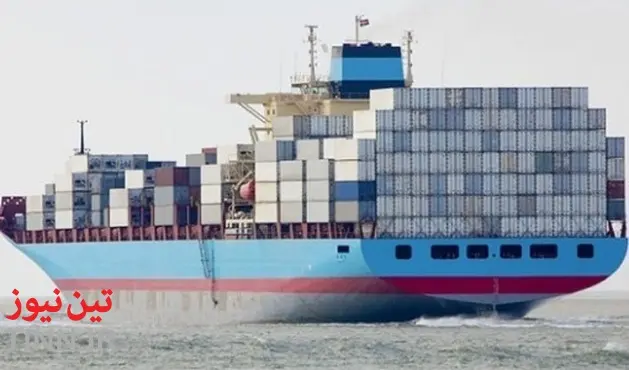
TIN news: AMSA has issued a discussion paper to explore and guide discussion on practical solutions to the implementation of upcoming SOLAS Convention amendments relating to verifying container weight.
These requirements will come into effect internationally from 1 July 2016. AMSA is seeking feedback on the impact these amendments will have on the whole logistics supply chain, along with possible solutions that may lessen any impact.
Background
Incorrectly declared containers can cause problems for ships and for workers at container terminals. For ships, accurate weight is required so that containers are placed and stowed evenly to maintain the stability of the ship during the whole voyage. Additionally, for loading and unloading ships and workers safety, the adequacy of securing devices used to attach containers to vessels and the selection of suitable lifting/loading equipment is reliant on knowing the correct weight of containers.
The impact of individual errors in weight declaration can be significant when considered on a vessel with thousands of containers. For example, the investigation into the incident with the container ship MSC Napoli found that 1 in 10 containers far exceeded their declared weights. In fact, noting that the ship carried 2318 containers, it was found that the difference between the calculated and actual deadweight of the ship at departure was some 1250 metric tonnes.
What needs to change?
Under section 10 and 11 of the current Marine Order 42 (Cargo, stowage and securing) 2014 (MO42) the shipper is already required to provide the master information about cargo to be loaded in sufficient time for the information to be used in the stability, stowage and securing calculations.
This includes the gross mass of the cargo or the cargo units. However, while MO42 requires that shippers ensure the actual gross mass of a container matches the gross mass provided on shipping documents it does not stipulate the method, or methods, for verifying the gross mass of a container.
From 1 July 2016, revisions to the SOLAS Convention, adopted by the International Maritime Organization (IMO), and applied as law for Australia under the Navigation Act 2012, and subordinate Marine Orders will come into effect. These SOLAS amendments will provide that:
The shipper will be responsible for verifying the weight of the container and providing the verified gross mass to the Master on the shipping documents. To do this the shipper can use either:
Method 1 Weighing the packed container
Method 2 Weighing all the cargo and all other material loaded into the container then and adding the weight of the empty container (marked tare weight) to calculate the gross mass.
Method 2 Weighing all the cargo and all other material loaded into the container then and adding the weight of the empty container (marked tare weight) to calculate the gross mass.
Weighing of packed containers, or weighing of cargo and other materials if method 2 is used, is to be carried out using calibrated and certified equipment (such as weighbridges, platform scales, pallet or industrial scales) to obtain accurate measurements.
What the international standards have not done is to specify the accuracy standards to be applied. This is left to the government of the country of shipment to determine.
However, to assist shippers and involved industry members understand how to comply with these SOLAS requirements, the IMO has published; ‘Guidelines Regarding the Verified Gross Mass of a Container Carrying Cargo’ (MSC.1/Circ.1475)
How this will be implemented in Australia?
AMSA considers that it can meet its international obligations by amending Marine Order 42 (Cargo, stowage and securing) 2014 (MO42) to reflect the SOLAS amendments. Principally the amendments could include the following:
• Shippers will be responsible for verifying the weight of the container on shipping documents.
• Such weight verification is to be carried out using equipment meeting the requirements of:
– the Australian National Measurement Act 1999 and supporting guidelines and regulation ; or
– An equivalent standard accepted by AMSA – initially a suitable standard for the weighing device accuracy could be based on the NMI guidelines: NITP 6.1 to 6.4 National Instrument Test Procedures for Non-automatic Weighing Instruments
AMSA believes that equipment meeting the above requirements in Australia will meet the definition of ‘calibrated and certified equipment’ in the IMO guidelines.
Further details may be found by clicking at AMSA paper below