|
News Code
70259
Copied
China’s Ships Agency Evolution
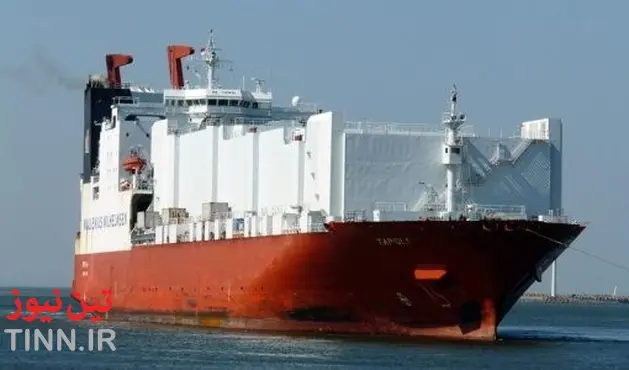
TIN news: Moving from a state-run monopoly to a free market in the 90s, customers now shopping around for ships agency services in China will be faced with a bewildering choice of providers, levels of service and indeed costings. However, thanks to a focussed expansion strategy delivering a network of coverage in all the country’s coastal provinces, we, WHSS (China) have become the default agency choice for many domestic and international clients.
A Short History of China’s Agency Business
The first modern ships agency service in China was founded in 1953, with the establishment of People’s Navigation Company (PENAVICO), which remained the sole body designated to handle international ships agency business until 1984.
1985 saw the ships agency market opened up to domestic players and the establishment of a second agency, SINOAGENT. At the time, few people realized how significant the introduction of this limited competition would be in the long term.
Between 1988 and 2002, the Chinese government opened the international ships agency market completely, with the intention of introducing a greater degree of competition and improving the efficiency of shipping in China.
The effect of this policy change has been astonishing. The total number of registered ships agency companies had reached 1,935 by the middle of 2012, the majority of which are privately owned.
Port Tariffs & Agency Fees
Port tariffs in China are universal and applicable at all ports. The tariff covers all service items such as pilotage, towage, harbour dues and tonnage dues etc. However, ships agency fees are very different.
During the monopoly era, agency fees were included as part of the Port Tariff because it was judged impossible to negotiate with a state body for a more competitive fee. The agent worked out the agency fee ‘accurately’ using a mathematical formula set out in Government Directives, with ship’s Net Registered Tonnes (NRT) and cargo volume being the key variable factors.
With the liberalisation of the ships agency market and tough competition for business between the port agents, fees are now charged on a more commercial basis. In 1994, the China Ship Agency Association suggested ‘recommended agency fees’ with the intention of letting the market set the level of agency fees.
The impact of this policy change in agency fee structure has been dramatic for some ship types such as bulk carriers, but has had less effect on VLCC agency fees. For example, the agency fee for a capesize bulker is now in the range of USD 8,000-10,000, subject to local port market competition, a sharp reduction from the previous rate.
Becoming A Market Leader
May 20th 1996 saw the establishment of WHSS (China), a joint venture between Wilh. Wilhelmsen ASA and Huayang Maritime Centre (HYMC). HYMC is owned by the Maritime Safety Administration of the People’s Republic of China, a subsidiary of China’s Ministry of Transport. From humble beginnings this joint venture has proved successful with WHSS handling more than 2,800 port calls across all major ports in China in 2012.
Originally trading with just two operating companies, one in Beijing and the other in Shanghai, which is our central hub for China, WHSS now includes nine fully licensed companies.
– Qingdao branch company established 2007
– Ningbo and Dalian branch companies established 2010
– Tianjin branch company established 2011
– Xiamen, Guangzhou and Fangchenggang branch companies established 2012
Challenges In Port
Even long after the end of the port agency monopoly, challenges remain for shipowners and operators at Chinese ports. Users must be aware of local complexities and uncertainties. Different rules are applicable at different ports and not every port follows the ‘first in-first out’ principle, so service levels can differ depending on the contacts that an owner has within a local port.
In addition, to varying service levels, something as straightforward as disembarking crew can poses challenges in China. Currently just Quingdao, Yantai, Weihai, Dalian and Shanghai allow crews to disembark via a shore pass, with all other Chinese ports requiring an official exit visa for offsigners. Issued in port, the production of visas is far from uniform and can typically take between one and a staggering five days, in the case of Ningde and Zhanjiang.
There can also be a general lack of transparency in port operations and associated costs with insufficient proficiency in English among many of the local agents and suppliers. This can create headaches for foreign owners or operators who do not have an international agent with local expertise.
By establishing its own agency offices at the major ports in China, we are able to liaise with the local ports and understand their particular rules. This means we can provide clients with all the information necessary for a smooth call, even before the vessel arrives.
Providing a single point of contact at the initial stage of an agency inquiry, our highly experienced staff, speak fluent English and our network includes several dedicated specialised teams providing professional services, such as bulk operations, tanker operations and newbuilding and drydocking operations.