|
News Code
70057
Copied
Magampura Port Oil Bunkering Under Scrutiny
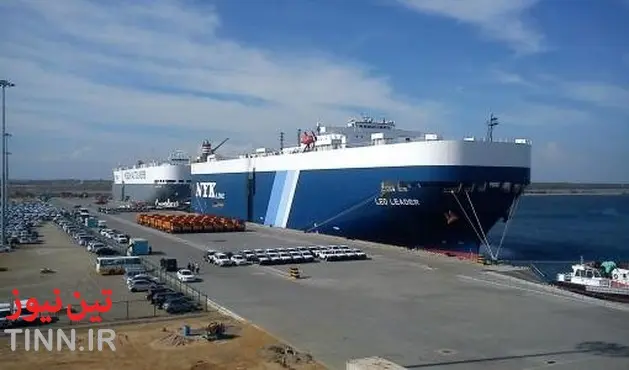
TIN news: Stern action will be taken against the perpetrators who were allegedly responsible for the losses incurred by the Sri Lanka Ports Authority (SLPA) running into billions of rupees during the previous regime, Ports and Shipping Minister Arjuna Ranatunga said.
The latest addition to the numerous irregularities that had allegedly taken place at the SLPA came to light recently when Ranatunga was informed how the oil bunkering facility at the controversial Hambantota Port had suffered a huge set back due to a loss of US$ 19.9 million to the SLPA.
According to Ranatunga, the losses incurred were due to the purchasing of a ship load of diesel which had been rejected by the Ceylon Petroleum Corporation (CPC) due to its substandard quality.
“We have received information how the rejected shipload of substandard diesel was purchased by the then management of the Sri Lanka Ports Authority (SLPA) for oil bunkering at a time when the world oil prices had hit the highest. It has been estimated that a staggering US$ 19.3 million had been spent to purchase 17,818 tons of diesel as a substitute for Marine Gas Oil (MGO), which has the lowest demand in the marine industry. Had there been urgency to purchase diesel for bunkering even when the prices were high, there wasn’t an issue. But in this instance when there wasn’t a necessity, a purchase had been done which was more than what was needed. Hence what made the then SLPA management purchase such a huge stock is the question,” Ranatunga said.
According to Ranatunga, from the time the purchase had been made by the SLPA, up to now an additional US$ 6 million had been paid as interest for the US$ 19.3 million and will incur more losses in way of interest even in the future. It is learnt that a three-member committee appointed to look into the alleged irregularities and misappropriation of SLPA funds that had taken place during the Rajapaksa regime had submitted a preliminary report to the Ports and Shipping Minister to which action would be taken against those who were responsible without considering their affiliations or status.
Meanwhile, reliable SLPA sources on conditions of anonymity said that the appointment of an ally of Kurunegala District MP, Mahinda Rajapaksa to the post of Deputy General Manager (DGM) Magampura Port Management Company after the last presidential election, announced for a salary of Rs. 1 million had also raised questions among the SLPA staff and added that all these irregularities had allegedly occurred under former SLPA Chairman Dr. Priyath Bandu Wickrema. According to sources, when the CPC had refused to accept the ship load of diesel due to its substandard quality, the SLPA, somewhere in 2013 or 2014, purchased it for oil bunkering purposes.
“When the ship berthed at the Colombo Port and tested the samples and was refused to be accepted by the CPC, it was revealed how the SLPA bought the entire stock of 17,818 tons that was directed to the Hambantota Port and unloaded it without considering the standard of the oil,” sources said.
Sources further said that MGO is slow moving oil and does not need to store huge stocks like other fuels – IFO 380 and IFO 180 – which are fast moving as they are used for operation of the ship engines.
“MGO is used only to operate small boats and for ship generators but not for any large vessels. This particular fuel is not purchased in large quantities like IFO 180 and IFO 380. Hence it is a question as to why the previous administration purchased 17,818 tons of fuel to be used as MGO. From the time of this purchase only a little more than 3,000 tons of MGO had been sold and there is more than 12,000 tons remaining. This is a loss to the country as the purchase was made at the time when the prices had hit the maximum in the oil market. This is a scam. What made the then Chairman SLPA to take such a decision to purchase such a large stock when the prices were so high and there was no necessity to purchase such a large stock,” sources alleged.
Secretary, Jathika Sevaka Sangamaya (Petroleum Branch), Ananda Palitha meanwhile said that it is high time for Minister Ranatunga to hold a proper investigation into the Hambatota oil bunkering programme and take legal action against those who have misused the public money for a mere white elephant project.
“The SLPA does not have any permit to import fuel to the country but still imported with the blessings of the Rajapaksas. It is only the CPC that has the permit to import the required fuel to the country and supply to any institution. It is the CPC that supplies fuel to the Ceylon Electricity Board (CEB) power stations and even to Katunayake and Ratmalana airports. What made the SLPA build five marine gasoline oil tanks and two aviation oil tanks at the Hambantota port” Palitha queried.
Palitha agreed to what Ranatunga said about the losses to the SLPA and added that it is now high time for the minister to find out as to who gave orders to the SLPA to construct a pipeline from the harbour to the Mattala Rajapaksa Airport, which was a wastage of public money into billions of rupees.
“Aviation fuel cannot be kept for so long as its quality reduces. When the airport and aviation authority informs the CPC how many flights are landing at Katunayake and how much aviation oil is needed for them daily, we dispatch them to Katunayake but there are no bunkering facilities at Katunayake. Likewise we send the aviation fuel stocks to Ratmalana domestic airport as well. Without any knowledge about this subject, what the Rajapaksa regime did was to get two huge tanks built to stock aviation oil. To an airport where aircraft do not arrive, what is the use of having oil tanks? We have to spend about Rs. 65,000 as transport cost to take aviation oil to Mattala and store them and bring them back after its standard drops and sell them as kerosene oil. This is a huge loss to the country,” Palitha said.
Meanwhile, Palitha said how the SLPA got the oil bunkers constructed at the Hambantota Port without getting the expertise knowledge from the CPC. “Without obtaining the expertise knowledge from us, they got these seven tanks built and five of them are now on the verge of sinking. Some tanks are leaking,” Palitha claimed. According to Palitha, the stocks of fuel the SLPA had imported could be substandard as they do not have the necessary technology and lab facilities to check the standard of the fuel once it reaches the port.
“When the oil stock is loaded to the ship, a report is taken to check its standard and once it reaches our port, CPC officers test the stocks to find out whether their findings tally with the report they have obtained at the time of the loading.
During the previous regime when substandard stocks arrived Colombo, CPC officers were instructed to unload the stock by the politicians, which we had to follow,” Palitha said. Palitha further said that SLPA has all the documents to prove how they imported fuel for a higher price when the world market price was much less and added that it is now up to Minister Ranatunga to act swiftly with the proven documents.
According to Palitha, had the proper procedure been followed by the SLPA from the very inception, the Hambantota port could have supplied fuel to many vessels that pass Hambantota.
Chairman SLPA, Dhammika Ranatunga too was uncontactable. Although a text message was sent seeking a comment, Ranatunga too did not respond. Chairman CPC, T. G. Jayasinghe when contacted said that it is the Ceylon Petroleum Corporation that has the permit to import fuel and that the Sri Lanka Ports Authority has no authority as such.
“It is we import the required fuel to the country and supply the fuel to the CEB and even aviation fuel to Katunayake, Ratmalana and Mattala.
What Minister Arjuna Ranatunga claimed that the SLPA had bought the shipload of fuel the CPC rejected was true,” Jayasinghe said.