|
News Code
68567
Copied
NTSB: Wreckage believed to be El Faro
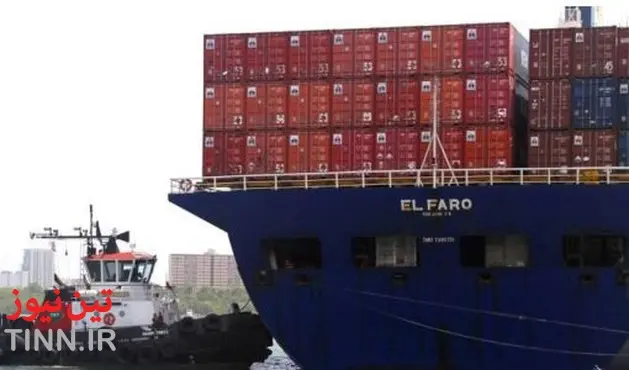
TIN news: NTSB believes that a wreckage found by a search team to be the cargo ship El Faro, which went missing on Oct. 1 during Hurricane Joaquin. The vessel was located at a depth of about 15,000 feet in the vicinity of the last known position.
Sophisticated sonar equipment towed from USNS Apache first detected what are believed to be images of the vessel using Orion, a side-scanning sonar system, at about 1:36 pm ET on October 31 during the fifth of 13 planned search line surveys.
To confirm the finding, specialists on Apache will use CURV 21, a deep ocean remotely operated vehicle, to survey and confirm the identity of the wreckage. This survey could begin as early as Sunday, November 1.
The target identified by Orion is consistent with a 790-foot cargo ship, which from sonar images appears to be in an upright position and in one piece.
Shortly after the National Transportation Safety Board opened its investigation into the accident, it contracted with the U.S. Navy to locate the missing ship, document the wreckage and debris field, and if possible, recover the voyage data recorder.
Apache departed Little Creek, Va., on Oct. 19 after being fitted with a suite of state-of-the-art underwater detection equipment. On Oct 23, after arriving at the last known position of El Faro, specialists on Apache placed a towed pinger locator (TPL) into the water and began slowly traversing the area according to a preset search pattern in hopes of picking up sounds of the pinger from El Faro's voyage data recorder.
After three days without any indication of a pinger signal, the TPL was withdrawn from the ocean and Orion was put in the water in an attempt to locate El Faro with sonar technology, which creates sonar images from the processing of sound patterns.