|
News Code
67780
Copied
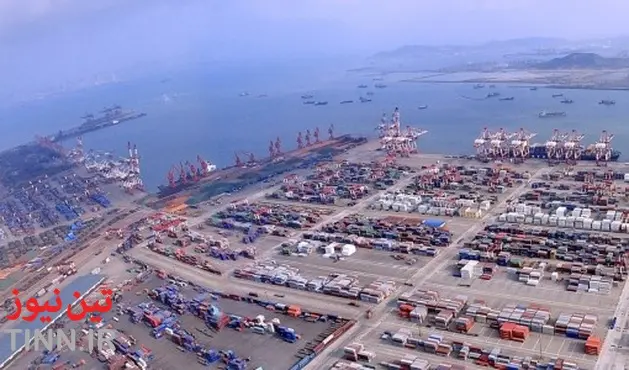
Iron ore inventory increases at Chinese ports
TIN news: Thanks to a few savage cost cutting, a few savvy business deals with contractors and the falling Australian dollar, Australia’s junior iron ore miners appear to be generating positive cash flows.
On Monday, economic growth in the region came in at its lowest level for six years, while industrial production slowed faster than the market had expected.
China refined 355 million tons of crude during the period, up 3.2 percent year on year, while refined oil production rose 4.7 percent to 224 million tons, the National Development and Reform Commission said in an online statement.
“If we extrapolate the previous experience in Europe, the United States, Japan, their steel sectors have all gone through painful restructuring in the past, with steel output all contracting by about 20 percent”, Xu told reporters at a forum in Shanghai.
“China will eventually get there as well, regardless how long it takes”.
“The whole steel sector is struggling and no one can be insulated”, Xu said. “The sector is facing increasing pressure on funding as banks have been tightening lending to the sector – both loans and the financing provided for steel and raw material stockpiles”.
According to growing number of analysts, demand for steel in China has peaked – a problem all the cheap iron ore in the world will not solve for the mills. Brazil produced 2.501 Million tonnes of crude steel, dropping by 13% when compared to 2.875 Million tonnes production achieved during September a year ago.
If you look at steel demand and you look at diesel demand – these are the two largest industrial commodities in China – growth for both of those has been negative this year. It eliminated 31.1 million tonnes of steel capacity in 2014.
With Chinese steel producers now bleeding cash on the back of overcapacity within the sector, the question many will be asking is whether that will soon be replicated further up the supply chain.
Prior to 2013, iron ore miners hardly mentioned their production costs – not surprisingly when they were receiving US$130 a tonne and higher for their product.
In 2009, before commodity prices soared to their 2011 peaks, China Inc. was engaged in a pitched battle with the world’s three major iron ore producers over its price.