|
News Code
66688
Copied
North P&I Club warns of a raft of new shipping regulations on cyber risks
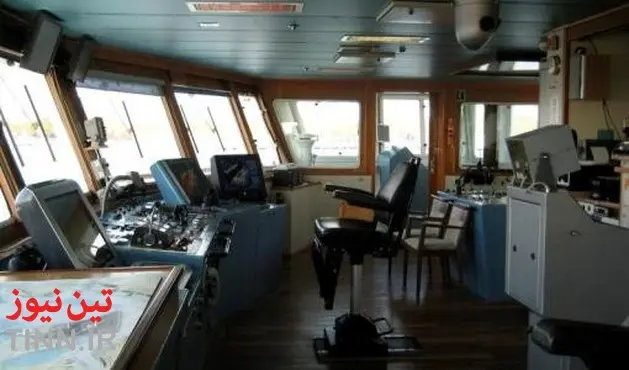
TIN news: North’s deputy director of loss prevention Colin Gillespie says, ‘The safe operation of ships is increasingly dependent on sophisticated electronic systems, so it is vital these systems are properly secured and protected from external risks.’ According to the Club, the US Coast Guard’s new cyber strategy also looks set to be a catalyst for new national and international regulations relating to cyber security on ships.
‘The US Coast Guard published its cyber strategy in June this year in response to what it perceives is one of the most serious threats to US economic and national security interests,’ says Gillespie. ‘The International Maritime Organization has also now recognised the threat to global maritime safety and commerce, and is expected to review industry guidelines at it maritime safety committee in May next year.’
Gillespie says the US strategy makes it clear that cyber risk prevention and response should be an integral part of a ship operator’s responsibilities. ‘The strategy calls on owners and operators to establish a reasonably viable cyber risk management programme, including continuous assessment, coordinated planning, investment, benchmarking, training, and possibly risk transference such as insurance.’
The article points out that while there is currently no requirement to adopt the US Coast Guard’s strategy, it is likely US authorities will soon require cyber risks and security to be managed on ships trading to the USA in much the same way as oil spill risks have to be managed under the US Oil Pollution Act 1990.
‘OPA ’90 focused attention on prevention and response. Shipowners trading to the USA would thus be well advised to start assessing and mitigating their potential cyber vulnerabilities related to network access and data protection, and considering and planning how to respond to a cyber event which might trigger, or relate to, a safety, security or environmental incident,’ says Gillespie. ‘Given the interconnected nature of modern technology, all shipping company systems that interface with a vessel will also need to be secure.’

‘The US Coast Guard published its cyber strategy in June this year in response to what it perceives is one of the most serious threats to US economic and national security interests,’ says Gillespie. ‘The International Maritime Organization has also now recognised the threat to global maritime safety and commerce, and is expected to review industry guidelines at it maritime safety committee in May next year.’
Gillespie says the US strategy makes it clear that cyber risk prevention and response should be an integral part of a ship operator’s responsibilities. ‘The strategy calls on owners and operators to establish a reasonably viable cyber risk management programme, including continuous assessment, coordinated planning, investment, benchmarking, training, and possibly risk transference such as insurance.’
The article points out that while there is currently no requirement to adopt the US Coast Guard’s strategy, it is likely US authorities will soon require cyber risks and security to be managed on ships trading to the USA in much the same way as oil spill risks have to be managed under the US Oil Pollution Act 1990.
‘OPA ’90 focused attention on prevention and response. Shipowners trading to the USA would thus be well advised to start assessing and mitigating their potential cyber vulnerabilities related to network access and data protection, and considering and planning how to respond to a cyber event which might trigger, or relate to, a safety, security or environmental incident,’ says Gillespie. ‘Given the interconnected nature of modern technology, all shipping company systems that interface with a vessel will also need to be secure.’