|
News Code
66583
Copied
Panama Canal Administrator Expects New Locks to Open On Time
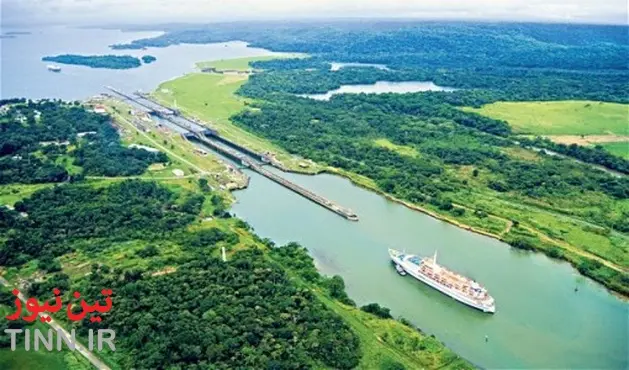
TIN news: The Panama Canal’s new, larger locks should open by April as scheduled despite leakage problems, the waterway’s administrator said, but he wants to see steel reinforcements installed before giving a final completion date.
The expanded canal, which is getting its first major makeover in 100 years, will be able to handle ships three times as big as today. The project has set off a flurry of port-expansion works in Panama, elsewhere in the Caribbean and on the U.S. East Coast to accommodate the larger vessels.
“The contractors say the leaking locks won’t delay the scheduled opening next April,” Panama Canal Administrator Jorge Quijano told The Wall Street Journal. “I still believe it’s going to happen by then, but I will be able to say more once some of the corrections are done and I see in Panama all of the steel reinforcements, which at this point they are not. At present, I can only take the word of the contractors.”
“It took quite some time to determine what it was,” Mr. Quijano said. “The contractors eventually came back to us and said that during the design they had not considered all of the stresses and that there was insufficient steel in some parts to absorb the water pressure. They will now correct it with specialized parts ordered from California.”
The leaks are the latest setback for the canal, where work on the new locks began in 2007 and was supposed to have been finished this year. Previous delays were caused by labor disputes and are in sharp contrast with work for a new channel in Egypt’s Suez Canal, which was completed in a year with 50,000 people working three shifts around the clock.
The $5.25 billion Panama project is currently running $200 million over budget, Mr. Quijano said. He said he wouldn’t know the final cost until the Panama Canal Authority reviews additional claims by the contractors.
Grupo Unidos por el Canal—which includes the project’s contractors such as Spain’s Sacyr Vallehermoso SA, Italy’s Salini Impregilo SpA, Belgium’s Jan de Nul and Panama’s Cusa—said 95% of the work has been completed and should be finished by the April target date.
It said tests will continue for at least three months before navigation testing starts.
“The 16 main sliding gates on the Pacific and Atlantic sides, weighing an average of 3,300 tons, are responding positively to all electromechanical tests,” it said.
When open, the new locks will accommodate ships carrying up to 12,000 containers, compared with 4,500-box vessels now. The expansion is expected to attract part of the traffic of bigger container vessels now going through the Suez Canal as the two waterways compete head-on in the Asia-to-U.S. East Coast trade route. The Suez can accommodate vessels of any size. Mr. Quijano said that in the future the Canal will be able to handle up to 14,000-box ships.
“Over the past three years, [the Suez has] taken away 10% to 15% of our revenue,” Mr. Quijano said. “This will change when the new locks open for the bigger ships, as the round-trip on the loop through Panama is 14 days shorter than through the Suez.”
Panama’s annual revenue is currently around $2.6 billion, compared with $5.3 billion for the Suez. Egypt expects the sum to increase to $13 billion in 2023, and Panama expects to earn around $4 billion by 2025.
The expected opening of the new locks has set off a series of expansion projects at U.S. ports to facilitate bigger vessels.
Norfolk, Va., Portsmouth, Va., Miami and Baltimore currently are the deepest U.S. East Coast ports, at around 50 feet. The Port Authority of New York and New Jersey has completed dredging New York Harbor to 50 feet and is spending $1.3 billion to raise the clearance of the Bayonne Bridge for taller vessels to go through. Savannah, Ga., is deepening its harbor to 47 feet from 42, and Charleston, S.C., to 52 feet from 45.
The 48-mile-long Panama Canal, which links the Atlantic and Pacific oceans, was completed by the U.S. in 1914 after 10 years of work. The U.S. administered the canal until 1977, then handed it over to Panama.