|
News Code
66441
Copied
EMSA issues Facts & Figures for ۲۰۱۴
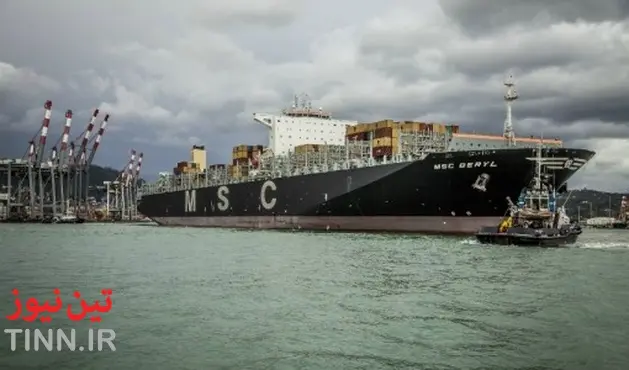
TIN news: While the Consolidated Annual Activity Report demonstrates very comprehensively how EMSA implements the tasks set out in the Work Programme, the new publication gives a more compact and illustrative account of the year's achievements.
EMSA's framework for action underwent several important new developments affecting its activities in 2014. In terms of legal standing, the revision of founding regulation came into force in March 2013. Legislation on funding for response to pollution caused by ships and oil and gas installations entered into force in mid-2014. EMSA's 5-year strategy was renewed until 2018 and approved by the Administrative Board in November 2013. Lastly, the European Commission issued a Communication on the programming of human and financial resources for decentralised agencies 2014- 2020
Monitoring vessel traffic in European waters
Ships transiting EU waters are tracked daily in real-time through SafeSeaNet, the EU’s vessel traffic monitoring and information system. The central system, operated by EMSA, enables the exchange of data between national systems managed by maritime authorities across Europe. The information in the system covers four key areas: ship position; ship pre-arrival, arrival and departure information (e.g. estimated time of arrival, actual time of arrival and departure, persons on board); cargo (for vessel carrying dangerous or polluting goods); and, any accident or incident posing a potential hazard to shipping, threat to maritime safety, the safety of individuals or the environment.
Monitoring European Vessel Traffic around the world
The EU LRIT Cooperative Data Centre (EU LRIT CDC) hosted by EMSA disseminates long range identification and tracking information on EU-flagged ships around the world on behalf of all European flag states, and exchanges information with other data centres around the world.
Monitoring the implementation of EU Maritime legislation
EMSA assists the European Commission and the EFTA Surveillance Authority in their efforts to achieve a convergent and effective implementation of EU maritime law by conducting visits to Member States, Iceland and Norway. In 2014, visits were carried out to monitor the implementation of four EU directives:
98/41/EC on the registration of persons sailing on board passenger ships
2002/59/EC on vessel traffic monitoring and informations systems in respect of the amendments introduced by Directive 2009/17/EC
96/98/EC on marine equipment
2009/18/EC on accident investigation.
2002/59/EC on vessel traffic monitoring and informations systems in respect of the amendments introduced by Directive 2009/17/EC
96/98/EC on marine equipment
2009/18/EC on accident investigation.
Additionally, the EFTA Surveillance Authority specifically requested that elements of two EU directives be addressed during the visits:
2003/25/EC on specific stability requirements for ro-ro passenger ships
2009/45/EC on safety rules and standards for passenger ships.
2009/45/EC on safety rules and standards for passenger ships.
Learn more by clicking below