|
News Code
65051
Copied
Corruption Accusations Threaten Expansion Project At The Port
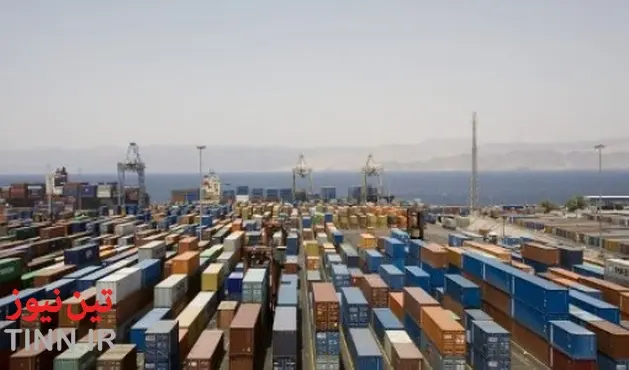
TIN news: Bidders for the concession of the management of a Second Container Terminal at the Port of Mombasa are questioning the last minute changes introduced by the National Treasury in tender documents issued to them earlier.
The concessioning deal is also straining diplomatic ties between Kenya and Japan, the port’s biggest financier in the recent past.
The bidders cite seven addendums that critically changed the contents of the initial tender documents as an indication of irregularities in the tender now before the public-private partnership review board.
They are questioning why the new rules came long after the contracting agency, the Kenya Ports Authority (KPA) had already conducted the technical evaluation stage of the tender and pre-qualified participants.
There is fear that power peddlers interested in the process are responsible for influencing the addendums to suit particular bidders.
Concerned that the process was moving in the wrong direction, the chief representative of the Japan International Corporation (Jica), Hideo Uguchi, protested against the manner in which the National Treasury handled the process.
He said the changes made by Treasury could affect Tokyo’s aid to Kenya.
“Any changes at this stage will affect future assistance to Kenya,” said Uguchi.
Indeed, the new container terminal facility for which the government is procuring an international operator has itself been built with Japanese financing.
The bidders concerns about the tender include the offering free equity of 15 per cent to government noting that it is expensive because their ability to offer high revenue to the contracting agency diminishes and will further complicate the investment.
This requirement has been introduced ostensibly to replace the 15 per cent local partnership clause that was in the earlier tender document.
Three of the bidders have already lodged complaints with the Public Private Partnership Review Board over what they perceive as unfair changes done by National Treasury’s Private-Public-Partnership (PPP) Unit led by Engineer Stanley K. Kamau.
The Kenya Ports Authority(KPA) who are the contracting authority has completed the technical evaluation which is first phase of the procurement and there are complaints already.
While the seven addendums have been done on the tender document thus completely altering the original requirements, PPP unit has not re-tendered as required by tender regulations.
The Director the Unit in a letter addressed to KPA Managing Director Gichiri Ndua dated May, 6, 2015 instructs the ports authority to circulate the 4th addendum to the tender even though bidders had already started working on the documents.
“Acting under section 14(2)(m) and 43 of the PPP Act,and having reviewed the tender documents forming the subject of your cited letter, and following the consultative meeting held at the National Treasury on 5th May 2015 between the PPP Unit and representatives from your Authority led by your General Manager Corporate Affairs, Mr J.O Nyarandi, we have identified issues in the tender documents that need to be amended through an addendum to be issued to bidders with the view of improving the competitive framework for the tender on the Second Container Terminal at Mombasa”, the letter says.
This is the addendum that introduced the offer of 15 percent to government to the disadvantage of the bidders who had already factored the same percentage to local entities.
In response, the KPA MD protested this introduction saying that the new requirement was being introduced late in the procurement process.
“This is a new requirements which is being introduced late in the procurement process. In the qualification stage, bidders had clearly been informed of the requirements for local participation and this had been clearly defined. Arising from Bidder’s Conference held on 30th April, it is already in the public domain that bidders have formed consortia/Joint ventures”, Ndua added.
Some of the bidders include Bollore, CMA CGM, TIL, DP World, Cosco Pacific Ltd, APM Terminals, PSA International Pte, Hutchison Ports Investments and, Group Maritime TCB, China Merchant Holding, ICTSI and Carrix and Interpel Investments Ltd, Terminal Investments Ltd SA.
With the unfolding events between KPA and Treasury, the winning bidder risks getting involved in a court battle with his erstwhile local partner for dropping them.
Some of the local partners include companies associated with influential businessmen and politicians. The companies with huge resources have been operating at the port for a long time.
They include Mombasa Maize Millers Ltd, Freight Forwarders Kenya, Interperl Investments, Siginon, Multiple Hauliers — perhaps the largest cargo hauling company in East Africa.
The second tier of local interests fighting for the prize is a group of well-connected Nairobi elites including a well-known local investor in the Nairobi Stock Exchange but whose name does not appear in the lists linked to the consortium led by one of the internal bidders from Singapore..
Dalbit Petroleum Ltd is also in the mix.
Another of the consortia is widely believed to enjoy the support of individuals in a very high office in Nairobi and influencing the altering of the tender.
The addendum introduced by the PPP unit besides introducing the 15 percent to government would also make KPA a landlord and beneficiary in the share process and therefore defeat that whole purpose of the PPP process.
The bidders opine that KPA as contracting authority did not follow the mandatory provision and time lines as per the letter of invitation, request for proposal/tender (RFP), and the PPP Act and that it rushed the process in 20 days when it should have taken thirty five days.
KPA has also insisted that it only needs to take the first ranked PPP and that too after opening the financial bids.
Bidders are concerned that although some of the bidders scored over 80 per cent during the technical evaluation stage, they were disqualified on flimsy grounds including for non compliance in the organizational structures, productivity which were not initially mandatory.
They says there was no specification of what format, the bids should be presented.
“The Contracting Authority did not specify the new criteria on productivity after they removed the required minimum moves of 25/hr. They arbitrarily replaced this marking scheme with the unspecified criteria of graduating scale. This marking scheme seemed to have been used to lock out other bidders by taking averages of three ports in a very subjective manner,” the protesting bidders have said.
The introduction of free equity to government in the tender at the last minute is likely to give fodder to loser to challenge the process in court.
One of the bidders who is in the last stage of the bid, DP World has been accused by the Djiboutian government of “illegality” and “corruption”, and has filed a claim against it at London’s Court of International Arbitration, scheduled to be heard next month. Djibouti annulled the concession.
The case is scrutinizing DP World’s corporate governance on the management of Doraleh Container Terminal.
DP World which operates 65 terminals around the world had in 2006 signed a 30 year concession to operate Doraleh Container Terminal.
In Senegal, the Justice ministry investigated Karim Wade, former minister and son of the ex-president, on corruption related to the company’s operation of the country’s port in Darkar under a 25-year concession signed in 2007.
At least eight out of the 12 bidders are world class operators with 30-60 ports to their credit and there would be very little difference between their technical quality.