|
News Code
64270
Copied
Oman seeks to revive seafaring spirit
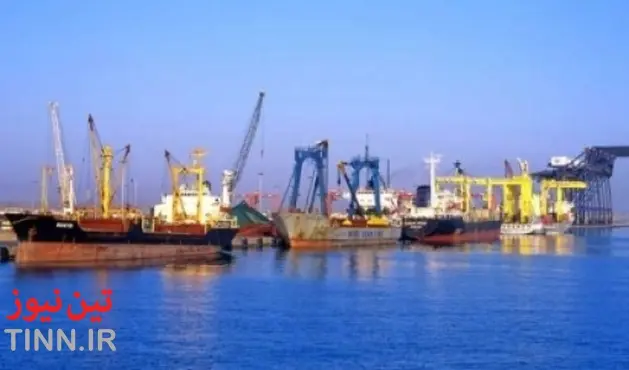
TIN news: Despite popular belief, the ancient Silk Road was never one single highway. Rather, it was a vast web of interconnected trade routes traversing land and sea. Taking pride of place as the maritime hub at the center of this vibrant network were the picturesque coastlines of the Sultanate of Oman.
Centuries ago, ships from the Indus Valley would dock in Oman’s ancient ports — Ras Al Hadd and Ras Al Jinz — loaded with spices and semi-precious stones. In exchange, Omani merchants would trade frankincense, an aromatic resin that was once worth its weight in gold. Traditional wooden dhows would sail as far away as India, Indonesia and China. Over the years, Omani sailors became pioneers in navigation. It was their nautical abilities and the trade winds of the Indian monsoon that helped the country create a powerful empire stretching all the way from Persia – or modern day Iran – down to Zanzibar in East Africa. While filming the latest episode in my CNN series about the Silk Road, I discovered how Oman is seeking to revive that seafaring spirit and reclaim its historical place as a center of maritime trade.
At the Port of Salalah in Southern Oman, one of three major ports in the country, an average of five to six giant vessels full of tens of thousands of containers arrive every day. The 20 to 40 ton containers are offloaded within hours and transferred to smaller ships headed to cities like Dubai, Mogadishu and Hong Kong. This process is called transhipment and Salalah has become a regional hub for it for one main reason—location.
Perfectly positioned at the mouth of the Persian Gulf, Oman’s Port of Salalah is at the center of east and west shipping lanes. Cargo ships sailing the Indian Ocean can bypass the narrow and congested Strait of Hormuz by stopping in Salalah. It cuts travel time by a few days and it’s significantly cheaper for traders–making Salalah one of the most popular entry points to the Middle East, India and Africa and the second biggest port in the region after Dubai’s Jabal Ali. And there are plans to expand even further with a brand new port in the Duqm region; as Oman tries to reduce its dependency on oil and map out a new future, one that’s once again dependent on the sea.
With over a thousand kilometers of coastline, the sea is never far away in Oman. It is an integral part of the nation’s history, culture, people and economy. Dotted along the shores, in tiny villages, children play in the water using styrofoam for surf boards, local fishermen bring back their catch of the day. As the first Arab to sail around the world non-stop Mohsin Al Busaidi explained to me, “the sea is in the Omani blood”. They live by the sea, for the sea, because of the sea.
Busaidi is part of Oman Sail, an initiative launched in 2008 to reignite the country’s maritime past by inspiring the youth and developing the nation’s future Olympic athletes. As the country turned to energy exploration in recent decades, many of Oman’s younger generation have taken jobs in more lucrative areas like the oil and gas sectors. Oman Sail is actively trying to change that, regularly conducting recruitment drives across the country and re-introducing the concept of sailing.
Re-invigorating Oman’s maritime past is also a unique way to bring in more tourists to the country. The giant sails operate like floating billboards at regattas. As Busaidi explained, many people still think Oman is all desert, they don’t know that Oman has such a rich maritime past. Predicted to account for over 8% of Oman’s GDP by 2024, tourism is being identified as a key part of Oman’s economic growth as the country preserves its ancient soul while still seeking out a modern face