|
News Code
64265
Copied
Taking a closer look at China’s oil imports and demand
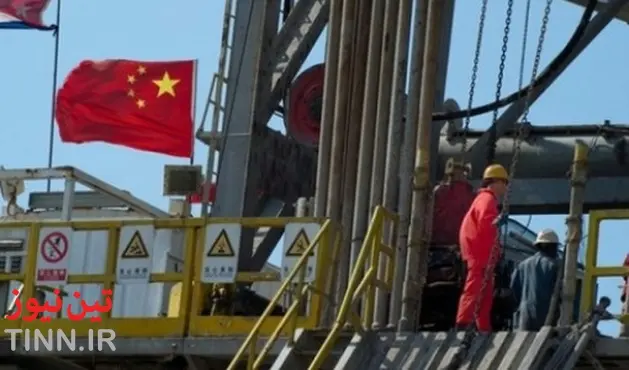
TIN news: These days, the negative news coming out on China seems to be much louder than positive news, a stark reversal from several years ago when every news item was seen as positive. It is often useful to look behind the headlines to see what is really going on. Since China is such an important driver for the oil and tanker markets (both physically and psychologically). Poten will take a closer look at China’s oil imports and demand to see if we can determine how the headlines compare to what is happening in the real world.
The economy in China is gradually transforming from an export driven manufacturing economy to a more domestic focused service oriented economy. Economists have been forecasting this development for some time as a normal progression in a country’s economic growth process. It is also part of China current (12th) five-year plan. This transformation will also affect the imports of raw materials and the energy demands.
The International Energy Agency (IEA) estimates that total oil demand in China for the second quarter of 2015 was 11.11 million barrel per day (Mb/d), 0.58 Mb/d higher than during the same period of 2014. Growth for the whole year 2015 is currently estimated at 0.38 Mb/d. One year ago, the IEA forecasted 2015 demand at 10.71 Mb/d or a growth of 0.39 Mb/d. The forecast for total demand growth is almost unchanged from what IEA predicted a year ago while the total demand forecast has increased by 0.2 Mb/d due to an increase in 2014 actual demand.
Jodi data shows especially strong growth in gasoline and aviation fuel demand. For these commodities, demand increased from 2.30 Mb/d in the first half of 2014 to 2.82 Mb/d. Demand growth in these commodities is consistent with a more consumer driven economy. Gasoil and diesel demand, which is more indicative of industrial production, increased from 2.74 Mb/d to 3.00 Mb/d over the first 6 months. However, June 2015 gasoil and diesel demand was lower than demand in June of last year. While this has happened regularly in prior months, the reduction was larger than typical declines. In June and July, product exports increased, which could be another indicator of slowing domestic demand (growth?).
For the oil tanker industry, China is mainly relevant as a crude importer, rather than for their product trades. Chinese Crude imports have been a major driver for the tanker market strength since the beginning of the year. Crude imports increased by 7.5% in the first half of 2015 compared to the first half of 2014. The Chinese government has utilized the cheap crude prices to fill up their Strategic Petroleum Reserve (SPR). The IEA estimates that 78 million barrels were added to their SPR since the beginning of 2014 (equivalent to 140 K b/d) and they expect China to continue adding about 380K b/d for the remainder of 2015 and an average of 260 Kb/d for 2016. Overall SPR capacity in China is currently estimated to be around 220 million barrels and the government is expected to add 38 million barrels of capacity by the end of 2015 and a further 94.5 million in 2016. By 2020, China wants to reach at least 500 million barrels of capacity. If China aims to get its SPR up to the OECD-target of 90 days of oil demand, they will need to build (and fill) an additional 400 million barrels of capacity.
The impact of China’s crude oil imports is not only driven by the volume, but also the distance. Statistics show that China recently increased its crude imports from the Atlantic basin (Venezuela and Angola), which helps explain the tanker market strength in the early summer.
Although the sentiment around China’s economy market has turned decidedly negative in recent weeks, this does not necessarily translate onefor-one to the real economy. So far oil statistics provide little sign of demand weakness and low prices will support demand and it also means that China will continue to fill their strategic reserves.