|
News Code
62577
Copied
Apapa Port Defies the Odds
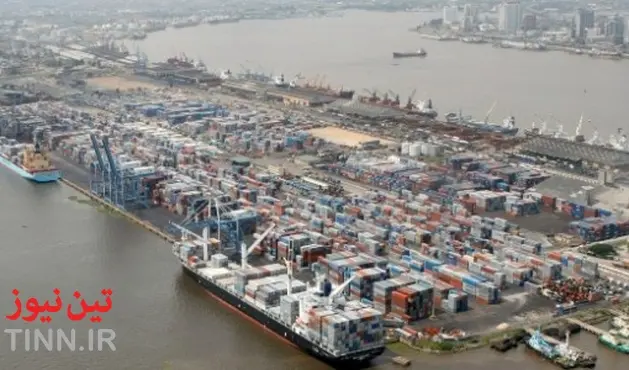
TIN news: Notwithstanding its operating limitations, the Apapa Port is faring relatively well and has generated huge revenue in the last eight months, writes John Iwori
Apapa port occupies a prime position in the maritime industry. Atlhough Tin Can Island Port (TCIP), which was built by Chief Olusegun Obasanjo during his first stint as Nigeria’s Head of State is newer and modern, Apapa port remains the busiest in the country. Other seaports located in Calabar, Warri, Sapele, Port Harcourt and Onne lag behind in several aspects such as vessel calls, import discharge, yard occupancy, containers gate out and cargo dwell time (CDT). CDT is the average time that cargo stays in the terminal from the point of discharge to the point it leaves the terminal. For several factors, it is generally high in the country.
This explains why the World Bank, in its reports, listed Nigeria as one of the most expensive places to do business in the world. Industry players said the high CDT contributes to the high cost of doing business in the country. This is because the consignees eventually pass the high cost getting the cargo out of the ports to the final consumers. Unlike many ports in the country, CDT in Apapa port is low. This is a result of modern cargo handling equipment, skill personnel, and the preference of most consignees to use Apapa port rather than other ports. Rather than use the port located in Port Harcourt, Onne, Calabar or Warri, many people prefer to patronise the ones in Lagos and convey the goods by road to the East. This is one of the reasons why the port is miles apart from others in the country.
Revenue Generation
It was therefore not surprising that the revenue from January to August 2015 released by Nigeria Customs Service (NCS), Apapa Area Command, recently, showed that the command generated N20.7 billion, N21.5 billion, N32. 3 billion and N20.7 billion in January, February, March and April respectively.
Similarly, the command, which has Comptroller Eporwei Charles Edike as its Customs Area Controller (CAC) also generated N23.8 billion, N24.6 billion, N24.4 billion, and N30. 1 billion in May, June, July and August respectively.
From the data, the command got the highest revenue in the last eight months from Apapa Quay in March when it raked in N32.3 billion. The lowest in the last eight months, however, was in the month of January when it raked in N20, 725, 398, 408. This was closely followed by the amount it got in April. It generated only N20, 760, 360, 398. This means that the command generated a total of N198.5 billion revenue in eight months.
Limiting Factors
Interest in how Apapa Quay fared is understandable. It remains home to Nigeria’s premier port, Apapa Container Terminal (ACT), which is presently managed by APM Terminals Apapa Limited (APMT), one of the subsidiaries of the Danish port operations and logistics giant, AP Moeller-Maersk Group. The firm took over the day-to-day running of ACT following the economic reforms which led to the concession of the nation’s seaports in 2006 during Chief Obasanjo’s administration. The concession exercise took cargo handling from the Nigerian Ports Authority (NPA). Just as there are different terminals for different cargoes in the country, there are different ports for different goods. In other words, some of the ports were built with some specific goods in mind.
A case in point is the Port Harcourt port, which is over one 100 years old. It was built by the colonialists with the primary aim of evacuating raw materials, especially cash crops such as cocoa, rubber, groundnuts, and palm oil from the Eastern part of the country to overseas. In other words, the Port Harcourt port can be described as a purpose built port. The colonialists had a specific motive for building it. Every other reason beyond this was a mere after-thought. This is not unconnected with the fact that at the time of building the port, the colonialists did not want anything to hinder the smooth evacuation of raw materials from the colonies to field the numerous factories and industries in Britain and other parts of Europe. To a large extent, the type of port constructed was based on the type of cargo it intends to handle. Therefore, there are some ports built for wet, bulk or general cargoes.
However, many factors have combined to limit the revenue generating capacity of Apapa Quay in the last eight months. For instance, the apprehension in the polity over what fate would befall Nigeria, in 2015 made many importers and exporters to adopt a “wait-and-see” attitude. This was one of the reasons why NCS, Apapa Area Command generated the lowest revenue in the month of January. It also generated low income in March. According to industry operators, the prediction by the United States of America (USA) that Nigeria would disintegrate as a country in 2015, also affected the performance of the port. The apprehension over the outcome of the 2015 general election, especially the presidential poll did not help matters.
From the data obtained by THISDAY, the command also recorded low vessels calls, import discharge, yard occupancy, and container gate out in the last eight months. According to the data, the vessel calls in Apapa port are 41, 45, 36, 31, 36, 33, 39, 39 for January, February, March, April, May, June, July, and August respectively. It also has import discharge of 17929; 15623;14935;12861; 14131;16941;18189;16983 for January, February, March, April, May, June, July, and August respectively.
On yard occupancy within the period under review, the command recorded 63 percent, 51 percent, 50 percent, 46 percent, 43 percent, 39 percent, 42 percent, and 45 percent in January, February, March, April, May, June, July, and August respectively.
The revenue generated by the command was also affected by the dwindling prices of crude oil in the international market. Again, just as the price of crude is falling in the international market, the price of naira against the USA dollar is also falling. It is on record that the naira had slumped 18 per cent against the dollar as oil prices collapsed by almost half since June 2014. This had prompted the Central Bank of Nigeria (CBN) to lower banks’ trading limits and introduce a new dealing system in February 2015. This has succeeded in preventing lenders from buying dollars on the interbank market without matching orders from customers needing to import goods. With dwindling income accruing into the central till due to the decline in the value of naira against the dollar as well as the poor price of crude oil in the international market, calls for the diversification of the economy have become strident.
Many stakeholders have called on the federal government to step up efforts in getting alternative sources of income to fund the budget. There are fears in some quarters that if this is not promptly carried out by the authority, Nigeria may become bankrupt in the months ahead unless there is a significant increase in the price of crude oil in the international market. Lagos base lawyer and former President of the Nigerian Bar Association (NBA), Mr. Olisa Agbakoba had in a letter early this year drew the attention of the federal government to the need to harness the enormous potential in the maritime industry for the benefit of Nigeria. The According to him, the maritime industry can provide as much as N7 trillion annually if it is fully harnessed by the government.
Since Agbakoba and others made the call, more attention is being paid to how the maritime industry can become a veritable source of income to the country. In fact, the government is now focusing on ways it can make the shipping sector the mainstay of the economy as many other countries that do not have crude oil have done. In a bid to actualize this, all eyes are now on NCS. The Customs High Command had, in a bid to fulfill its mandate in line with the new thinking, is doing everything possible to ensure that all loopholes of leakages in the system are blocked in all Customs formations across the country. The need to ensure that every kobo due for the federation account is fully paid and not diverted into private pockets has spurred NCS to initiate ways and means to plug the avenues for leakages of government revenue. This is understandable. One of the reasons adduced for the inability of NCS to achieve the N1.2 trillion revenue target given to it in 2014 was the failure of the authorities to ensure that all revenue generated by the service is paid into the federation account.
While the service often strives to meet the revenue target and in some cases surpass it, it sometimes fails to do so. Impeccable sources close to NCS Headquarters, Abuja said one of reasons why the service could not meet its target last year was the initial hiccup the service faced when it was saddled with the responsibility of managing the Pre-Arrival Assessment Report (PAAR). PAAR replaced Risk Assessment Report (RAR) following the cancellation of the seven years contract given to the three scanner service providers (SSPs) by the government. THISDAY gathered that the initial opposition to the implementation of PAAR over a year ago hindered the service from attaining its set goals and objectives, including meeting the revenue target for 2014.
“When we took over PAAR, there were a lot of challenges associated with the successful implementation of the scheme. This is normal with every new initiative. You have to grapple with a lot of things to ensure that it works.
“There was also a lot of opposition from the former scanner service providers. Many importers and freight forwarders who were apprehensive of losing what they were benefitting from the old order also kicked against PAAR. We were being bombarded left and right. If not for the strong will of the former Comptroller General of Customs, Alhaji Inde Dikko Abdullahi and his management team backed fully by former President Goodluck Jonathan, the service would have abandoned the scheme. There were also backlog of RAR left by the former three scanner service providers that Customs needed to clear with a lot of leakages here and there. Naturally, human beings do not like change. They always resist it. PAAR was not an exception. If not for these initial hiccups, we would not only have meet the target but also surpass it,” a source stated.
High Expectations
From the data obtained by this THISDAY, it is clear that NCS has continued to make strides in spite of the factors that hindered it from attaining set goals and objectives. As the flagship in NCS, there are lot expectations on the command. That is why it has stepped up efforts to block all avenues of revenue leakages. It also involved all stakeholders in the scheme of things. It achieved this through regular holding of stakeholders’ forum in the command headquarters. This has made most stakeholders to have understanding of all the command operates. It also made the training and re-training of its men and officers a regular feature of its operations since last year.
A Lagos based licensed customs agent, Chief Isaac Adebayo told THISDAY that the expectations on NCS, especially Apapa Area Command were not unexpected.
He argued that if NCS is to make a head way in providing the requisite income to meet the growing needs of the country as contained in the 2015 budget, then Apapa Area Command must play a leading role.
According to him, the command must lead the way since it is like the first son in the NCS family. It cannot afford to take the back seat or fail. The consequences of the command failing to meet its primary function of trade facilitation, anti-smuggling and revenue generation are too grave to contemplate.
It is pertinent to note, however, that the command is already making a success of its premier position in spite of the factors that hindered its operations in the last eight months. It should make sure that it consolidates on the successes it has recorded within the period under review. The Customs High Command must do everything possible to back Edike and his men so that they can record greater successes in the months ahead. All hands must be on deck to ensure that the command does not fail in its primary functions of anti-smuggling, revenue generation and trade facilitation. This is important because the command need the co-operation of all stakeholders to make a head way.