|
News Code
62092
Copied
Waterway World
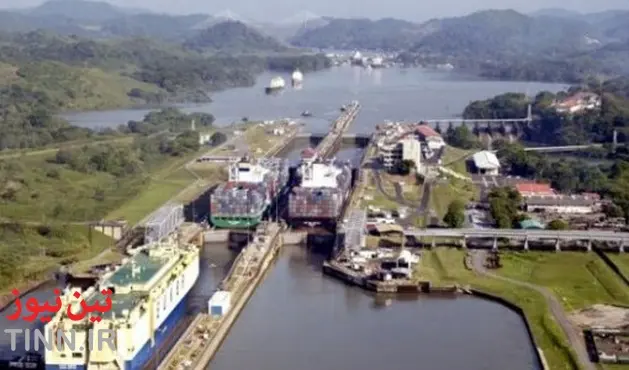
TIN news: With the new improvements to the Suez Canal, and the opening next year of the expanded waterway across the Panamanian isthmus, the shipping industry enters a fascinating period of uncertainty. There will be new choices made available, for the shippers of goods, for the carriers, and not least the ports along the routes, which may (or may not) be redrawn.
It is perhaps simplistic to suggest that the two great waterways will be in greater competition with each other. For shippers into the US east coast and mid-west, for instance, from ports in east Asia, there is already the choice of a trans-Pacific service and rail and direct sailings into US east coast ports. Bigger ships will merely see the choice expanded, but waterway transit, port handling and inland transport costs will all require to be computed afresh. The operators of more ships will have more choice about their routeing. Efficiency in canal transits, the potential for delays, limitations on matters such as water levels will all be part of the comparisons that will be made.
While Suez promises a faster, slicker service, the expansion of the Panamanian waterway offers some new opportunities for routeing changes for larger ships. Much is being made of the potential for greater north-south business, with bigger ships able to operate between the west coast of north America and the east coast of south America, making use of the interchange facilities which have sprung up on Atlantic and Pacific ends of the canal. How will the ports and inland rail systems, react? Suez, for its part, suggests that the development of the Egyptian waterway as a major industrial and logistics hub will, in time, prove a major attraction. New cargoes are being energetically canvassed for the expanded and improved waterways. The Panama expansion has already attracted the attention of energy shippers, with LNG in particular being seized on to become a major trade flow.
It is worth remembering that shipping is an industry of derived demand, while history informs us that things seldom turn out exactly as the planners and strategists forecast. A shipping industry that is struggling to make ends meet will be more sensitive than ever to matters like canal transit and port costs and the waterway authorities need to be aware of their customers’ problems. There are usually alternatives available if the price of canal transits increases to unsupportable levels, especially if fuel costs keep declining in the realities of the world’s energy over-production. “Interdependencies” would appear to merit rather closer study.
By next year, when the two giant waterways are operating and may be thought of as competing with each other to some degree, we may expect to see the situation become quite fluid, as lines and shippers “test” the capabilities of their new routes. Costs, efficiencies, political stability in the various regions, port capabilities and the preferences of shippers will all be weighed afresh as the waterways polish their credentials.
It is perhaps simplistic to suggest that the two great waterways will be in greater competition with each other. For shippers into the US east coast and mid-west, for instance, from ports in east Asia, there is already the choice of a trans-Pacific service and rail and direct sailings into US east coast ports. Bigger ships will merely see the choice expanded, but waterway transit, port handling and inland transport costs will all require to be computed afresh. The operators of more ships will have more choice about their routeing. Efficiency in canal transits, the potential for delays, limitations on matters such as water levels will all be part of the comparisons that will be made.
While Suez promises a faster, slicker service, the expansion of the Panamanian waterway offers some new opportunities for routeing changes for larger ships. Much is being made of the potential for greater north-south business, with bigger ships able to operate between the west coast of north America and the east coast of south America, making use of the interchange facilities which have sprung up on Atlantic and Pacific ends of the canal. How will the ports and inland rail systems, react? Suez, for its part, suggests that the development of the Egyptian waterway as a major industrial and logistics hub will, in time, prove a major attraction. New cargoes are being energetically canvassed for the expanded and improved waterways. The Panama expansion has already attracted the attention of energy shippers, with LNG in particular being seized on to become a major trade flow.
It is worth remembering that shipping is an industry of derived demand, while history informs us that things seldom turn out exactly as the planners and strategists forecast. A shipping industry that is struggling to make ends meet will be more sensitive than ever to matters like canal transit and port costs and the waterway authorities need to be aware of their customers’ problems. There are usually alternatives available if the price of canal transits increases to unsupportable levels, especially if fuel costs keep declining in the realities of the world’s energy over-production. “Interdependencies” would appear to merit rather closer study.
By next year, when the two giant waterways are operating and may be thought of as competing with each other to some degree, we may expect to see the situation become quite fluid, as lines and shippers “test” the capabilities of their new routes. Costs, efficiencies, political stability in the various regions, port capabilities and the preferences of shippers will all be weighed afresh as the waterways polish their credentials.