|
News Code
57605
Copied
Mooring line failure results in injury onboard LNG carrier
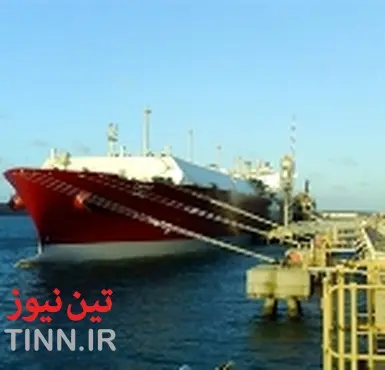
TIN news: On 2 March 2015, a deck officer on board the LNG tanker, Zarga, suffered severe head injuries when he was struck by a mooring line that parted during a berthing operation at the South Hook LNG terminal, Milford Haven. The officer, who was in charge of the vessel's forward mooring party, was airlifted to a specialist head injuries trauma unit for emergency surgery.
Zarga was declared all fast alongside about 40 minutes prior to the accident and the attending tugs were let go. The vessel subsequently moved out of position in the gusty wind conditions during which time the mooring teams were fitting chafing guards to the lines.
As the tugs had already been released, the master instructed the officer in charge (OIC) of the forward mooring party to tension the forward spring lines to warp Zarga back into the correct position. The OIC positioned himself aft of the forward springs' port-shoulder roller fairlead , and positioned a second crewman forward of him in order to relay his orders to the winch operator. As the winch operator attempted to heave in on the springs, the winch repeatedly stalled and rendered.
After about 10 minutes, one of the spring lines began to rattle and creak, and then suddenly parted. The section of the line between the break and the port-shoulder roller fairlead struck the OIC on his head as it whipped back before going overboard through the fairlead.
Lessons learned
When connecting synthetic tails to UHMPE, HMPE and wire mooring lines, the energy introduced due to the elasticity of the tails can significantly increase the snap-back hazard.
Elongation is proportional to the length of tail. Increasing the length of the tail will increase the amount of elongation and hence the amount of energy that can be stored in the line when under load.
Ship owners/operators should ensure that the type of lines and tails used for mooring lines are suitable for the task and that the dangers of snap-back are fully considered.
Mooring teams should be aware of the potential for snap-back in all types of mooring line, and the probable areas on the mooring deck that are not safe when lines are under load.
Mooring lines led around roller pedestals and fairleads can lead to potentially complex snap-back zones. Ship operators and masters should conduct their own risk assessments to ensure potential snap-back zones are identified, and are reviewed at regular intervals.
Notwithstanding the ongoing investigation into the nature of the failure of Zarga's spring line, where doubt exists on the continued use of a mooring line, the vessel operator should obtain guidance from the rope manufacturer on the conduct of detailed line inspections