|
News Code
56811
Copied
Hamburg a port city proud of its seafaring history
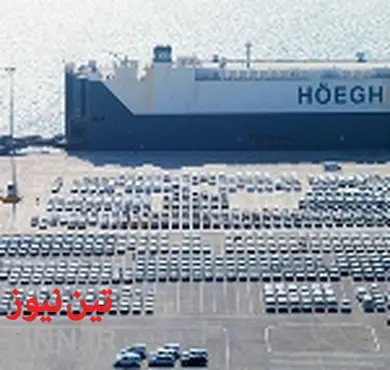
TIN news: CAPTAIN Hoffman stands on the bridge in naval uniform intently watching an approaching container vessel. But instead of barking orders for a change of course, he takes up a microphone and announces in a kindly manner – from two 6oo-watt speakers – the tonnage, length and homeport of the oncoming ship. Then, at the click of a mouse, a lofty anthem booms out across the water.
“I have 153 national anthems here,” Hoffman says proudly. “They used to be on vinyl, then cassette tapes and now they are MP3s. That one was from the Marshall Islands because that is where the ship is flagged.”
Before you think the German navy has completely lost the plot, we’re on dry land, Hoffman is retired, and his “bridge” is a small office on the side of the Schulauer Fahrhaus restaurant.
This bonkers little ceremony takes place at a narrow point in the Elbe River, 22km west of Hamburg, conducted for all arriving and departing ships over 5000 tons. It first began in 1952, initiated by the restaurateur who was constantly asked by customers where the ships were from.
Hamburg is Germany’s richest city, the country’s media, design and music capital, and Europe’s second-biggest port. It feels more chilled than Munich, less swaggering than Berlin and, despite being 110km from the North Sea, the connection with seafaring is ever present.
You can’t miss the giant port that smothers one bank of the Elbe River. The city is clearly proud of it and flaunts it with a historic riverfront that grandstands the dry-docked cruise liners that are here for refits, while the banks are lined with containers and cranes.
And the love of shipping doesn’t stop there. I stayed at the 25hours HafenCity Hotel, a funky new place where standard bedroom decor includes a rope ladder, a life-size cartoon of a sailor in the bathroom, a globe and a faux antique Louis Vuitton travel trunk.
I could, however, have chosen the Atlantic Kempinski, which was built for first-class passengers travelling on the Hamburg-America line and has a lobby bar like a cruise liner’s, or the recently refurbished Fairmont Hotel Vier Jahreszeiten, where older rooms have double doors with a space in between, formerly for the discreet delivery of luggage – just as posh old liners once insisted upon.
The Love Boat theme was playing when I entered the Fairmont bar, which is a cabin-like nook with wood panelling and a spiral staircase. The chap enjoying red wine and cheese at the bar immediately chatted: “This has been my ritual to escape the hustle of every day life for 40 years now.”
And with an twirl of his fork he added: “Did you know that Hamburg has 64km of docks and more bridges than Venice and Amsterdam put together?”
I looked sceptical but the barman returned and said he’d checked his mobile and it wasn’t correct. “Wikipedia says that there are 2400 bridges in Hamburg, more than Venice, Amsterdam and London put together,” he beamed.
At the Strandperle beach restaurant, I joined the tables of beautiful people on a rather grey beach and watched as the mammoth blue bulk of a container ship slid past. As I chomped through a bratwurst and enjoyed a beer, two mates in their 70s asked if the seats beside me were taken.
Wolf excitedly told me that the blue container ship was the APL Sentosa – “Too big for the Panama Canal even, 70m longer than the Eiffel Tower and carrying up to 14,000 containers!” His friend Berndt rolled his eyes: “Oh, here we go again,” he bemoaned through a huge smile. “Wolf knows everything about ships.”
The hippest places for cocktails are Clouds and the 20up bar, both topping tall buildings and angled for the best floor-to-ceiling harbour views. There are bars down on the river, too – cheap eats on the 10 Landsbrucken pontoons with a seaside-feeling medley of children and postcards.
I sat nearby in a deckchair and felt the sand between my toes at the mellow Hamburg del Mar bar, then I had a drink on the floating Astra Biergarten, and walked to the curvaceous wooden deck of a little red lighthouse ship.
On the U3 metro line, I was startled when the train emerged from a tunnel to reveal fantastic views of Hamburg’s river.
Between Landsbrucken and Baumwall stations, the train trundles over rails elevated on iron stilts, opening on to views not unlike those heading in or out of Sydney’s Circular Quay railway station.
Ferries fuss along the Elbe River and dozens of harbour cruise options vie for tourist attention. There’s an extraordinary river tunnel too, built in 1911 for workers to commute to the docks. Glass lifts for pedestrians and older garage-sized ones that take two cars at a time, descend 75m to the tunnel floor.
The late afternoon sun drew me to stroll westwards along the riverbank on my last day in Hamburg. I passed a U-434, a Russian submarine (now a museum) and an office block in the shape of a ship, and eventually reached a cute cluster of historic vessels at the Oevelgoenne museum.
Inside the cosy dining room of a converted 1952 Hamburg ferry, I tasted the city’s speciality of Labskaus, a delicious hash of beef, potato and onion topped with an egg. The young waitress suggested that I should get a ferry back to where I’d started – one that was leaving in four minutes.
“At night when I finish it feels like a village here,” she said. “All peaceful and quiet. I get the ferry back to the centre sitting on deck watching the lights of the dock’s cranes and ships, and I feel very lucky.”
Four minutes later, the tug-like ferry arrived and lowered its gantry. I hurried on and took her advice, sitting on deck to watch the eerily lit cargo ships, their containers stacked like toy bricks, and red lights pinpointing the toiling crane tips.