|
News Code
56193
Copied
Serious injury to crew on board Happy Buccaneer
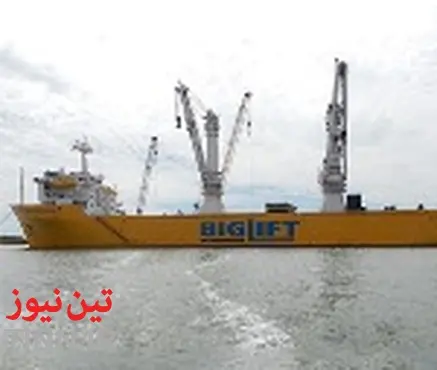
TIN news: At 1455 (Western Standard Time) on 16 February 2015,HappyBuccaneer berthed at the Roy Hill Wharf, Port Hedland, which was under construction. On board were 47 modules for the wharf, with individual weights of up to 931 t. The larger modules could take up to 24 hours to lift off the ship and place into position on the wharf pilings.
At 1235 on 22 February, the fifth module had been placed in position. Later that afternoon, the ship was moved along the wharf, in preparation for a lift the next day and, at 1800, work for the day was stopped.
At 0600 on 23 February, the crew was tasked by the chief mate with clearing an area for stacking hatch covers in order to gain access to the next module. The work involved moving packs of load spreaders from on top of the hatch covers to the ’tween deck.
At 0630, after a tool box talk, the crew started the work. Working with the second mate on deck were two able-bodied seamen (AB) tasked with hooking up the packs of load spreaders. The boatswain (bosun), the ship’s technician and two Abs were on the ’tween deck, to position the packs and remove the sling hooks. All crew involved in the moving of the load spreaders had performed this task before and were familiar with the operation.
The second mate was operating the crane’s 25 t auxiliary hook using a wireless remote control unit. The remote allowed him to move around the area to maintain a good line of sight while lifting from the deck, and to move to the edge of the hatch opening when lowering the packs.
By about 0900, two packs of load spreaders had been moved and the third pack had been lowered to the ’tween deck. The two ABs removed their hooks and left the chain slings hanging against the side of the pack. They then moved clear, towards the centre of the hold.
The technician was having difficulty removing the sling hook on his corner so the bosun went to assist him. Once the sling hook had been freed, they began walking forward between the load spreaders and the side of the hold. As they walked, the bosun signalled to the second mate to raise the hook.
When the technician and the bosun were about half way along the side of load spreaders, the two ABs saw the topmost load spreader lift up and start to slide off the top of the pack. They shouted warnings to the second mate and the two men, however, there was not enough time for either of the men to move clear and they were both struck by the load spreader as it slid towards them.
On the bridge, the chief mate heard the loud noise of the load spreader falling. As he made his way to the ’tween deck he called the second mate on the radio and asked what had happened. When he got closer, he heard the cries of the injured men. He called the master, advised that there had been an accident and that medical assistance was required. The master asked the ship’s agent, who was on board at the time, to arrange for medical assistance from ashore.
When the chief mate arrived at the accident site, he saw the bosun and the technician lying in awkward positions on top of the load spreader. The technician’s right leg was pinned under the load spreader and he had fractured both legs. The bosun was not trapped but had suffered fractures to his lower left leg. The chief mate updated the master as to the severity of the situation and began arranging first aid.
The injured men were freed by the ship’s crew with the assistance of shore personnel. Both were then stabilised and prepared for evacuation. At about 1005, the bosun was lifted ashore and taken to Port Hedland hospital. About 50 minutes later, the technician was lifted ashore and taken to the hospital.
Treatment for the leg fractures of both men required extensive orthopaedic surgery. The technician’s right leg had to be amputated below the knee and he also had a fractured pelvis.
On 24 February, both men were transferred to a hospital in Perth. They continued to receive medical treatment there until they were well enough to travel home.
Safety message
Other than unintended falling / dropping, there are numerous other hazards associated with suspended load operations. Some of those hazards continue posing a serious injury risk even after the load is landed. Risks can be particularly high when the load comprises a number of unsecured components that can move as individual units. Lifting and handling procedures and practices should anticipate the hazards (through risk assessment) and be planned to minimise the associated risks.