|
News Code
55426
Copied
India: Centre seeks bigger role for building new ports in states
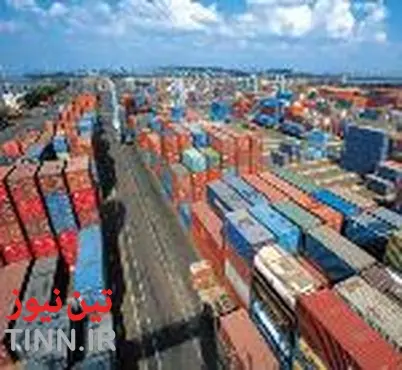
TIN news: India’s shipping ministry led by Nitin Gadkari is asserting itself in the development of ports outside its ambit—or harbours that come under the jurisdiction of state governments.
Last week, the ministry-controlled Jawaharlal Nehru (JN) Port Trust signed a deal with the Maharashtra Maritime Board to build a satellite port at Wadhwan near Dahanu, bordering Gujarat. The pact between India’s busiest container port and the Maharashtra government agency—it’s tasked with developing ports owned by the state government—is further proof of a growing trend of the ministry getting involved in building ports in states.
In February, the National Democratic Alliance (NDA) government approved a Rs.817 crore viability gap funding for a new port being planned by the Kerala government at Vizhinjam near the state capital.
VO Chidambaranar Port Trust in Tuticorin, Tamil Nadu, one of the 12 ports controlled by Gadkari’s ministry, plans to develop a satellite port at Colachel in the state’s Kanyakumari district, which falls in the parliamentary constituency of junior shipping minister Pon Radhakrishnan.
A few months ago, Kolkata Port Trust, also controlled by the shipping ministry, signed a joint venture pact with West Bengal for building a new port at Sagar Island in the state.
A similar arrangement is being worked out by Visakhapatnam Port Trust for a new port at Dugarajapatnam in Andhra Pradesh.
Given the limited scope for capacity expansion at its own port, the planned new port at Wadhwan—with a natural deep-water depth of more than 20m—fits well into the strategy of JN port, one of the few cash-rich ports among the dozen owned by the government. Many of the 12 ports have limitations in adding capacities and, hence, are looking at expanding either in their respective outer harbours, if feasible, or developing new satellite ports through collaboration with the governments of the states where they are located.
For the states, developing ports through a joint venture with the centre will lighten their financial burden, besides hastening the implementation of projects that require a host of central government clearances, including those related to environment and forests as well as building rail and road infrastructure for evacuation of cargo.
Unlike the existing 12 ports that are run as trusts, new port projects will be developed as companies, wherein the Union government-owned ports will hold 74% of the equity and the balance by the respective states or the agency nominated by it.
The new ports will be developed on the landlord port model whereby the publicly governed port authority acts as a landlord while the private firms carry out operations, mainly handling of cargo. Here, the port authority maintains ownership of the port while the infrastructure is leased to firms who provide and maintain their own superstructure and install their own equipment to load and unload cargo.
This model lends more viability to new port projects and results in higher revenue share accruals for the publicly owned port authority because private firms will not be required to spend a huge sum of money in dredging, breakwater and berth construction, which otherwise would have reduced the commercial viability of the project. By investing in new port projects, the profitable ports in the list of 12 will have an avenue to utilize their cash reserves to expand and get higher returns, particularly when they don’t pay any dividend to the government as they are run as trusts.
Gadkari says the arrangement of the centre partnering the states in developing ports is a testimony to the spirit of cooperative federalism espoused by Prime Minister Narendra Modi.
The Vizhinjam project is a prime example of that. Kerala is ruled by the United Democratic Front (UDF) government led by the Congress party. Vizhinjam will be India’s first port project to receive a viability gap funding—a one-time grant given by the centre for supporting public-private partnership, or PPP, projects in infrastructure that are economically justified but fall short of financial viability.
A project can secure as much as 20% of the capital costs as viability gap funding from the central government.
With rival political parties mounting pressure on the Kerala government against approving the sole bid submitted by the Adani Group for developing Vizhinjam, Gadkari has cautioned the state against delays in awarding the project, disregarding the fact that Vizhinjam does not come under his purview.
“If the (Vizhinjam) project is facing (political) opposition and if local people do not want development in their state, then the project can be shifted to Colachel in Tamil Nadu,” Gadkari told reporters in Mumbai on 3 June. Colachel is outside the scope of the central government.
The partnership between the centre and the states in developing ports will augur well for an ambitious Union government maritime project named “Sagarmala” that seeks to achieve the broad objectives of enhancing the capacity of major ports (those owned by the centre) and non-major ports (owned by the states) and modernizing them to bring efficiency, thereby enabling them to become drivers of port-led economic development.
It also aims to optimize the use of the existing and new transport assets and develop new linkages for transport, and set up industries, manufacturing centres and logistics hubs to be served by ports in international and domestic trade.