|
News Code
48687
Copied
Cargo under - declaration: FG to sanction shipping firms, terminal operators
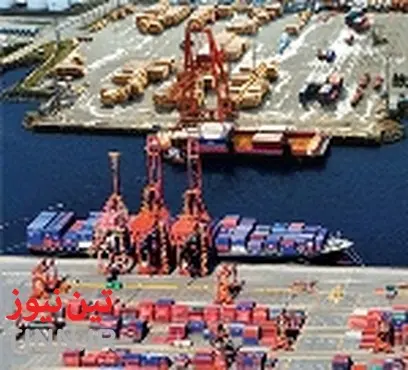
TIN news: Strong indications have emerged that the Federal Government was concluding plans to issue fresh guidelines against under-declaration of cargo imported into the country.
The proposed guidelines would make shipping companies, terminal operators and the consignees of the said imports more liable in all proven cases of under-declaration.
Under-declaration in international trade parlance is the deliberate reduction or lowering of volumes or value with a view to paying less duty and other charges that accrue to the government from the said imports Prior to this, only consignees have been made to face punitive measures over cases of underdeclaration of the volume and value of goods in which the Federal Government has lost huge sums of money.
Competent industry sources, who spoke on condition of anonymity, hinted that the Government has directed the Nigerian Shippers Council in its capacity as the port economic regulator for the port industry to issue guidelines that are designed to checkmate the increasing cases of under-declaration of imported cargo, through which government loses hundred of billions of naira annually.
According to the source, the government is relying on the provisions of section 161 of the Customs and Excise Management Act CEMA 2004, which provides that the consignee or the importer should be made to pay the undeclared value in addition to two year jail term or both in some cases.
Under the new guidelines, the government through the NSC would liaise with the marine risk underwriters, who insured the consignment based on the true value of the goods.
It was also gathered that the government would also make reference to the value contained in the bill of lading, which is also represents the true value of the consignment, which is usually lowered by the consignee in other to cut corners.
The source also said that the decision of the government to include the shipping companies and terminal operators is because the consignee or the importer of the goods pays for the shipping services including freight based on the true value of the goods being imported.
“In this case, both the provider of the services and the users, which cover the consignee on the one part and the shipping firm and terminal operators on the other are liable because the providers of the services were paid based on the true volume and value of the consignment, which makes them accomplices in the matter”, the source argued.
He also said: “It is not possible that a shipping line would lift a certain consignment from abroad; say China or United States without knowing the true volume and value of the consignment, which is the basis upon which is is paid for its services, which is also applicable to the terminal operator, a development that makes the three parties culpable in the present manner”.