|
News Code
43276
Copied
HART Honolulu: Inside America’s first driverless rail transit system
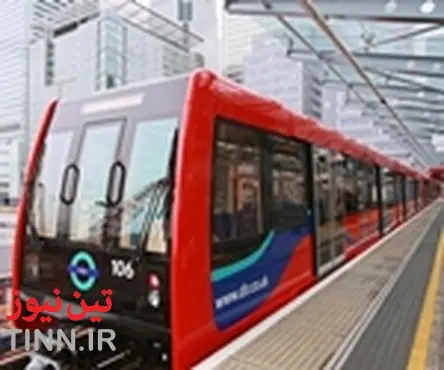
TIN news: The Honolulu Rail Transit Project is building 20 miles of elevated track across Hawaii’s capital city, bringing welcome relief to its traffic-stricken roads. It is also set to become the first fully automated railway in the US, prompting questions as to whether mainland metropolises are ready to take the plunge and go driverless. Ross Davies reports.
Honolulu
A quick glance at the "Honolulu Traffic" twitter feed makes for predictable reading. Words such as "gridlock", "bottleneck" and "congestion" pepper the frequent updates concerning the Hawaiian capital's notoriously busy highways.
The H-1 freeway, which connects Honolulu with Waikiki with seven lanes all heading in the same direction, has long been the source of frustration for the drivers on the island, particularly during rush hour. Honolulu vies with LA for the traffic capital of the US - hardly a title worth savouring.
The image of infernal tailbacks - replete with honking horns - is somewhat antonymous with the calm, sun-drenched idyll of Honolulu, as perpetuated by holiday brochures. First-time tourists, in particular, are often shocked at the high levels of traffic they encounter on the city's roads.
"If you land at rush hour, it's a standstill. It surprises people when they come here, to see how much congestion we face," said Dan Grabauskas, executive director and CEO of the Honolulu Authority for Rapid Transportation ¬(HART).
A project close to the HART: The history of rail transit in Honolulu politics
Launched in 2011, HART is on a mission to offset Honolulu's age-old traffic pandemic through the creation of a high-capacity commuter rail service. Its Honolulu Rail Transit Project proposes an elevated track, stretching 20 miles across the city with a fleet of four-train cars, able to hold 800 passengers.
What can railway stations learn from airport security?
Recent statistics reveal that four of the top ten UK crime hot spots are major railway stations.
If all goes according to plan, the first journeys will commence in 2017. The project - which could cost in excess of $5.2bn - is expected to relieve Honolulu's roads of some 40,000 cars. As an added incentive for wave-seekers, compartments are set to include surfboard racks.
Up until the advent of HART, the story of urban rail transport in Honolulu had been characterised by several false starts. In 1968, then-mayor Neal Blaisdell proposed a 29-mile route between Pearl City and Hawaii Kai, but, after much dithering over funding during the subsequent decade, the project was eventually scrapped in 1981.
Interest lay dormant until 2004, when newly elected mayor Muffi Hanneman stressed that the construction of a rail line in the city was an administrative necessity. While funding was approved the following year, the topic remained a point of contention in local politics - predominantly in relation to benefit to cost ratio - until an amendment was finally passed in favour of its creation in 2008.
Advancing automation: Are other US cities ready to go driverless?
Surfboard storage and traffic alleviation aside, the HART project also continues to attract headlines due to the fact that it will be the first automated transit system in the US. Operated through computer software - which will control stops, departures and speeds - the service is expected to be safer and more reliable than its manually driven equivalent.
"There are transit systems where driver error has caused collisions or other incidents," said Grabauskas. "The driverless operation we have is going to be very safe. We can also make pretty nimble service changes - almost literally with the press of a button. Driverless systems offer tremendous advantages."
"Up until the advent of HART, the story of urban rail transport in Honolulu had been characterised by several false starts."
While workers continue to break ground in a bid to complete the first phase of the HART project, what are the chances of a driverless transit systems catching on in other US cities? Despite metro systems in New York and San Francisco being automated to an extent, the US has been reluctant to follow in the footsteps of other regions, such as Europe and Asia, where the computerisation of rail lines is much more commonplace.
According to Grabauskas, Honolulu's system - which is based on the Copenhagen Metro - has received "a tremendous amount of interest" from several mainland authorities. However, as yet, not one appears to be willing to puts its money where its mouth is.
Several reasons could lie behind this national loathness to go driverless. One possible disincentive may be to do with safety. The collision between two semi-automated driverless trains in Washington in 2009 - which caused the death of nine people - still remains painfully fresh in the memory of the country's rail sector.
Potential ire from rail workers' unions could represent a significant stumbling block, too, as evidenced in London where recent proposals by Mayor Boris Johnson to introduce driverless trains by the early 2020s remain a point of contention among unions.
However, Louis Sanders, director of technical services at the American Public Transportation Association, recently claimed that it is none of the above; rather, it is a question of the up-front costs needed to provide the appropriate technology which poses the greatest deterrent.
"To take advantage of driverless, you have to change everything you do," he said.
Back in Honolulu, such fiscal misgivings appear to be giving way. In October, it was revealed that HART has received a total of $1.25bn from Oahu's General Excise and Use Tax surcharge during the course of the project so far. In the coming months, it also expects to receive another tranche of $250m in federal funding.
So there should soon be a day where the famous line uttered by Christopher Lloyd's madcap scientist, Dr Emmett Brown, in Back to the Future rings true for those visiting Honolulu: "Where we're going, we don't need roads."