|
News Code
29064
Copied
Suez route dominates Asia - US East Coast trade
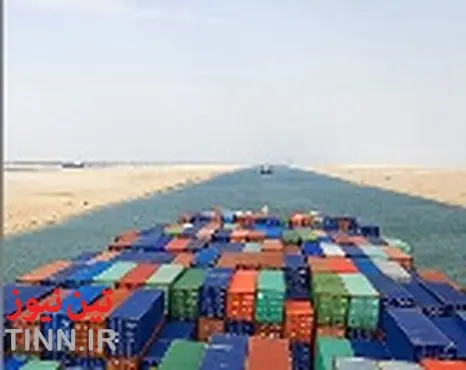
TIN news: According to Drewry, carriers increasingly switch the routing of their Asian services to the longer Suez Canal.
The trend towards more Asia-US East Coast container services via the Suez Canal route and fewer via the traditional Panama Canal route is accelerating.
Based on Drewry's proprietary database of container services, another 2 Panama weekly services between Asia and the US East Coast have gone in the past year and were replaced by an additional Suez loop (see Table above).
Counted in number of loops, only 62% of services in this tradelane now use the Panama Canal route. During the forthcoming winter season, when the G6 alliance merges its NCE and SCE Panama Canal services into just one loop, the proportion is expected to fall again to 60% (12 out of 20).
As a new member of the CKYHE alliance, Evergreen replaced its former independent Asia-Panama Canal-USEC "AUE" service (using 4,200 teu ships) by a joint Asia-Suez Canal-USEC "AWE8/AUE" service with Hanjin (using 8,200 teu ships).
Changes in the number of Asia-US East Coast weekly services, by route
The number of services is only part of the story. Drewry calculated the relative capacity shares of the Asia-Panama Canal-US East Coast services and the Asia-Suez Canal-US East Coast services. This shows an even bigger loss in share for the Panama Canal.
The main reason why carriers are switching to the Suez Canal route is that they currently have a surplus of 8,000teu ships. Once the enlarged Panama Canal is open in 2016, Asia-US East Coast services (other than those from South East Asia) will probably revert to the Panama Canal route, provided its new canal tolls (yet to be announced) are reasonable.