|
News Code
28475
Copied
Chemical tanker Key Bora contacts with the jetty in the port of Hull
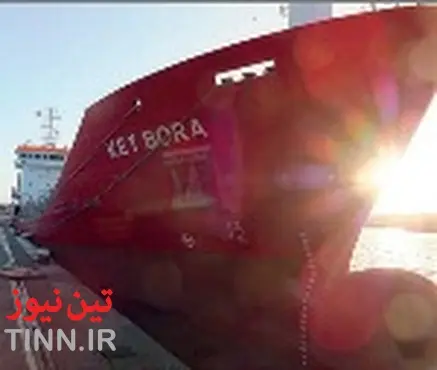
TIN news: The UK MAIB has issued report on the Failure of the controllable pitch propeller of the chemical tanker Key Bora, resulting in heavy contact with the jetty in the port of Hull.
At 1840 on 20 December 2013, the 93m chemical tanker Key Bora made heavy contact with the western approach jetty at Alexandra Dock, Hull. The vessel’s CPP1 system had a history of responding slowly to demands for astern pitch, and did not respond in time to the pilot’s order of full astern to prevent the bow striking the quay. The bulbous bow was holed above the waterline, there was no pollution.
The MAIB investigation identified that:
The pilot was aware of the vessel’s poor astern response but did not test the engine prior to manoeuvring.
The master was unaware of the function of the CPP backup control system, which could have been used to bring the situation under control.
The crew at the anchor station had diffi culty hearing the master’s order to drop the anchor over the hand-held UHF2 radio.
Fault fi nding and assessment of the CPP system performance was hampered by the lack of installation records against which to judge the system’s response.
The port authority, ABP3 , has taken steps to ensure that astern propulsion is tested and ready for use before departure or arrival from any berth, regardless of the vessel’s size.
The vessel’s manager, V.Ships, has been recommended to investigate and rectify the anomaly with the CPP system on Key Bora and to include in its safety management system a requirement for bridge watchkeeping officers to familiarise themselves with the emergency backup control of their CPP system.
Following a recommendation from the chief inspector, BV4 has requested IACS5 to include response times in its forthcoming unified requirement for commissioning trials on CPP systems.
Conclusions:
Key Bora made heavy contact with the jetty because the CPP's astern response was inadequate and did not develop sufficient astern thrust in time to stop the vessel.
The CPP control system astern response was four times slower than the ahead response to 50% demand.
It is almost certain that the poor CPP astern response was introduced at the time the system was commissioned in 2005.
Fault finding and assessment of the CPP system's performance by the crew, the operator, independent technicians and surveyors was ineffective due to the lack of a performance standard against which to judge the system's response.
Having not tested the propulsion system, the pilot was unable to fully assess the risks presented by the poor astern response and so did not put in place sufficient control measures.
The master's lack of familiarity with the backup control system meant that he was unable to intervene effectively to prevent the vessel striking the quay once it was clear that Key Bora was not slowing quickly enough.
Had the talkback system been functioning and used, the command to drop the anchor would probably have been heard clearly and implemented much sooner.