|
News Code
126404
Copied
Engineers from Iowa State test electrically conductive slabs at Des Moines Airport
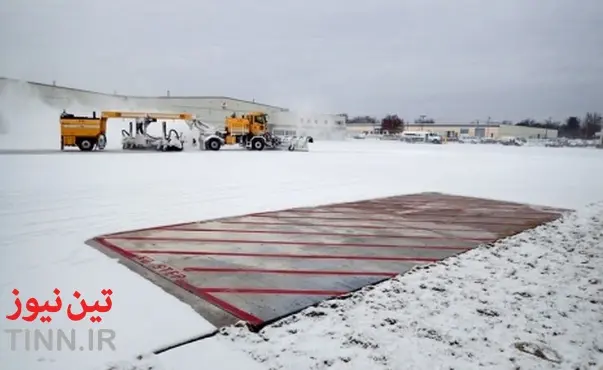
TIN news: Iowa State University’s Halil Ceylan and engineers from Iowa State have tested the first full-scale slabs of electrically conductive concrete installed at Des Moines International Airport in Iowa, US.
The research is supported by the US Federal Aviation Administration’s (FAA) Center of Excellence Partnership to Enhance General Aviation Safety, Accessibility and Sustainability (PEGASAS).
To test the heated pavement technology, Halil Ceylan and the research team from Iowa State’s Programme for Sustainable Pavement Engineering and Research installed two slabs of electrically conductive concrete at the airport.
The two 15ft-by-13.5ft test slabs have been deployed in the apron at the southwest corner of the Elliott Aviation hangar, used for smaller aircraft, at Des Moines International Airport.
As stated by Ceylan, aprons are the most congested areas at airports, meaning it takes longer to clear ice and snow from them as large plows and other heavy equipment cannot be used.
Ceylan said: “We have proven this technology does work. Our goal is to keep airports open, safe and accessible.
“We don’t want any slips or falls, or any aircraft skidding off runways. Our technologies can contribute to providing a safe environment and fewer delays.”
The electrically conductive concrete slabs are made up of 1% carbon fibre and a special blend of cement, sand and rocks.
With the use of carbon fibre, the test slabs are able to conduct electricity, and heat is created by resistance to moving electrons.
"Our technologies can contribute to providing a safe environment and fewer delays."
The heat is used to clear ice and snow from the airport apron without requiring plowing, ensuring safe and unhindered operations at the airport.
Ceylan further added: “We have proven this technology does work. Our goal is to keep airports open, safe and accessible.
“We don’t want any slips or falls, or any aircraft skidding off runways. Our technologies can contribute to providing a safe environment and fewer delays.”
Though the installation costs of the concrete would be higher than regular pavements, the heated pavement technology will help in reducing the cost of plows, de-icing chemicals and wastewater treatment of chemical runoff.