|
News Code
123824
Copied
VLCC market to face short - term headwinds
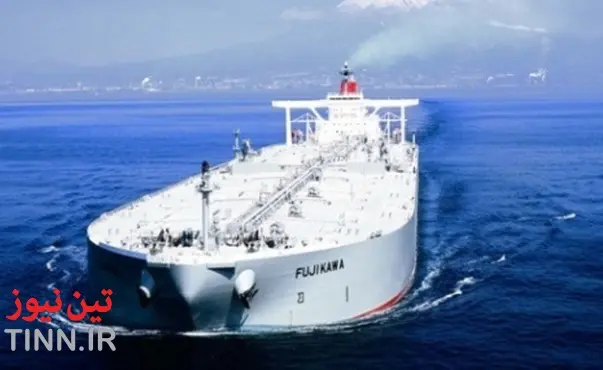
TIN news: VLCC tanker market could soon be facing significant headwinds, as the decision taken by OPEC in November 2016 to take back control is starting to have an effect. According to its latest weekly report, shipbroker Gibson noted that “promised production cuts of nearly 1.8 million b/d agreed between OPEC and a number of non-OPEC countries are primarily felt in the Middle East. According to the IEA, the Middle East OPEC crude production fell by a colossal 1 million b/d in January from December levels and initial Reuters estimates indicate that these cuts were somewhat further reinforced in February. As the Middle East is by far the largest market for VLCCs, the decline in crude exports at a time of rapid growth in fleet size is starting to hurt tanker owners. VLCC spot TCE earnings on the benchmark Middle East – Japan route started March at around $20,000/day, down gradually from $50,000/day in early January”, Gibson noted.
According to the shipbroker, “the oil markets are also changing. Shortly after production cuts were announced, oil prices firmed, fuelling optimism about the recovery in the US oil production. The latest EIA forecast for domestic output stands for notable increases in supply from October 2017 onwards, up by over 0.4 million b/d year-on-year in December 2017 and by another 0.5 million b/d in December 2018. However, independent industry observers speculate whether an even stronger and faster rebound is on the cards, as the rig count continues to rise, productivity per rig has increased around 20% over the past year and shale breakeven costs have on average fallen to just over $40/bbl (source: WSJ, Drillinginfo)”.
Gibson added that “despite the initial step up in oil prices in early December, very little volatility in prices has been observed thereafter. Yet, notable changes have been registered in the forward curve. Wide contango, which was a feature of the market in 2015/16, has narrowed substantially for near dated contracts; while pricing for longer dated contracts is moving towards backwardation. The front month of oil futures is being supported by production cutbacks, while the expectation of a stronger and faster rebound in US shale is applying downwards pressure further along the curve. There is also much debate for how long OPEC production will remain restrained”.
“OPEC has stressed many times that the main reason behind its current policy is to rebalance the oil markets and to reduce massive oil inventories, accumulated in recent years. Although this strategy will support prompt oil prices, drawdown in stocks and easing forward oil prices threaten floating storage. Our analysis shows that the number of VLCCs in non-trading activities (primarily Iranian/non-Iranian crude storage and fuel oil storage) has started to slip. At the end of February 45 VLCCs were involved in various non-trading activities, down from an average of 52 units seen between July 2016 and January 2017. In fact, Iranian crude storage has started to decline rapidly a few months ago but up until February this was offset by robust non – Iranian crude storage. Despite the latest drop, VLCC floating storage remains substantial, representing around 6.5% of the global VLCC fleet. However, the downward trend is likely to continue. Not only are the NITC ships finding their way back into the international trade, but also the anticipated drawdown in stocks and flirtation with backwardation makes it less attractive to use tankers for storage. This paints a bleak picture for VLCC owners in the short term”, the shipbroker concluded.
Meanwhile, in the crude tanker market this week, in the Middle East, Gibson said that “as expected, an initially busier VLCC fixing pace merely accelerated the softening trend and rates re-set solidly into a lower range at down to the low ws 50’s East and high ws 20’s to the West. Availability still looks plentiful through the balance of March and Owners are likely to remain pressured over the next phase too. Suezmaxes dipped off a little, but then activity did pick up somewhat and rates returned to close to ws 85 to the East and low ws 40’s to the West and delays in Singapore may provoke Charterers to keep shopping for the more clear cut positioned units. Aframaxes tightened further and rates took a step higher to 80,000 by ws 120+ to Singapore with perhaps a little more to come in the short term”, the shipbroker concluded.
According to the shipbroker, “the oil markets are also changing. Shortly after production cuts were announced, oil prices firmed, fuelling optimism about the recovery in the US oil production. The latest EIA forecast for domestic output stands for notable increases in supply from October 2017 onwards, up by over 0.4 million b/d year-on-year in December 2017 and by another 0.5 million b/d in December 2018. However, independent industry observers speculate whether an even stronger and faster rebound is on the cards, as the rig count continues to rise, productivity per rig has increased around 20% over the past year and shale breakeven costs have on average fallen to just over $40/bbl (source: WSJ, Drillinginfo)”.
Gibson added that “despite the initial step up in oil prices in early December, very little volatility in prices has been observed thereafter. Yet, notable changes have been registered in the forward curve. Wide contango, which was a feature of the market in 2015/16, has narrowed substantially for near dated contracts; while pricing for longer dated contracts is moving towards backwardation. The front month of oil futures is being supported by production cutbacks, while the expectation of a stronger and faster rebound in US shale is applying downwards pressure further along the curve. There is also much debate for how long OPEC production will remain restrained”.
“OPEC has stressed many times that the main reason behind its current policy is to rebalance the oil markets and to reduce massive oil inventories, accumulated in recent years. Although this strategy will support prompt oil prices, drawdown in stocks and easing forward oil prices threaten floating storage. Our analysis shows that the number of VLCCs in non-trading activities (primarily Iranian/non-Iranian crude storage and fuel oil storage) has started to slip. At the end of February 45 VLCCs were involved in various non-trading activities, down from an average of 52 units seen between July 2016 and January 2017. In fact, Iranian crude storage has started to decline rapidly a few months ago but up until February this was offset by robust non – Iranian crude storage. Despite the latest drop, VLCC floating storage remains substantial, representing around 6.5% of the global VLCC fleet. However, the downward trend is likely to continue. Not only are the NITC ships finding their way back into the international trade, but also the anticipated drawdown in stocks and flirtation with backwardation makes it less attractive to use tankers for storage. This paints a bleak picture for VLCC owners in the short term”, the shipbroker concluded.
Meanwhile, in the crude tanker market this week, in the Middle East, Gibson said that “as expected, an initially busier VLCC fixing pace merely accelerated the softening trend and rates re-set solidly into a lower range at down to the low ws 50’s East and high ws 20’s to the West. Availability still looks plentiful through the balance of March and Owners are likely to remain pressured over the next phase too. Suezmaxes dipped off a little, but then activity did pick up somewhat and rates returned to close to ws 85 to the East and low ws 40’s to the West and delays in Singapore may provoke Charterers to keep shopping for the more clear cut positioned units. Aframaxes tightened further and rates took a step higher to 80,000 by ws 120+ to Singapore with perhaps a little more to come in the short term”, the shipbroker concluded.