|
News Code
121376
Copied
Future of Safe Navigation
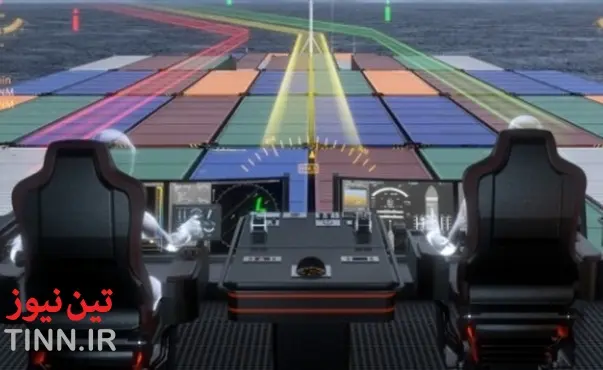
TIN news: Torsten Galaske, Service Sales Manager, Marine Solutions, Wärtsilä Electrical and Automation, investigated the “Future of safe navigation“ during his presentation at the 2017 SMART4SEA Conference & Awards. He noted that most navigational accidents due to human error have a root cause in cognitive workload, information overload and automation. Therefore, he suggested, the focus should be on new ways to collect, file and merge information, present information unambiguously and have adaptive supportive automation. He also said that future navigation includes augmented reality and bridge design supporting Bridge Resource Management.
Within the last 20 years, there is not any notable change in the navigation scheme. We many now have AIS, but since GPS became fully operational in 1995 there has been no real development. We still use rotary pulse radar using a magnetron. According to the latest EMSA report, the accident rate is slightly increasing over the last five years.
Most navigational accidents “due to human error” have a root cause in cognitive workload, information overload and “dumb” automation. So, any effort for improvements on navigation should focus on these areas.
Navigation is in motion; the future of navigation has never been this interesting. Different fields of technology provide us with concepts for autonomous vehicles, new sensors and applications and create new anti-collision algorithms. The acceptance of driver assistance is growing, even among sailors and shipping companies. This unique opportunity needs to be utilized.
The future looks much more versatile. Having a look on the sensor side today‘s situation is as follows:

Wärtsila’s vision of future navigation involves new ways for improving safety by removing errors by: collecting, filing and merging information; presenting information unambiguously and providing adaptive supportive automation (driver assistance). In particular, safety can be improved via 3D rendering of chart, route, targets, shallow areas and significant objects. Also of small targets detected by infrared or Lidar, search light and camera fully integrated for investigation. Augmented reality presents essential information unambiguously and in an intuitive way to the navigator to support situation awareness and decision making.
The next step is the bridge design for effective Bridge Resource Management. A modern bridge design has the following ergonomics features:
Within the last 20 years, there is not any notable change in the navigation scheme. We many now have AIS, but since GPS became fully operational in 1995 there has been no real development. We still use rotary pulse radar using a magnetron. According to the latest EMSA report, the accident rate is slightly increasing over the last five years.
Most navigational accidents “due to human error” have a root cause in cognitive workload, information overload and “dumb” automation. So, any effort for improvements on navigation should focus on these areas.
Navigation is in motion; the future of navigation has never been this interesting. Different fields of technology provide us with concepts for autonomous vehicles, new sensors and applications and create new anti-collision algorithms. The acceptance of driver assistance is growing, even among sailors and shipping companies. This unique opportunity needs to be utilized.
The future looks much more versatile. Having a look on the sensor side today‘s situation is as follows:
Wärtsila’s vision of future navigation involves new ways for improving safety by removing errors by: collecting, filing and merging information; presenting information unambiguously and providing adaptive supportive automation (driver assistance). In particular, safety can be improved via 3D rendering of chart, route, targets, shallow areas and significant objects. Also of small targets detected by infrared or Lidar, search light and camera fully integrated for investigation. Augmented reality presents essential information unambiguously and in an intuitive way to the navigator to support situation awareness and decision making.
The next step is the bridge design for effective Bridge Resource Management. A modern bridge design has the following ergonomics features:
Sit or stand with same access and reach
Freedom to move or walk – good screen visibility from far away
Improved visibility compared with traditional consoles and screens
Freedom to move or walk – good screen visibility from far away
Improved visibility compared with traditional consoles and screens
The bridge designs has to reflect the BRM
Share the forward screens for improved teamwork and situational awareness
Tactical/planning/briefing table with screen
Tactical/planning/briefing table with screen
There are four steps to implement the new technology
Stage 1: Smart Predict
Stage 1: Smart Predict
Today’s predictors are only capable of measuring current movement and extrapolate this into a prediction of future positions
SmartPredict is based on the ship’s mathematical model,
It will predict as soon as you move the joysticks (rudder, engine, thruster)
It will also add effect of wind and current
This will give the operator a much more accurate and early prediction.
SmartPredict is based on the ship’s mathematical model,
It will predict as soon as you move the joysticks (rudder, engine, thruster)
It will also add effect of wind and current
This will give the operator a much more accurate and early prediction.
Stage 2 – joystick functionality
There will be 2 different joystick modes:
Thrust mode – traditional thruster and rudder control
There will be 2 different joystick modes:
Thrust mode – traditional thruster and rudder control
Speed mode – the joystick controls speed and Rate of turn, where the DP system calculates forces and manages thrusters
Stage 3 – self driving ship
The operator manages the follow track by means of a pre-planned route using for the berthing a virtual ‘’parking assistant”
Stage 4 – Collision Avoidance
The operator manages the follow track by means of a pre-planned route using for the berthing a virtual ‘’parking assistant”
Stage 4 – Collision Avoidance
All targets are compared against COL-REGS, and an advice about recom-mended action is given to the OOW
In case of no action from OOW, the automation chooses safest option and executes.
In case of no action from OOW, the automation chooses safest option and executes.
In conclusion, there is need for major improvements on data processing and management; new sensors; new layout with Augmented Reality and also visual assistance to select safest option.