|
News Code
111679
Copied
Oman to ratify international treaty on ballast water for ship transportation
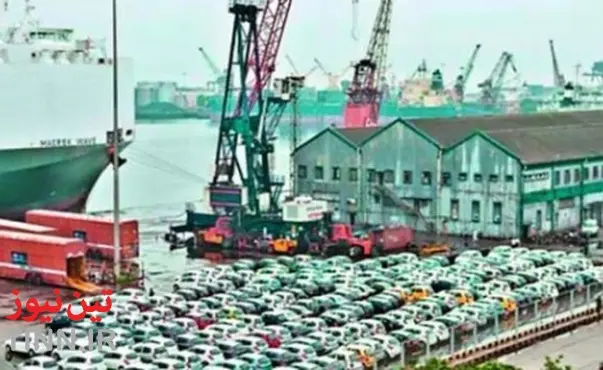
TIN news: Oman is preparing to ratify the International Maritime Organization’s (IMO) Ballast Water Management Convention which aims to protect environment and human health.
What does ballast water management mean?
When cargo ships travel overseas, their concern is not only weather or navigation. It’s also about maintaining balance.
When goods are dropped off, that causes a weight change on the ship. In order to combat that, ships take on sea water (known as ballast water), to replace the cargo weight.
But that creates problems to the environment.
Sea water in one area of the world contains numerous organisms, including plants and animals that are alien to another. This can lead to the rise of what are known as invasive species – those that are unwanted because they damage the environment and human health.
This is especially relevant for Oman, an economy based on ships exporting oil and gas. And it will continue to be important in the future, if Oman pursues its potential in logistics, in places like Duqm.
It’s for that reason that IMO has created the Ballast Water Management Convention which will go into effect on September 8, 2017.
It requires ships to treat the ballast water while it’s on board the ship, so that it can be released safely.
Recently, ClassNK, a Japan-based ship regulator company operating in Oman, organised a seminar as Oman prepares to ratify the convention.
The IMO convention requires ballast water to be treated while on board the ship, so that it can be released again without harm.
Each shipping company can develop their own equipment to treat this water.
ClassNK’s system uses a seven step process, which includes physical treatment and treatment, and ending with re-treatment and neutralisation in order to be safely discharged.
Water must be released at least 200 or if impossible, 50 nautical miles, from land and where water depth is at least 200m.
Installing the system creates its own challenge: Ships must take into account sufficient space, extra weight, and the risk to safety due to hazardous material.
The convention applies to all ships except those who do not cross international waters, those that are not designed to store ballast water, and warships.
ClassNK manages all of Oman’s seven LNG exporting ships, which are owned by Oman Shipping Company. Most of these ships head towards East Asia.
ClassNK began installing its own ballast water management system from 2013, and it’s currently installed on 15 per cent of its 9,239 ships around the world.
At the seminar, Ministry of Transport and Communications’ director general of maritime affairs Dr Rashid al Kiyumi said Oman would be ratifying the convention soon. Dr Kiyumi said the ministry has been meeting with the Ministry of Environment and Climate Affairs to advance the process.