|
News Code
111537
Copied
Cargo processed at Busan port dips ۶.۵% in Oct.
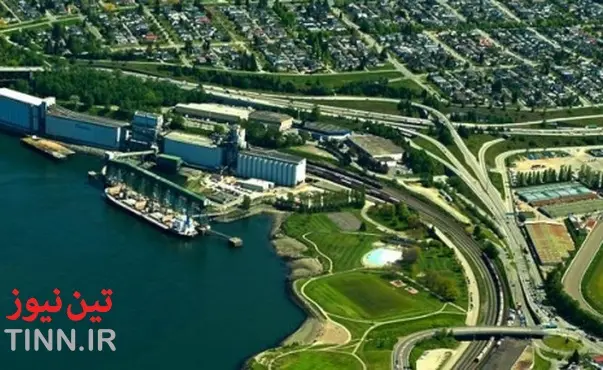
TIN news: Timaru’s port is well-placed to cope with increased demand for coastal shipping after the North Canterbury earthquakes, PrimePort chief executive Phil Melhopt says.
The vulnerability of roading and rails meant businesses could look for alternative transportation in light of the earthquakes last week.
Transport Minister Simon Bridges anticipated there would be a “big shift to ships”.
Melhopt said the value of the competition, connectivity and resilience offered by PrimePort and the Timaru Container Terminal to the Central South Island region had been highlighted by the earthquakes.
“The port is well-prepared for any transition to coastal shipping,” Melhopt said.
“PrimePort is clearly in a strong position.”
PrimePort recorded a 12 per cent profit increase from last year, posting an after-tax profit of more than $3.5 million in the last financial year.
“Container shipping services through Timaru are continuing to expand with the recent announcement of a new weekly service between Australia, Tauranga and Timaru,” Melhopt said.
Transport Minister Simon Bridges said “Timaru is quietly flourishing and it’s able to exploit its competitive advantage”.
Ad Feedback
Trucking and the rail network could face a “possible decline” as shipping became more of a focus, he said.
Parts of State Highway 1 near Kaikoura will be closed indefinitely.
The aftermath of the November 14 earthquake would be “a time for coastal shipping to prove itself”, Bridges said.
“It’s an exciting opportunity for New Zealand’s coastal shipping, albeit from tragedy.”
Labour Party MPs have been advocating for a national port strategy in light of the earthquakes, which Bridges dismissed.
TIN news: The proposal would see the creation of a New Zealand-wide port strategy for the shipping network, instead of a hierarchy built by competition.
However, Bridges said “heavy handed” central directives would get it wrong.
“Let a natural hierarchy of ports emerge from competition,” he said.
Melhopt echoed Bridges and said “PrimePort doesn’t believe that a central planning approach, National Port Strategy, is required”.
“The market will ultimately adjust to the transport challenges posed by recent events. Coastal shipping is already responding.”
Brosnan Transport managing director Greg Brosnan said natural disasters did show how reliant New Zealand was on roads and rails for transport.
“Coastal shipping would help overcome this issue, but it would take a lot longer for goods to arrive,” Brosnan said.
Following the earthquakes, businesses across the South Island were affected by extra costs and significant transport delays, he said.
However, his business would not support Labour’s proposal for a national port scheme.
“A national strategy will not fix Timaru’s problem”, it would only make it worse, Brosnan said.
“We will always be a regional port, but an important one. It’s up to all importers and exporters in our region to support it so it is maintained. We have capacity to take more cargo.”
Shipping companies would dictate where their ships call, he said.
“NZ is not a large enough market for the International lines, and they want to make less calls rather than more.”
The close proximity to Christchurch meant containers could be shifted to and from the city regularly, he said.
Labour’s associate economic development spokesman Peeni Henare said shipping was “the missing spoke in our transport wheel in this country”.
“We’re reliant on truck and rail, and rail is on the decline so it’s all about truck,” Henare said
“The Kaikoura earthquake has proven to us that’s isolating, it’s vulnerable. There’s big holes in our shipping policy.
“Places like Timaru, they really benefit from a solid, robust port and a transport network that considers Timaru, not just Lyttelton.”