|
News Code
109483
Copied
Lack of basic safety results in explosion
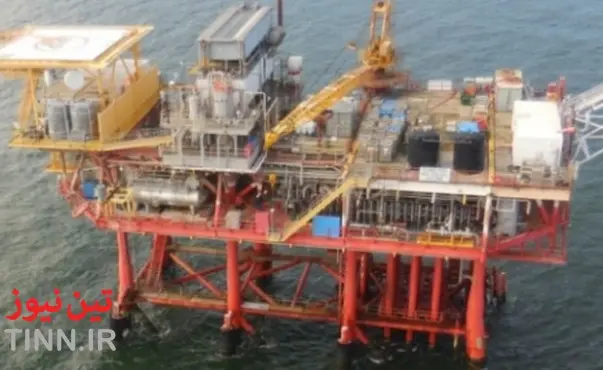
TIN news: An explosion occurred offshore in the Gulf of Mexico shortly after 2:30 p.m. on November 20, 2014, while Turnkey Cleaning Services GOM (Turnkey) personnel were cleaning an electrostatic heater treater at the West Delta (WD) 105 E platform for = Fieldwood Energy LLC (Fieldwood). The explosion caused fatal injuries to a Turnkey Supervisor, and injured others in the vicinity of the heater treater.
On or about November 13, 2014, the platform’s oil handling systems began to experience excess water and a ‘pad’ of thick oil and emulsifications. When Fieldwood and contract personnel were unable to resolve the issues, they contacted Turnkey on November 16, 2014, to clean the associated equipment, including the dry oil tank and heater treater on the platform’s production deck. The platform stopped producing oil and was shut-in on or about November 17, 2014. A four-man Turnkey cleaning crew cleaned the dry oil tank on November 19, 2014. That morning, a Senior Lead Operator for Island Operating Company (Island), that was acting as the Personin-Charge (Island Acting PIC) while the normal PICs were on vacation, took steps to isolate electrical energy from the heater treater’s transformer using energy isolation / lockout tagout (LOTO) procedures for the associated breaker located in the platform’s Motor Control Center (MCC) building.
On November 20, 2014, the Turnkey crew began draining the heater treater and pumping its fluids to containers located on the top deck. Once the fluid level was below a manway hatch on the coalescing section, the crew opened the hatch. Shortly thereafter, three Turnkey employees and a Lead Operator with Island were standing outside the hatch while the Turnkey Supervisor was reportedly rinsing the lip of the manway hatch with water from a hose, when an explosion occurred inside the heater treater. The initial blast forced the Turnkey Supervisor backwards, landing on the platform deck. The Island Lead Operator and two other Turnkey employees were also forced to the deck, one of which was struck on the head by the hose nozzle formerly held by the Turnkey Supervisor.
Platform personnel that responded to the production deck after hearing the explosion described finding the two Turnkey crewmembers and the Island Lead Operator appearing disoriented, and the Turnkey Supervisor not breathing and without a detectable pulse.
Findings
The BSEE Panel found that the explosion was a result of: a partially drained vessel (the heater treater) that contained flammable vapors; an introduction of oxygen upon the opening of the manway; and an ignition source that was not sufficiently removed or mitigated during the preparation for, and activities of, internal cleaning of the WD 105 E electrostatic heater treater. The presence of these elements created a hazardous environment that was conducive to such an explosion.
The BSEE Panel believes the probable cause of the ignition was the unrestricted supply of electrical energy to the electrostatic components inside the coalescing section of the heater treater. However, all other possible ignition sources could not be definitively eliminated.
Recommendatons
As result of this incident, the BSEE Panel made recommendations to companies operating on the U.S. Outer Continental Shelf to further protect health, safety, property, and the environment. Those recommendations include ensuring that pre-job isolations and verification of isolations are completed for all available isolation locations and by authorized and affected employees with knowledge of how to perform isolation on the equipment, preferably by a qualified electrician or technician; and using group lockout/tagout when appropriate.
Additional recommendations include that after product removal through discharge nozzles or other fixed connections (without opening manways or hatches), personnel use approved and appropriate vapor and gas freeing, degassing and ventilating methods to safely displace or dilute potentially hazardous gas and vapors in the tank or vessel; and that a qualified person test and document the applicable atmospheric conditions and ensure levels are safe prior to permitting work inside or around the outside of those tanks or vessels.
It is also recommended that operators use procedures or safety devices to ensure protection of electrostatic grids through de energization when liquid levels drop and expose the grid components.
In addition, the BSEE Panel recommends that authorized and affected personnel ensure JSAs align with approved procedures, address hazards specific to the job at hand and represent an orderly completion of job steps; and that companies ensure contractors are aware of the functions and potential hazards of the equipment on which they are working.
Further, the BSEE Panel recommends companies document recommended monitoring for heater treater functionality; regular internal and external inspection of heater treater electrical components; and specific mention of all equipment that must be shut down prior to cleaning and maintenance activities in a platform’s operating procedures.
The BSEE Panel also makes recommendations for site-specific training and assessments that address all aspects of the actual equipment and hazards at each work site; first aid and project management training; and retraining whenever deviations from or inadequacies in an employee’s knowledge or use of energy control procedures are identified.
Further details may be found by reading the Panel Investigation Report below