|
News Code
107127
Copied
Lessons learned from liquefaction incident response
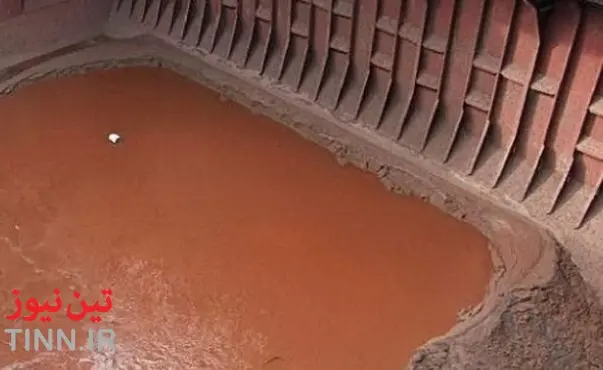
TIN news: Elias Psyllos, Business development Director, T&T Salvage, gave a presentation regarding “Lessons learned from Liquefaction Incident Response” during the 2016 SAFETY4SEA Conference & Awards, focusing on two different nickel ore liquefaction cases with vessel in distress in the Philippines and Papua New Guinea in which his company has been recently involved. He explained the method that his company followed; salvage teams equipped with appropriate salvage assets mobilized from the company’s international salvage base in Singapore, Asia to attend the casualties on of them aground at an iconic beach with the threat of an environmental disaster imminent if the vessel was not immediately afloat. In both cases, T&T’s salvage engineering teams developed a salvage plan to reposition the vessels in a port of refuge and thereafter regain their respective trading abilities. This method, he stated, has received praise from industry engineering experts as well
as the insurance industry for finding a solution to a chronic problem in the specific ore trade.
T&T Salvage was involved in the response of two liquefaction incidents facing many challenges regarding the techniques and the difficulties with respect to remote locations. In the majority, the response of a liquefaction incident needs to take place in the most remote locations and determine where to discharge the cargo in order to avoid environmental damage and secure a place of refuge.
Nickel ore is mined in over 23 countries in the world. Amongst the list of nickel ore producing countries in the world, Philippines, Indonesia, Australia and New Caledonia are the top few producers in term of tonnage exporting to China.
INTERCARGO Bulk Carrier Casualty Report 2015, has reported a loss of 102 seafarers and 11 vessel for the years 2005 to 2015 due to liquefaction incidents.
There have been mandatory codes and guidelines; specifically, IMO, Classification Society, P&I and the bulk cargo shipping industry/ Organization have published mandatory code, guidelines and checklist for acceptance of suitable/safe cargoes with moisture content within the threshold of transportable moisture limit (TML) as a margin of safety for loading and sea transportation. These are the organizations that we had to deal with, all the response has to be monitored and approved by flag state, by class and basically two different ships, two different classes.
Incident #1 – Overview
An actual incident occurred in year 2015.
Size Category – Handymax (55,562 metric ton deadweight)
Laden with unprocessed nickel ore in bulk.
Encounter Heavy weather.
Liquefaction occurred during the voyage from her loading port Philippines to China.
13,500BHP tug mobilized for escort (if necessary, towage) to nearest port of refuge.
Heavy weather (Typhoon Season).
Captain issued order to abandon ship.
Crew were rescued by tug. Sad to cite one crew member perished during rescue effort, reportedly due to heart seizure.
Subsequently , drifted aground off the coast of Candon, Ilocos Sur, Philippines with a starboard list of about 17.5
Incident #2 – Overview
A second incident occurred in year 2016.
Size Category – Handymax (55,562 metric ton deadweight)
Laden with unprocessed nickel ore in bulk.
Encounter Heavy weather.
Liquefaction occurred during the voyage from her loading port Philippines to Australia.
Captain seeks Port of Refuge in Papua New Guinea.
Options to discharge cargo under safe conditions in sheltered port area.
Subsequently, local proprietors intervene and after continuous stoppages block the discharge.
14,000BHP tug mobilized for tow the vessel to offshore dumping area.