|
News Code
106538
Copied
Chinese firm keen on ship - to - ship transfer of LNG products in Subic
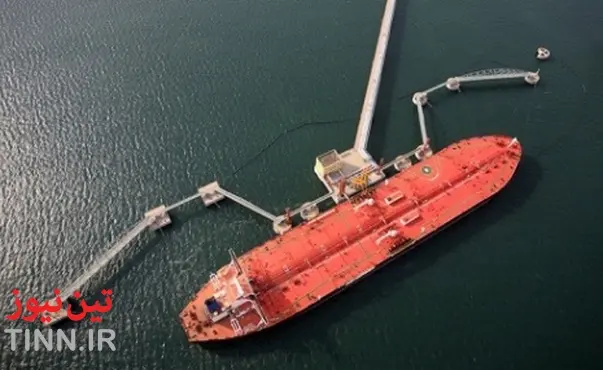
TIN news: Privately owned Chinese energy company Jovo expressed its readiness to operate ship-to-ship (STS) transfer of liquefied natural gas (LNG) in Subic Bay, with possible introduction of clean-energy alternatives to the local market.
In a meeting here with stakeholders from the Subic Bay community, Jovo Group Co. Ltd. International Business Manager Yuan Lu said their operation would involve the transfer from tankers of LNG sourced from Asia-Pacific sources to smaller vessels bound to ports in China.
He said the LNG will mostly be brought to Subic from Australia and Indonesia by a Belgium-flagged 94,000-ton bulk carrier, and then loaded here to smaller 47,000-ton feeder ships.
A similar operation is being handled here by the Brazilian metals giant Vale SA, which began supplying iron ore to China via the Subic route in 2012. Ship-to-ship transfers address the problem of bulk shipping to China where most ports cannot accommodate very large ore and petroleum carriers due to depth issues.
Company officials said the Port of Subic will earn “tens of millions of pesos” in the operation from port services and anchorage, including tug-boat services. Other indirect revenues may include payments for chandlers, bunkering and food supplies.
Lu said the STS operations of Jovo in Subic will be assessed after five years, after which the company will determine if a regional hub should be established here to accommodate delivery of LNG to the local market and the rest of Southeast Asia.
He said Jovo has a long-term plan to introduce LNG to local markets in the Philippines, especially those in the transportation sector, as this kind of fuel is safe and environmentally friendly.
Lu said Jovo has decades of comprehensive experience in clean-energy shipping, storage, processing and sales with zero accidents, and assured their STS operations, as well as the LNG product itself, will be environmentally safe.
Jovo’s LNG business portfolio includes an LNG receiving terminal, tank-truck operations, urban pipelines for natural gas, automobile gas-refilling stations, direct-industrial clients, power-plant customers and exclusive management of an industrial park in South China.
The consultation-meeting, held at the Subic Bay Metropolitan Authority (SBMA) Seaport Department office, was attended by local fishermen, members of the Philippine Coast Guard and the PNP Maritime Group, as well as SBMA officials.
In the meeting, Subic, Zambales, resident Laureano Artagame, chairman of the Subic Bay Fisheries and Aquatic Resource Management Council (SBFARMC), expressed his appreciation to Jovo and SBMA officials for consulting with local fishermen on the project, but voiced concerns on possible effects to their livelihood.
He noted that, while large ships sometimes intrude into the fishing areas of small fishermen in Subic Bay, a close coordination between Subic authorities and their group may help prevent accidents at sea.
Meanwhile, China Classification Society (CCS) Senior Engr. Fan Hong Jun presented the advantages of using LNG versus gasoline or liquefied petroleum gas (LPG), saying that, while gasoline and LPG are highly combustible, LNG has lesser greenhouse effect and is lighter than air, thus making it safer in case of spillage.
He said LNG is very environment-friendly because it is hard to burn but evaporates rapidly.
“Thus, if it spills into the oceans or even into some water source, it will not affect marine life, and the water would remain safe to drink,” Fan said.