|
News Code
106353
Copied
New SOLAS requirements for lifeboat servicing
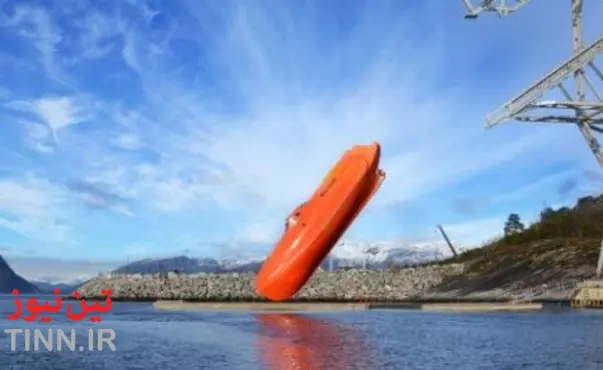
TIN news: Michael Røssland, Vice President, Norsafe Academy focused on the “New SOLAS requirements for lifeboat servicing“. He referred to the new resolution and amendments to SOLAS approved by IMO regarding requirements for periodic service of lifesaving equipment. Mr Røssland explained that this resolution requires documented competency and approval of personnel conducting services and outlined necessary actions for vessels, shipowners, flag, class and servicing companies to comply.
A new resolution concerning Life Saving Appliances (lifeboats, davits, winches, rescue boats, hooks) has been approved by IMO and as every regulation has its challenges when it comes to implementation, we are going to address what this will specifically require.
During last decades, several accidents, detention and losses that have been reported and calling for new regulations. Ten years ago, the MSC Circ.1206 addressed seven main reasons for lifeboat accidents. The Committee noted that most accidents fell under the following categories:
Failure of on-load release mechanism
Inadvertent operation of on-load release mechanism
Inadequate maintenance of lifeboats, davits and launching equipment
Communication failures
Lack of familiarity with lifeboats, davits, equipment and associated controls
Unsafe practices during lifeboat drills and inspections and
Design faults other than on-load release mechanisms
From the above, categories under issue 2,3,4,5,6 are clearly related to competency fields. On an international basis, when an accident occurs, we tend to blame the equipment. Some say that the equipment itself is the major factor of the accident. Failure of on-load release mechanisms was a hot topic for years and eventually lead to a new regulation, requiring all on-load hooks to be replaced with new ones; this is currently ongoing. The sad thing is that accidents continue to happen. Who to blame now? The answer is still bad or the absence of maintenance. Maintenance and its requirements have been a topic under discussion for many years among industry associations. This year, a new resolution is adopted requiring an amendment to SOLAS to solve the problems of maintenance.
MSC 96 approved amendments to SOLAS Regulation III/20 regarding operational readiness, maintenance and inspections and also instructions for onboard maintenance. Specifically, resolution MSC 402(96) adopted entitled ‘’Requirements for maintenance, thorough examination, operational testing, overhaul and repair of lifeboats and rescue boats, launching appliance and release gear.’’ The resolution will be effective from 2020.
The new resolution addresses the following:
1. 5 year cycles for inspections
There is still requirement of 5-year cycles for inspections. The fifth year there will be a thorough examination; a 5 yearly inspection will take place.
2. Maintenance cycle of LSA
Inspections and maintenance are two completely different things. During one year, from one annual inspection to the next, there would be need for weekly maintenance, monthly maintenance as well as repairs and replacement of parts.
3. Roles and responsibilities
The original equipment manufacturer or authorized service companies are responsible to conduct the annual inspections. However, from one annual inspection to the next, the ship crew has responsibility for all the maintenance on board (52 x weekly maintenance/ 12 x monthly maintenance / repairs / replacement of parts)
4. Competence requirements
The original equipment manufacturer does not need any approval for conducting services.
Other service companies may be approved by flag/class based on:
Other service companies may be approved by flag/class based on:
Approved quality system
Access to original parts, manufactures checklists and drawings, service notices, product notices etc.
Service engineers personal certification or documented training for each brand and type of equipment
Access to original parts, manufactures checklists and drawings, service notices, product notices etc.
Service engineers personal certification or documented training for each brand and type of equipment
Training of service engineers shall include practical technical training on thorough examination, operational testing, maintenance, repair and overhaul techniques using the equipment for which the personnel are to be certified.
Ships crew’s competency is maintained by;
Ships crew’s competency is maintained by;
On board training (by senior officers)
Maintenance training at the manufacturer’s training site
Some STCW courses includes maintenance (i.e. Fast rescue)
Maintenance training at the manufacturer’s training site
Some STCW courses includes maintenance (i.e. Fast rescue)
Weekly and monthly inspections and routine maintenance as specified in the equipment maintenance manual(s), shall be conducted by authorized service providers, or by shipboard personnel under the direction of a senior ship’s officer in accordance with the maintenance manual(s).
However, maintenance is not always quality maintenance.

Good maintenance ensures low annual costs on repairs and servicing. And good maintenance can be achieved with a crew who knows the correct operation of the product and knows the maintenance procedures. Therefore, ship crew training is the solution. In any case, maintenance training is a small investment compared to the costs of repairs, refurbishments – or even worse – detentions and accidents.
However, maintenance is not always quality maintenance.
Good maintenance ensures low annual costs on repairs and servicing. And good maintenance can be achieved with a crew who knows the correct operation of the product and knows the maintenance procedures. Therefore, ship crew training is the solution. In any case, maintenance training is a small investment compared to the costs of repairs, refurbishments – or even worse – detentions and accidents.