|
News Code
101047
Copied
Argentina: Government toughens stance on Buenos Aires Port transfer
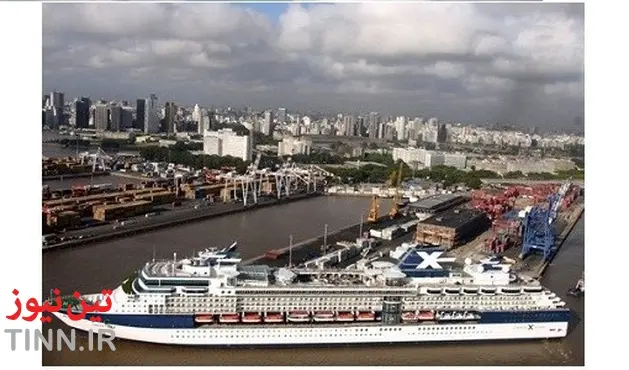
TIN news: Transport Minister Guillermo Dietrich last week seemed to double down on the national administration’s decision not to transfer the jurisdiction over the Buenos Aires Port to the City of Buenos Aires.
During a press conference at the Argentine Engineering Centre (CAI), the Herald asked him why the government of President Mauricio Macri was failing to abide by Law 24,093 of 1992, which ordered the transfer of national ports to their respective provinces and the City of Buenos Aires.
He quite curtly replied: “Because it is under trusteeship. And it continues to have open accounts payable (balances adeudados). There is a lot of issues that must be resolved. We are working on that.”
Since the trusteeship depends on the national administration, the first part of the minister’s response seemed tautological. Dietrich, who gave long answers to several other questions from the audience, failed to elaborate on the Buenos Aires Port issue.
The Buenos Aires City Port is the only one that remains under national jurisdiction in Argentina dating back to 1992, when then president Carlos Menem, partially vetoed Law 24,093 to keep the port within federal domain, arguing that, at the time, the mayor of Buenos Aires was personally appointed by the president and that, as a consequence, City Hall was just a decentralized entity within the federal government sphere.
In 1994, however, constitutional reform led to the autonomy of Buenos Aires and since then different City administrations have been demanding — unsuccessfully — that the nation transfer the jurisdiction of the port to the City. The Macri administration is no exception, despite the fact that during the eight years he served as Buenos Aires mayor (2007-2015) before becoming President, he steadfastly demanded control over the port.
In line with Minister Dietrich’s stance, Gonzalo Mórtola, the controller of the General Ports Administration (AGP), the federal agency that manages the Buenos Aires City Port, said this month that the nation wanted to retain a 51 percent control over the port or at least a golden share in a future entity running it.
Good ports, bad access routes
Dietrich also said that Argentina — which accounts for 11 percent of the world’s grain and oilseed exports — has a port capacity well above its needs for several years to come but that one of the leading problems regarding port efficiency was access routes.
He rebuked an assertion from one of the attendees who said that Rosario — a cluster of ports on the Paraná River some 300 kilometres north of Buenos Aires and the world’s largest grain export complex — was obselete.
“Rosario is not obsolete. The problem doesn’t lie with private companies. The crushing plants in Timbúes, San Lorenzo and San Martín are really impressive. The problem is that access routes are dirt roads (caminos de tierra),” Dietrich said.
“Argentina has a port capacity in excess of its needs for a fair number of years, not to mention when the La Plata Tecplata (container) Terminal starts operating,” he said, adding that the Rosario facility, beyond being the world’s largest, was also the most efficient grain export complex.
The US$450-million Tecplata Terminal has been idle since its inauguration in December, 2014. It is owned by ICTSI (International Container Terminal Services, Inc.), from the Philippines. A person from the audience who claimed to be a Tecplata official said that the firm was a perpetual contact with Buenos Aires Province and that in two years — “weeks more, weeks less” — the container Terminal will finally have its access route.
Cargo train
Dietrich also said: “We are investing five billion pesos in road projects and another five billion in train access to Rosario ports. Also, we have created a Federal Port Council formed by 12 provinces.”
He complained about the “catastrophic” plight of freight rail after 12 years of Kirchnerite administrations, which he accused of having “destroyed” the Belgrano Cargas freight line that Argentina renationalized in 2013 under the administration of President Cristina Fernández de Kirchner.
Dietrich said that under the influence of then Chaco Governor Jorge Capitanich, who also served as Cabinet chief for Fernández de Kirchner, investments in Belgrano Cargas, instead of being channelled to Rosario, were prioritizing the port of Barranqueras, in Chaco Province.
“Now, Barranqueras handles 160,000 tons of grain versus the 50 million tons handled by Rosario,” he said.
“To redress all this is very hard. People who are not transport experts believe that Barranqueras’ problem is that railroads don’t reach that port and that once the train gets there, the port will revive. But the problem is not the train, the problem is the port,” Dietrich said.
He added that there are currently five contracts for a total US$40 million from companies which are investing along the Belgrano Cargas line with a view to revamping that line, a project that includes renewing 1,500 kilometres of railroads.
“The only thing the state does is to give those companies railroad equipment for the accesses and the plants they build. There are 12 more contracts under consideration, as well as a cement plant.”
Dietrich said: “In 2019 we will have a fully revamped narrow-gauge railroad from the north of the country to the ports in Rosario.”